
Lieferung heute & morgen

Qualitätsgarantie

Willkommens-Angebote freischalten: KOSTENLOSE Lieferung | Bis zu 80 % RABATT | Kostenlose 30-Tage-JoyPlus-Testphase
App herunterladen
LEGO sets vary greatly in terms of age, theme and piece count. A colourful LEGO Classic set is ideal for free building, whereas a LEGO Minecraft or LEGO Harry Potter building set focuses more on characters, scenes and specific play features. For adults, the emphasis is often on decoration, collectability and a more challenging construction.
However, when buying, a few common assumptions can lead to poor decisions. The piece count alone tells you little about how the set will actually be used. A set with many small elements may offer fewer versatile building possibilities than a box of basic bricks. Equally, a well-known licence such as Disney, Minecraft or Harry Potter does not automatically guarantee that the set suits the age and interests of the person you are buying for.
820 pieces might sound like a lot of possibilities. What really matters, though, is whether the selection consists of basic bricks, specialised parts, figures and functional elements. LEGO Classic sets usually contain many versatile, combinable bricks. Themed sets, on the other hand, focus more on a specific model and characteristic accessories.
The age rating is an important guide to complexity and safety. Sets with small parts are fundamentally unsuitable for children under three. For children aged four and over, large starter bricks and simple step-by-step instructions can make getting started easier. Models for ages 9, 10, 12 or 18 generally require more patience, space and time.
Movable elements such as gates, wheels, flaps, wings or explosion features increase play value. However, they can also place extra demands on the build and later storage. If you mainly want to display a model on a shelf, you should pay attention to dimensions, footprint and construction method.
First, check the official age recommendation and the warning labels. Details such as “ages 4+”, “ages 7+” or “ages 18+” help you realistically assess the construction. For all the sets featured here, please note: small parts can pose a choking hazard. Younger children should be supervised during building, depending on their developmental stage.
When choosing a LEGO gift, you should also consider the recipient’s interests:
The piece count is a useful comparison point, but it should be combined with the finished size. For example, the LEGO Classic 10696 contains 484 elements and comes in a storage box. The LEGO Classic 11045 includes 820 pieces and contains instructions for several models. A large model such as LEGO Harry Potter 76419 consists of 2,660 pieces and requires significantly more display space, measuring roughly 35 × 25 cm.
Measure the intended shelf or desk before you buy. For decorative LEGO collector sets, you should also consider dust protection, direct sunlight and a stable placement surface.
The product details for the featured sets list ABS plastic as the main material. For cleaning, we recommend a dry, soft cloth. Parts should not be soaked in water. If any components become damaged or loose, the model should not be used further if this affects a function or stability.
Organised storage saves time and prevents key parts from getting lost. A box with compartments works well for Classic bricks; themed sets can be separated by figures, special parts and build stages.
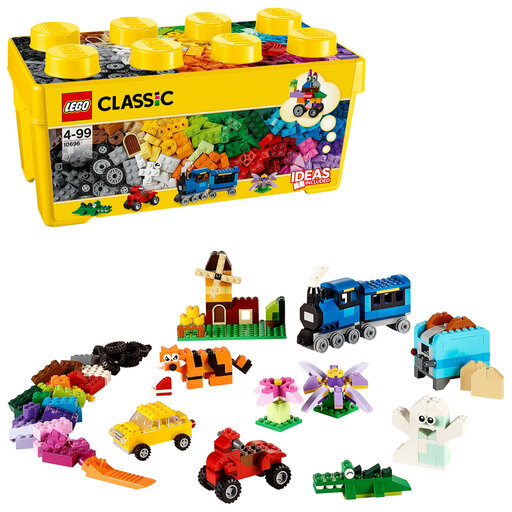
Why this product fits the profile: This box is aimed at children aged 4+ and offers 484 elements, including wheels, windows, eyes and green base plates. It works well as a starter set or as an addition to an existing LEGO collection.
The box doesn’t rely on a single themed model; instead, it focuses on combinable basic elements and multiple build ideas.
35 different colours according to the product description; practical plastic storage box; suitable for fans aged 4+.
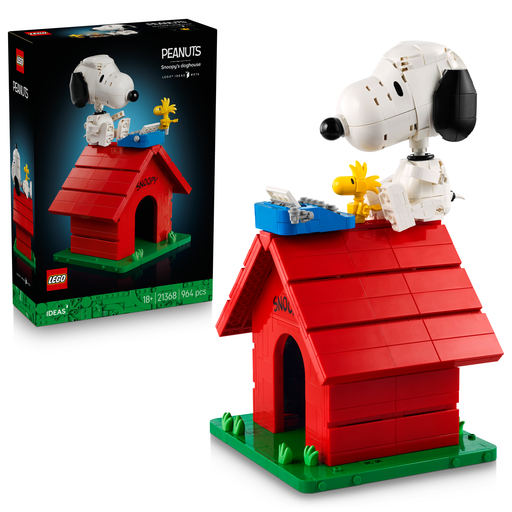
Why this product fits the profile: This 964-piece model combines a well-known Peanuts licence with movable figures and a changeable display area. It is aimed at adults and comic fans.
The details list both the piece count and the finished size, as well as the intended display features.
Snoopy with alternative positions; fold-out doghouse with a starry sky; suitable for display on a shelf or desk.
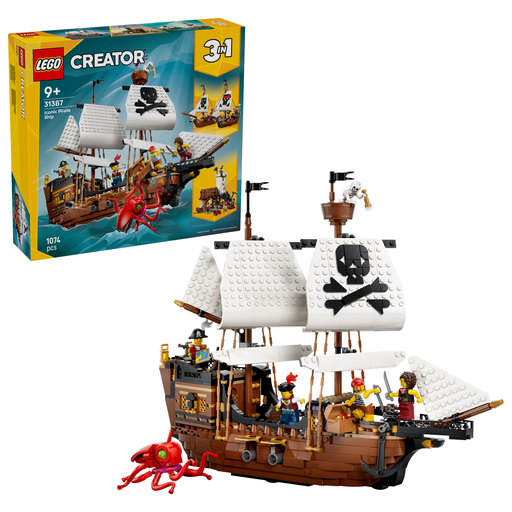
Why this product fits the profile: Children aged 9+ can build a pirate ship, a castle or two smaller ships from 1,074 pieces. This is ideal for users who want to rebuild repeatedly.
The 3-in-1 construction offers a clearly stated alternative to a one-time build. According to the product details, the three models cannot be built at the same time.
Five minifigures; movable anchor, two cannons and a secret compartment; finished ship approximately 30 cm high and 39 cm long.
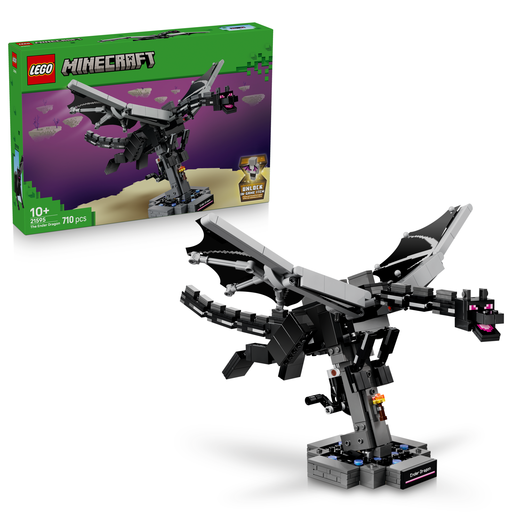
Why this product fits the profile: This set for ages 10+ combines a well-known Minecraft motif with a movable figure and a wing-flapping function. It is designed for both play and display.
The product description explicitly mentions joints, wing mechanism, footprint and dimensions. This makes it easier to assess the space needed before buying.
710 pieces; movable head, neck, tail and legs; crank mechanism for the wings; model approximately 21 × 37 × 39 cm.
We have put together a complete, regularly updated list of products that fully meet these strict selection criteria and the safety regulations in force in the EU.
For children aged 4+, the LEGO Classic 10696, LEGO Classic 10698 and LEGO Disney Princess 43281 are particularly suitable. These sets contain age-appropriate build ideas or starter bricks. You should also consider the individual child’s abilities.
When stored in a dry place and looked after properly, LEGO building sets can be used and rebuilt for a long time. The key is not to expose the parts to prolonged moisture, heat or direct sunlight. Movable elements should be checked regularly for damage.
No. LEGO Architecture, LEGO Ideas and larger LEGO Harry Potter sets are often used as decorative models, but they can also be rebuilt. Before buying, you should compare the piece count, build effort, model size and the available space.