
Lieferung heute & morgen

Qualitätsgarantie

Willkommens-Angebote freischalten: KOSTENLOSE Lieferung | Bis zu 80 % RABATT | Kostenlose 30-Tage-JoyPlus-Testphase
App herunterladen
As your Joybuy Product Recommendation Officer, my mission is to provide you with clear, factual information so you can make informed purchasing decisions. The variety of lentils can seem overwhelming at first glance. This guide is designed to help you find the perfect type for your kitchen, whether for a hearty stew, a quick curry, or a light salad.
Choosing a type of lentil largely depends on your planned dish and personal preferences. Three criteria can make your selection easier.
Lentils differ mainly in their cooking properties. They can be roughly divided into two categories: soft-cooking and firm-cooking varieties.
Preparation time is another important factor. Dried lentils require different cooking times.
A general tip: Salt or acidic ingredients like vinegar or lemon juice should only be added after cooking, as they can slow down the cooking process and cause the lentils to remain hard.
Lentils are known for their high nutritional value. They are an excellent plant-based source of protein and fibre, and are low in fat. If you are specifically looking for protein-rich lentils, it's worth checking the nutritional information. Red lentils often have a particularly high protein content, but other varieties are also a valuable addition to a balanced diet.
Based on the criteria mentioned, we have put together a selection of versatile lentils.

What makes them special Brown lentils are a classic in German cuisine. With a diameter of 6–7 mm and a nutty flavour, they form the basis for traditional stews and hearty soups. Their firm-cooking property ensures they also hold their own in salads, retaining a pleasant bite.
Advantages
Who they're for These lentils are a great choice for fans of traditional, hearty cuisine who want to prepare an authentic lentil stew. They are also suitable for anyone looking to stock their pantry with a nutritious supply of dried lentils.

What makes them special These hulled red lentils are known for their extremely short cooking time and do not need to be soaked. They break down into a creamy mass when cooked, making them the ideal base for Middle Eastern dishes like dal, as well as thick soups and purées. Their flavour is mild and slightly nutty.
Advantages
Who they're for Ideal for cooks who prefer quick, nutritious, and straightforward dishes. Especially suitable for preparing vegan and vegetarian meals that require a creamy base.
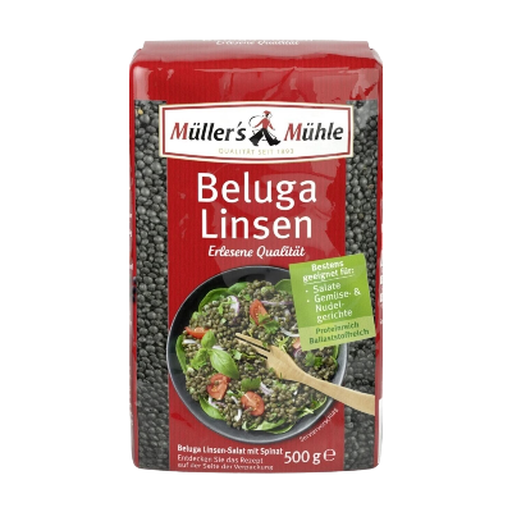
What makes them specialBeluga lentils get their name from their resemblance to Beluga caviar. These small, black lentils are firm-cooking and have a delicate, nutty flavour. They retain their shape and colour during cooking, making them a visually appealing ingredient in salads, bowls, and as a side dish.
Advantages
Who they're for For home cooks who appreciate special aesthetics and want to add a sophisticated touch to their dishes. They are an excellent choice for modern, healthy salads and as a high-quality side dish.
The world of pulses is diverse. If your preferred variety isn't listed here, or if you want to discover more products from quality brands like Müller's Mühle Lentils, you can find a wider selection of grains and pulses for your pantry in our Food Mills category.
Soaking is not necessary for all types of lentils. Hulled varieties like red or yellow lentils do not require soaking. For unhulled, larger varieties like brown lentils, soaking (e.g., overnight) can significantly shorten the cooking time and improve digestibility.
Dried lentils should be stored in a cool, dry, and dark place. After opening the package, it is advisable to transfer them to an airtight container. This protects them from moisture and pests, and they will maintain their quality for many months.
In general, all lentils are a good source of protein. The exact content can vary by variety. Hulled red lentils often have one of the highest protein contents (frequently over 20 g per 100 g in their dry state), making them an excellent choice for a protein-conscious diet. However, it is always recommended to check the nutritional information on the specific product packaging.
Your Joybuy Product Recommendation Officer