
Lieferung heute & morgen

Qualitätsgarantie

Willkommens-Angebote freischalten: KOSTENLOSE Lieferung | Bis zu 80 % RABATT | Kostenlose 30-Tage-JoyPlus-Testphase
App herunterladen
If you’re looking to buy a mirror, don’t base your decision solely on the frame colour, number of LEDs or a low price. The right criteria depend on where you’ll use it. In the bathroom, the IP rating, lighting and anti-fog function are key. In the bedroom, size and stability matter. For a car mirror, check the field of vision, how it is fitted and whether it is being used correctly as an additional mirror.
A bathroom mirror with lighting can illuminate your face evenly, but it won’t necessarily replace ceiling or vanity lighting. Some models are specifically designed to provide supplementary light. So check that the light output and fitting position are right for your bathroom.
An illuminated mirror with an anti-fog function can keep the mirror surface clear after a shower. However, this doesn’t automatically mean that every component is suitable for direct contact with water. Check the stated IP rating, the installation instructions and the recommended installation area.
Before buying, measure the wall width, socket position and connection type, and check which way cupboard doors open. A large mirror may be impractical in a narrow bathroom. For a full-length mirror, you should also consider the floor space it needs, its tip-over protection and whether it can be secured to the wall.
The colour temperature of LED mirrors is usually given in kelvins:
A dimmable LED mirror lets you adjust the brightness to suit the time of day and how you use it. A bathroom mirror with a touch switch can make it easier to use, but it needs a properly fitted and correctly connected power supply. Also check whether your chosen setting is saved or needs to be selected again each time you switch the mirror on.
In the bathroom, choose a mirror width and height that work with your basin and available wall space. A model with an additional shelf can hold toiletries, but needs more space in front of the wall. A wall mirror saves floor space, while a freestanding mirror can be positioned more flexibly.
A full-length mirror should have a sufficiently tall reflective surface and be placed on level ground. Leaning mirrors need to be positioned securely against a wall. In homes with children or pets, additional securing is a sensible precaution.
A car mirror add-on, also known as a car blind-spot mirror, is intended only to supplement your view. A convex mirror can widen your field of vision, but often makes distances appear different. Your main wing mirror and looking over your shoulder remain essential.
When choosing a convex rear-view mirror, look for:
A 360° adjustable car mirror can make fine-tuning easier. However, you must not adjust it while driving.
The selection below matches different types of mirrors to specific uses. Technical details are based on the information provided for each product.
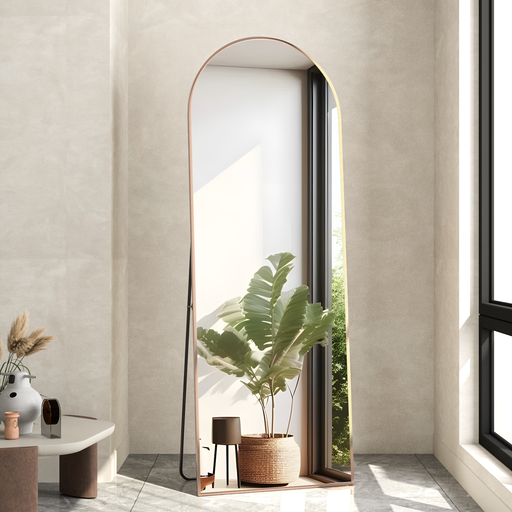
Why this product suits this profile: Measuring 150 × 60 cm, this arched full-length mirror is designed for the bedroom, hallway or living space. It can be used freestanding, hung on the wall or leaned against it.
With three fitting options, you’re less likely to be restricted to a single fixed position. Check that the mirror is stable and securely fixed to the wall before use.
Generous size with an arched shape, plus the flexibility to use it freestanding, hung on the wall or leaned against it.
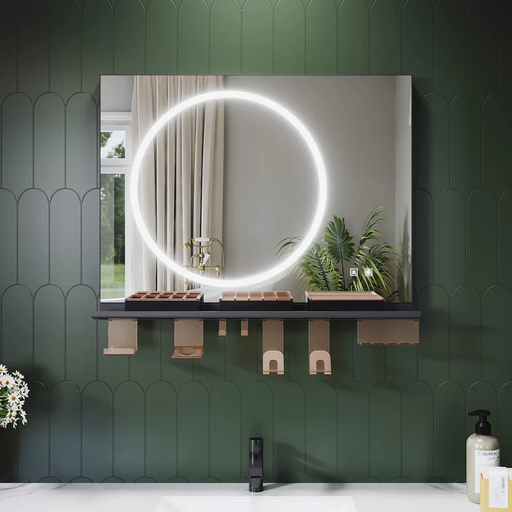
Why this product suits this profile: This model combines LED lighting, a shelf and an anti-fog function, making it suitable for renovations or a busy family bathroom.
The product details specify three colour temperatures, stepless brightness adjustment and a heated anti-fog function. This makes it easy to compare key criteria before buying.
Integrated 120 cm shelf with several holders, 3,000/4,000/6,000 K colour temperatures and an IP65 rating.
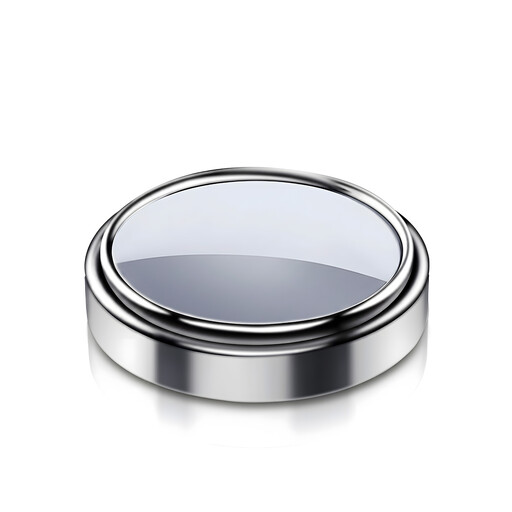
Why this product suits this profile: These two round additional mirrors are designed for cars, SUVs, vans, motorhomes and other vehicles where you want to extend your side view.
The product details explain that the mirror gives a convex view and is intended only as a supplement. Before driving, make sure the adhesive has bonded securely to a clean surface.
360° rotation, 30° angle adjustment and two fitting options, according to the product description.
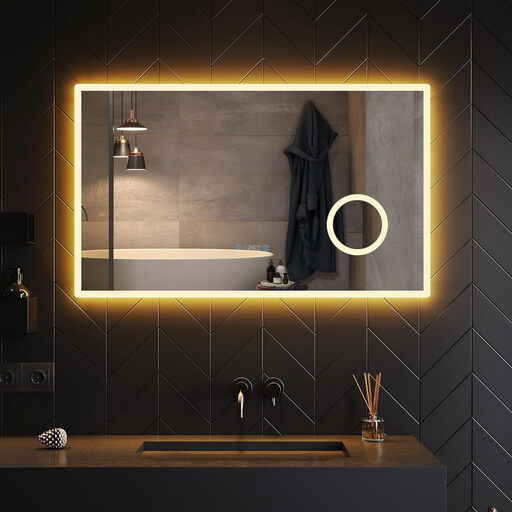
Why this product suits this profile: This wall-mounted model combines LED lighting, touch controls, an anti-fog function, a clock and temperature display, and three-times magnification.
The product information clearly states that the light is intended as supplementary lighting. Check that the stated IP44 rating is suitable for your chosen installation location.
Three colour temperatures, dimmable LED lighting, a separate anti-fog function and 3× magnification.
We’ve put together a complete, regularly updated list of products that meet these strict selection criteria and the safety regulations in force in the EU.
The width should suit your basin and the available wall space. Before buying, also measure the distance from taps, sockets and cupboards, as well as the height at which you want to fit the mirror. A wider model may work well above two basins, provided there’s enough space on the wall.
The actual lifespan depends on factors such as how long the mirror is used, heat dissipation, the power supply and exposure to moisture. Manufacturers’ LED lifespan figures are estimates, not a guarantee of the lifespan of the mirror as a whole. Follow the installation instructions and check the stated IP rating when fitting the mirror.
Consumption mainly depends on the electrical power in watts and how long the mirror is used each day. For example, a 19 W mirror uses around 0.019 kWh if it’s on for one hour a day. For a realistic estimate, compare the wattage of your chosen model with your electricity tariff and how long you expect to use it.