
Lieferung heute & morgen

Qualitätsgarantie

Willkommens-Angebote freischalten: KOSTENLOSE Lieferung | Bis zu 80 % RABATT | Kostenlose 30-Tage-JoyPlus-Testphase
App herunterladen
Deciding to buy a new mountain bike can be overwhelming, given the vast array of models, technical specifications, and intended uses. Whether for the daily commute, leisurely weekend rides, or your first off-road adventures, every rider has unique needs. This guide is designed to offer you clear direction. We focus on objective criteria and present a selection of models designed for different needs and use cases.
To make an informed decision, it helps to understand a few fundamental technical aspects. The following points are crucial for the performance, safety, and longevity of your future bike.
The frame is the heart of any bike, significantly defining its weight, stability, and ride quality. The most common materials are aluminium and steel.
For beginners and all-rounders, an MTB hardtail is often a smart choice. These mountain bikes feature a suspension fork at the front, while the rear triangle is unsuspended (rigid). This design offers an excellent balance of comfort on light trails, efficiency on flat routes, and lower maintenance compared to full-suspension models.
A reliable braking system is essential for safety. A bike with disc brakes offers clear advantages over traditional rim brakes. Mechanical or hydraulic disc brakes deliver consistent and powerful braking performance that hardly fades, even in wet or dirty conditions. This is particularly important if you plan to use your bike all year round, in any weather.
For purely urban traffic and the daily commute, a street-legal electric scooter can be a practical alternative to a bicycle. Models that can reach speeds of up to 45 km/h allow you to get around quickly and represent an eco-friendly alternative to the car. A 45 km/h e-scooter is ideal for anyone who wants to reach their destination quickly and without physical exertion.
Based on the criteria mentioned above, we have compiled a selection of models that are well-suited for different user profiles due to their specific features.
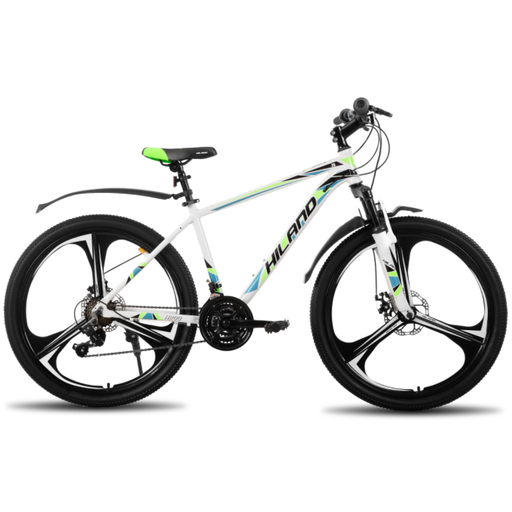
Why It Stands Out: The Hiland H200 Plus combines a lightweight aluminium frame with low-maintenance, single-piece 3-spoke mag wheels. This construction makes it both agile and stable, ideal for entering the world of mountain biking.
Advantages:
Who Is It For? This model is an ideal entry-level mountain bike for adults and teenagers looking for a versatile bike for daily use and recreational rides on paved paths or light trails.
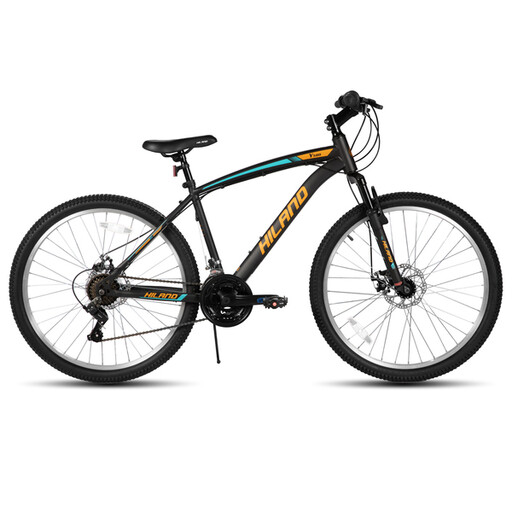
Why It Stands Out: The Hiland Ridge features an extremely robust high-tensile steel frame and larger 27.5-inch wheels. This combination makes it a resilient companion for taller riders and more demanding daily conditions.
Advantages:
Who Is It For? This bike is the right choice for individuals who need a very stable commuter bike or a robust daily rider. It is especially suitable for taller riders who value durability and reliability.
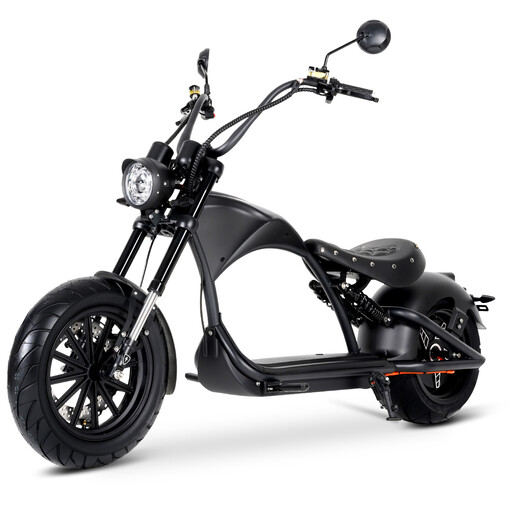
Why It Stands Out: The Mangosteen M1P is not a bicycle, but a high-performance mobility solution for the city. With its street-legal status, a top speed of 45 km/h, and a long range, it is a complete alternative to a car in the urban environment.
Advantages:
Who Is It For? The Mangosteen M1P is aimed at city dwellers and commuters looking for a fast, efficient, and emission-free mode of transport. It is ideal for anyone who wants to combine the convenience of a motor scooter with the benefits of an electric drive.
All models presented here are equipped with reliable braking systems. If you wish to explore more options or specific replacement parts, such as brake pads or complete brake sets, you will find a wide selection in our disc brakes category.
1. What is the difference between a hardtail and a full-suspension mountain bike? An MTB hardtail has a suspension fork at the front, but the rear part of the frame is rigid. This makes it lighter, more efficient on climbs, and lower-maintenance. A full-suspension bike has suspension at both the front and rear, which provides more comfort and control on very rough terrain but also comes with more weight and higher maintenance.
2. Do I need a license for an e-scooter that goes 45 km/h? Yes. To operate an electric scooter of the L1e-B vehicle class, which can travel up to 45 km/h, a valid driver's license is required. Typically, a car license (Class B) or a moped license (Class AM) is sufficient. Additionally, there is a mandatory insurance requirement, which necessitates displaying an insurance plate.
3. What should I look for in an entry-level mountain bike? For beginners, three points are particularly relevant: a sturdy frame that fits your height (aluminium for lightness, steel for robustness), a reliable braking system (ideally disc brakes for consistent performance), and a drivetrain with a sufficient number of gears (e.g., 18 speeds) to be prepared for various inclines.