
Lieferung heute & morgen

Qualitätsgarantie

Willkommens-Angebote freischalten: KOSTENLOSE Lieferung | Bis zu 80 % RABATT | Kostenlose 30-Tage-JoyPlus-Testphase
App herunterladen
The muesli aisle offers a huge selection, and the packaging often promises a nutritious, healthy breakfast. But not every muesli delivers on its promise. On closer inspection, many products turn out to be sugar bombs, having more in common with candy than a balanced start to the day. To help you make an informed decision, we'll highlight the most common pitfalls and show you what to actually look for when buying muesli.
Before you choose a product, it's important to recognise common marketing tactics that often conceal more than they reveal.
healthy breakfast, especially crunchy muesli varieties, contain a significant amount of sugar. It's not uncommon for a 100-gram serving to contain over 20 grams of sugar. This is equivalent to about five to six teaspoons of sugar and can cause your blood sugar levels to spike and crash quickly.muesli without sugar or "no added sugar" doesn't necessarily mean the product is low in sugar. Manufacturers often replace refined table sugar with other sweetening ingredients like agave syrup, rice syrup, honey, or highly concentrated fruit juices. These alternatives are also largely composed of sugar and have a similar effect on the body.To make a conscious choice that aligns with your nutritional goals, you should check three key criteria: the ingredients list, the whole grain content, and the actual sugar content.
The order of the ingredients indicates their proportion in the product. If sugar or one of its many names (e.g., glucose syrup, dextrose, invert sugar syrup, barley malt extract) is listed near the top, the sugar content is high. A look at the nutrition table is essential: the value for "Carbohydrates, of which sugars" should be critically examined. A value over 15 grams per 100 grams indicates a heavily sweetened product.
A high-quality muesli should have a high proportion of whole grains. Whole grain muesli made from oat, spelt, or rye flakes provides complex carbohydrates that ensure long-lasting satiety. It is also rich in fibre, which aids digestion. Look for a fibre content of at least 8 grams per 100 grams. Products like Alnatura Muesli often use a high whole grain content as their base.
fruit muesli) or nuts. This is generally the lower-sugar and lower-fat option, as long as no additional sweeteners are included.Dr. Oetker Vitalis offer a wide selection here. However, this variety is usually higher in calories and sugar.Here are some recommendations tailored to different preferences and nutritional goals.
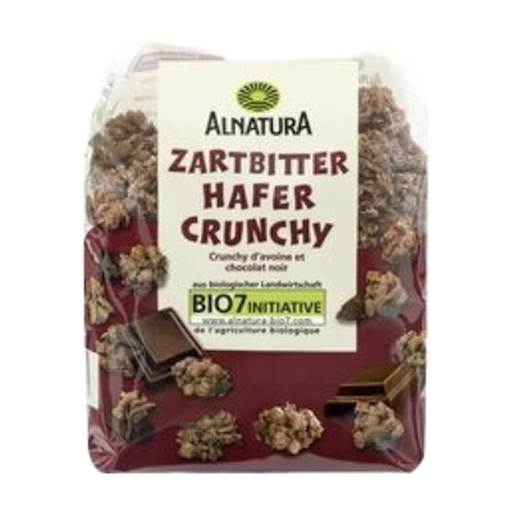
Why This Fits Their Persona: Ideal for those seeking an intense chocolate muesli experience but who also value high-quality ingredients. The combination of dark chocolate and organic quality offers a balanced indulgence.
Although it contains sugar (20g/100g), it's based on whole grain oat flakes (66%) and organic raw cane sugar instead of cheap glucose syrup.
High whole grain content and certified organic muesli quality. The ingredients list is transparent and easy to understand.
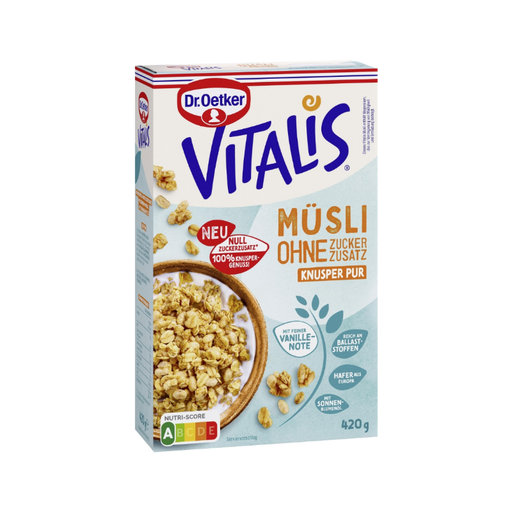
Why This Fits Their Persona: Perfect for anyone actively looking to reduce their sugar intake without sacrificing a crunchy breakfast experience. A straightforward choice for a balanced breakfast.
This product directly addresses the hidden sugar trap. It's a true no-added-sugar muesli, earning it a Nutri-Score A.
No added sugar, a very high fibre content (15g/100g), and a high whole grain content of 61%.
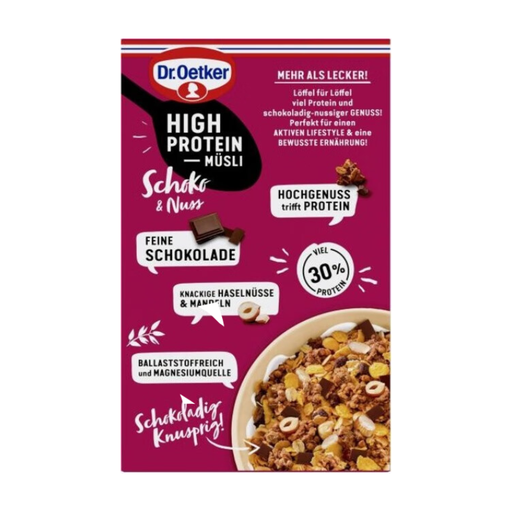
Why This Fits Their Persona: Specifically designed for people with an active lifestyle and increased protein needs. It supports recovery and muscle maintenance after a workout.
The focus here is clearly on functionality. Instead of just providing empty calories, this protein muesli is based on soy protein products (44%) as its main ingredient.
Very high protein content to support fitness goals. The combination with nuts and chocolate ensures an appealing taste.
We've compiled a complete, up-to-date list of products that fully meet these strict selection criteria.
Classic muesli is a raw mixture of cereal flakes, dried fruits, and nuts. In contrast, granola is baked. The flakes are mixed with fat (e.g., sunflower oil) and sweeteners (e.g., sugar, honey) and roasted in the oven, creating crunchy clusters. This typically results in a higher calorie, fat, and sugar content.
Look for the "no added sugar" label. Even so, always check the nutrition table under "Carbohydrates, of which sugars." A low value (under 5g per 100g) indicates a low-sugar product. Also, check the ingredients list for sweeteners like agave syrup or rice syrup, which are not declared as "sugar" but have a similar effect.
An organic muesli guarantees that the ingredients were grown without synthetic pesticides and fertilisers. This is a mark of agricultural quality. However, it does not automatically mean the product is low in sugar or calories. An organic granola can contain just as much sugar and fat as a conventional product. The health value still depends on the overall nutritional composition.