
Lieferung heute & morgen

Qualitätsgarantie

Willkommens-Angebote freischalten: KOSTENLOSE Lieferung | Bis zu 80 % RABATT | Kostenlose 30-Tage-JoyPlus-Testphase
App herunterladen
The right nappy should fit securely, absorb moisture and make your daily routine as simple as possible. Yet buying them often leads to unnecessary expense: a pack that's too big may go unused, the wrong size can cause pressure marks or leaks, and marketing claims about "maximum" dryness are hard to judge without looking at specific product features.
The size guide isn't an exact growth chart – it's a guideline. A baby weighing 7 kg may need a different size to another child of the same weight, depending on their body shape. What really matters is:
A nappy that's too small can leak at the legs or back. A nappy that's too big, on the other hand, may not seal properly.
Bulk packs of nappies often reduce the price per nappy, but they're not automatically better value. With newborns especially, weight and body shape change quickly. For size 1 nappies or size 2 nappies, it's best to start with a smaller pack or a modest supply. Only once the fit and skin compatibility work well in daily use does a larger pack make sense.
Labels like "extra dry", "gentle" or "leak-proof" shouldn't be taken at face value. What's more meaningful are specific features: an absorbent core, elasticated leg cuffs, the fastening system, a wetness indicator and the stated weight range. Even with nappies for sensitive skin, remember: dermatologically tested or free from certain fragrance allergens is a product feature, not a guarantee of individual tolerance.
Start by checking the weight range on the packaging. The sizes available typically run from size 1 nappies through size 2 nappies, size 3 nappies and size 4 nappies up to size 5 nappies, size 6 nappies and size 7 nappies.
A practical guide based on the products available:
These values are product-specific, so always check the details on the pack you're buying. It's time to move up a size if the nappy regularly leaks, the fastenings only just close at the edges, or you see marks on your baby's tummy and legs.
The absorbent core is usually made from wood pulp and superabsorbent polymers, which take in and lock away moisture. For everyday use, side leak barriers, elasticated leg cuffs and a good back seal are also important. For night-time or longer trips, models with a substantial absorbent core and an extra back pocket can be handy.
The term leak-proof nappies should be understood as a reference to the design, not an absolute guarantee. Actual protection also depends on size, fit, how often you change and your child's movement.
With nappies with a wetness indicator, a strip changes colour when wet. This can be especially helpful with newborns, but it doesn't replace regular checks. Wet or soiled nappies should be changed promptly.
According to product information, the Pampers Premium Protection models are dermatologically tested, certified to OEKO-TEX STANDARD 100 and, per the manufacturer, contain no intentionally added EU perfume allergens as listed in the relevant EU cosmetics regulation. These details describe the product and do not constitute a medical guarantee of tolerance. If redness or irritation occurs, stop using the product and seek medical advice if symptoms persist.
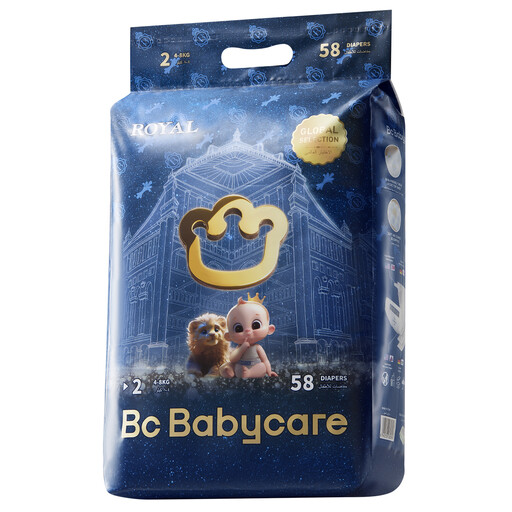
Why this product fits the profile: The pack of 58 nappies is ideal for trying out before buying a larger supply. The stated weight range is 4 to 8 kg.
The modest pack size limits the risk of wasted purchases when sizes change quickly.
According to product information: absorbent SAP core, 360-degree leak protection and three visible strips as a wetness indicator.
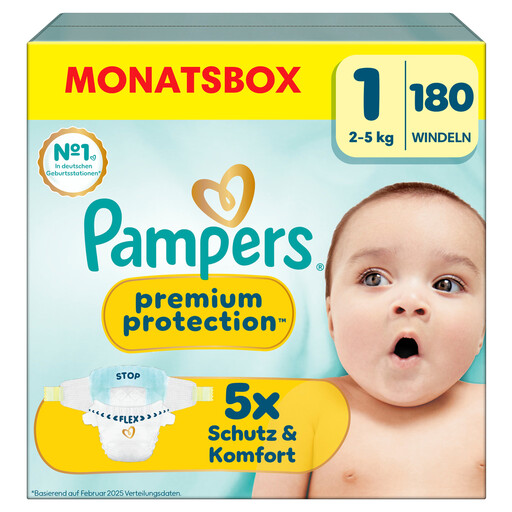
Why this product fits the profile: For newborns who need clearly defined features such as a wetness indicator, elasticated tummy panel and back seal.
The stated range of 2 to 5 kg makes size checking easier; the wetness indicator makes changing time more visible.
According to manufacturer information: Derma-Comfort inner layer, Stop-&-Protect pocket, leg cuffs and OEKO-TEX STANDARD 100.
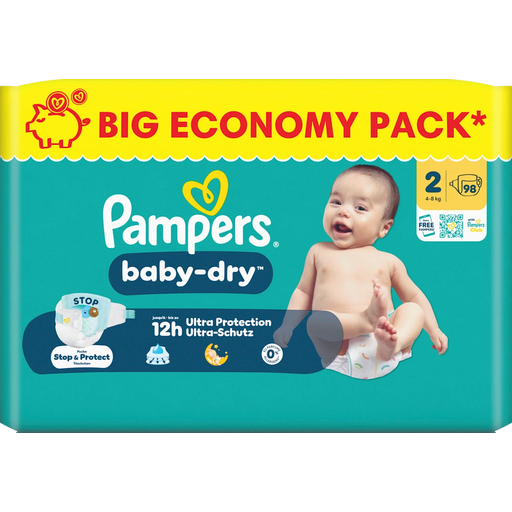
Why this product fits the profile: The bulk pack is aimed at households with a regular nappy need and a child who already fits securely in size 2.
The decision to buy the bulk pack should only come after a successful size trial, so the supply doesn't go unused.
According to the product description: 360-degree stretch waistband, double leg cuffs, absorbent core and Stop-&-Protect pockets.
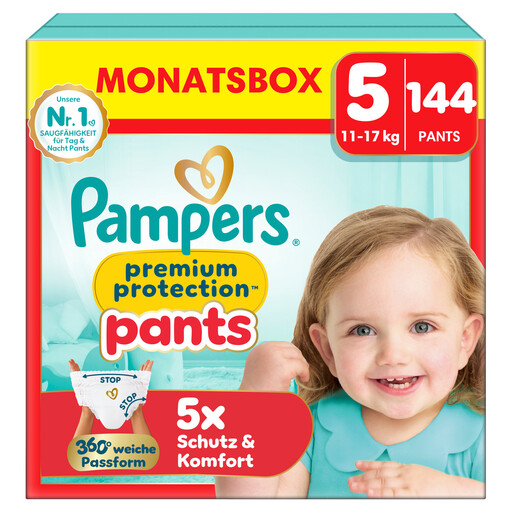
Why this product fits the profile: Pants can be pulled up over the legs and opened at the sides, which is ideal for children who wriggle during changing.
The 360-degree waistband and soft leg cuffs support the fit during movement; for leak protection, the cuffs must sit on the outside.
According to product information: side tear for removal, adhesive tabs for disposal and a Stop-&-Protect pocket at the back.
We've put together a full, regularly updated list of products that meet these strict selection criteria and the safety regulations in force in the EU.
Wet or soiled nappies should be changed promptly. A wetness indicator can help you check at a glance, but it doesn't always show the full fill level. With newborns, regular checks are especially important because they tend to pass small amounts frequently.
The specific shelf life is printed on the packaging. For the Pampers products mentioned, the manufacturer states a typical shelf life of 36 months from the date of manufacture. Unopened packs should be stored in a dry, cool place away from direct sunlight. Damaged or damp nappies should not be used.
That can only be judged by the price per nappy. Divide the pack price by the number of nappies and then check whether the size will actually fit for several weeks. With size 2 nappies, a bulk pack can make sense if weight and fit are stable. For fast-growing babies, a smaller pack offers more flexibility to begin with.