
Lieferung heute & morgen

Qualitätsgarantie

Willkommens-Angebote freischalten: KOSTENLOSE Lieferung | Bis zu 80 % RABATT | Kostenlose 30-Tage-JoyPlus-Testphase
App herunterladen
A notebook needs to be reliable in everyday life: in class, at university, in the office, for journalling or when you’re out and about. But eye-catching designs and broad marketing claims don’t automatically mean you’ll find the right one. Often, it’s only after buying that you discover the format is too small, the paper isn’t suitable for your pen, or the cover isn’t practical.
An A5 notebook offers considerably more writing space than an A6 notebook, but it also takes up more room in your bag or rucksack. The paper size alone doesn’t always tell you how much space you can actually use. Spiral bindings, wide margins or a thick cover can all affect how practical a notebook is.
The figure in g/m² describes the paper’s weight per square metre; it doesn’t automatically tell you how it performs with every type of pen. 70 g/m² paper is light and practical for notes. 90 or 100 g/m² paper is thicker, but can increase the overall weight.
If you write with a fountain pen, rollerball or marker, also check the product details for information about how the paper handles ink. For a lined notebook, it’s also worth checking that the lines are clear enough and spaced far enough apart. A squared notebook can be more practical than a classic lined one for tables, maths and sketches.
A notebook with an elastic closure, bookmark or pen loop can make everyday use easier. What matters, though, is whether these features suit the way you plan to use it. An elastic closure keeps loose pages together, while a pen loop only fits certain pen sizes. A pocket inside the back cover is handy for a few loose sheets, but it won’t replace a separate folder.
A hardback notebook has a sturdy cover that protects the pages from pressure and creasing. A softcover notebook is usually more flexible and can be easier to fit into a full bag. If you often write in different places, a binding that lies flat is also worth considering.
Compare more than just A5 and A6: check the dimensions, page count and weight too. An A5 notebook with 192 pages is suitable for extensive notes, but it’s less compact than an A6 model with the same page count. With spiral notebooks, the binding can take up extra space.
Choose a ruling that suits how you’ll use the notebook:
A spiral notebook can often be opened wide and lie flat on a desk. Perforated pages make it easy to remove individual sheets neatly. However, check whether this means fewer permanently bound pages are available.
A hardback is a good choice if you’ll regularly carry the notebook in a bag or use it as a journal over a longer period. A softcover often reduces weight and bulk. Useful features include:
Also check the care instructions. Keep paper and small parts such as ribbons or elastic closures away from moisture. For products with small components, follow the manufacturer’s safety instructions.
The recommendations below group specific models by format, features and typical use.
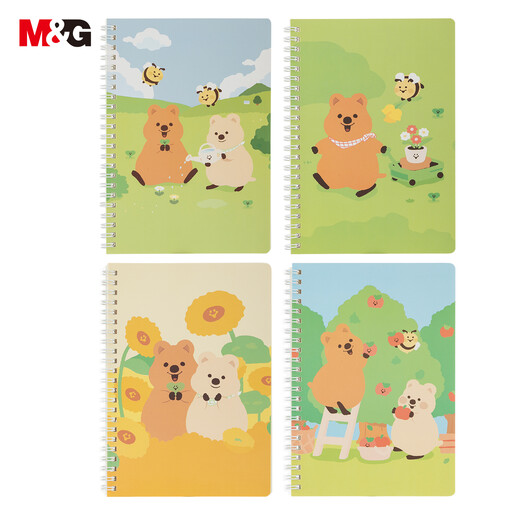
Why this product suits you: This set contains four A5 spiral notebooks with lined pages, ideal for keeping school subjects, projects or personal topics separate.
The four separate notebooks save you from having to carry one large, heavy notebook for different tasks. The spiral binding makes it easy to turn the pages.
A5 format, lined pages, spiral binding and four notebooks per pack.
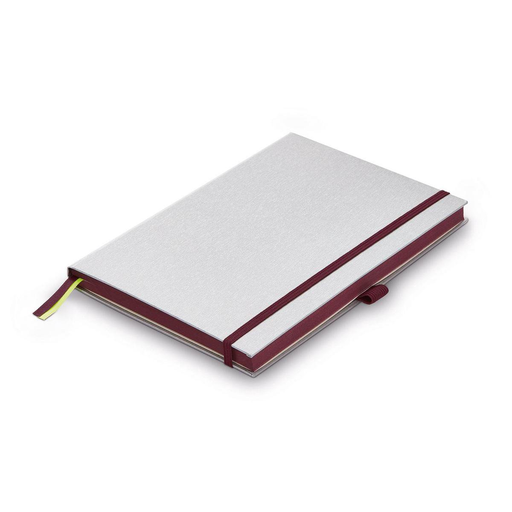
Why this product suits you: The compact A6 format combines a hardback cover with 192 pages of 90 g/m² paper and several features for using on the go.
The hardback cover protects the pages when you’re carrying it around. The product details specify acid-free paper and a pocket inside the back cover.
192 pages, two bookmarks, a pen loop, an elastic closure and eight perforated sheets, according to the product description.
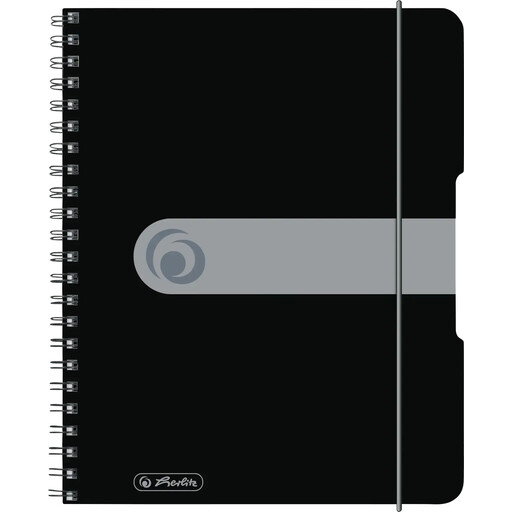
Why this product suits you: This notebook is ideal for structured notes, calculations and documents that you may want to remove or file away.
The twin-wire binding lies flat, while the micro-perforation and punched holes make it easier to remove and file pages.
A5 format, squared pages with a white border, elastic closure, micro-perforation and six-hole punching.
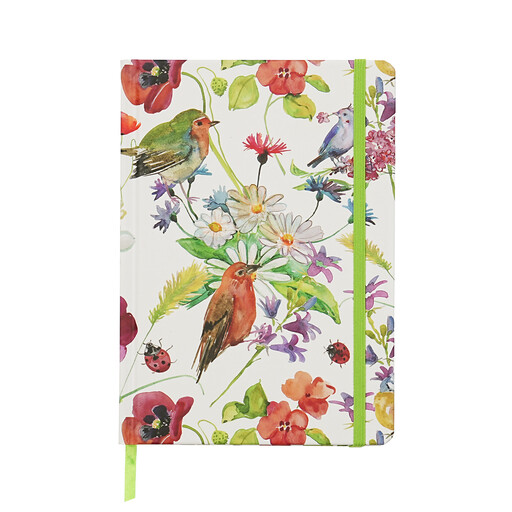
Why this product suits you: This A5 journal offers plenty of room for longer texts, personal entries and creative ideas. Its sturdy cover is designed for regular use.
The product details specify 100 g/m² paper, a bookmark and an elastic closure. You can mark important pages and keep the notebook closed when carrying it around.
A5 hardback, 192 pages or 96 sheets, lined 100 g/m² paper and botanical cover designs.
We’ve put together a complete, regularly updated list of products that meet these strict selection criteria and fully comply with the safety regulations in force in the EU.
For quick reminders, sticky notes, memo pads or Sticky Notes are more practical than a bound notebook. A set of three pads with 50 sheets each is suitable for a desk, monitor or planner. Larger sets, such as twelve pads with 100 sheets each, are useful if you regularly jot down phone messages, shopping lists or tasks.
For self-adhesive notes, check which surfaces they’re designed for. They stick best to clean, dry surfaces. The Pelikan Sticky-Note-Cube product is listed as 75 × 75 mm, with 400 sheets and FSC Mix paper. The manufacturer also specifies a water-based, solvent-free adhesive. These details relate to the individual product description and shouldn’t be taken as a general assessment of its environmental impact.
An A5 notebook is usually more practical for detailed lecture notes, as it gives you more writing space. A6 is better suited to short summaries, to-do lists or notes on the go.
How long it lasts depends on the page count, binding, cover and how you carry it. A hardback can protect the pages in your rucksack, while a softcover is lighter and more flexible. Moisture, excessive bending and overfilled bags can damage the paper and binding more quickly.
For individual reminders and short-term tasks, sticky notes usually use less material. A bound notebook is better organised for ongoing notes, journalling or information you need to find again. So the right choice depends on how you plan to use it, not just the price per item.