
Same-day & Next-day Delivery

Quality Guaranteed

Unlock Your Welcome Offers: FREE Delivery | Up to 80% OFF | Free 30-day JoyPlus trial
Download the APP
Buying oats might seem like a simple task. But the variety on supermarket shelves can be overwhelming, and not every product lives up to its packaging's promise. As your Joybuy Product Recommendation Officer, I'm here to help you navigate the jungle of marketing terms and make an informed decision that fits your needs. Before you buy, you should be aware of a few common pitfalls.
The 3 Most Common Pitfalls When Buying Oat Products:
To find the right oats for your purpose, you should check two fundamental criteria: the type of flake and the processing method.
The texture and preparation time of your oat meal depend directly on the type of flake. Choosing the right one is crucial for the final result.
Besides texture, the processing method and specific properties are relevant for many buyers.
Based on these objective criteria, we have put together a selection of products suitable for different needs and use cases.

Why This Fits Their Persona: Ideal for those who appreciate a classic, nutritious, no-frills breakfast. The coarse texture provides a good bite in muesli and makes for a filling porridge.
This product is 100% whole grain rolled oats with no added sugar or flavourings. This allows you to bypass the trap of hidden sweeteners found in ready-made mixes.
High in fibre (11g per 100g) and versatile enough for traditional preparations like porridge, muesli, or baking.

Why This Fits Their Persona: Perfect for individuals with celiac disease or gluten sensitivity who are looking for a safe yet nutritious oat option for their healthy breakfast.
This product is explicitly certified as gluten-free oats. It avoids the risk of cross-contamination present in standard oats.
Guaranteed gluten-free through controlled cultivation and processing. The tender texture makes for a quick, creamy porridge.
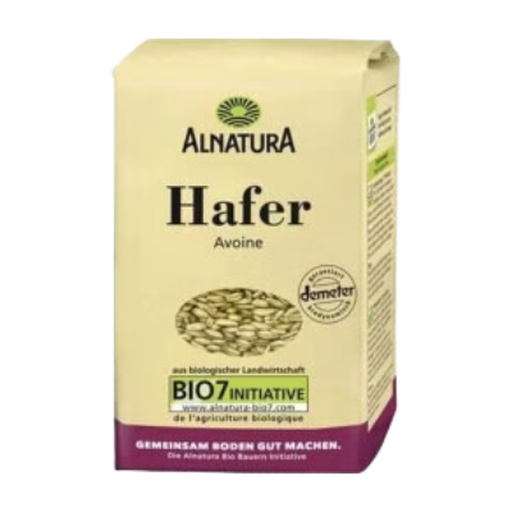
Why This Fits Their Persona: For creative cooks who want to use oats not just for breakfast, but also in savoury dishes, salads, or for baking bread.
This product is the unprocessed base, bypassing any additives. You get the pure oat kernel in Demeter quality, giving you full control.
Maximum versatility for sweet and savoury dishes. The nutty flavour and firm texture make it an ideal substitute for rice or groats.
We have compiled a complete, up-to-date list of products that fully meet these strict selection criteria and quality standards.
The main difference lies in the manufacturing process and the resulting texture. Rolled oats are made by steaming and rolling whole oat groats, making them larger and chewier. They are well-suited for muesli. Instant oats are made from more thinly rolled or cut oat groats, are finer, and dissolve more quickly when cooked, resulting in a creamier porridge.
Oats themselves do not contain gluten but a protein called avenin, which is tolerated by most people with celiac disease. The problem is the frequent contamination with wheat, barley, or rye during cultivation, harvesting, and processing. Therefore, individuals who must follow a strict gluten-free diet need to use products that are explicitly labelled as 'gluten-free'.
Oats should be stored in a cool, dry, and dark place. After opening, it is advisable to transfer them to an airtight container. This protects them from moisture, foreign odours, and pests, and ensures their nutty aroma is preserved. Stored this way, they typically last for many months.