
Lieferung heute & morgen

Qualitätsgarantie

Willkommens-Angebote freischalten: KOSTENLOSE Lieferung | Bis zu 80 % RABATT | Kostenlose 30-Tage-JoyPlus-Testphase
App herunterladen
The shift to a home office or long study days at a desk makes one thing clear: choosing the right chair is not a minor detail, but a fundamental decision for comfort and productivity. However, the office chair market is overwhelming. Many products are advertised as "ergonomic" but fail to deliver on their promises in practice. This guide will show you which crucial features to look for and how to avoid common purchasing traps.
Before diving into the positive features of a chair, it's wise to understand the most common flaws that lead to dissatisfaction and additional costs.
To avoid a bad purchase, focus on verifiable, technical features rather than advertising claims. A good ergonomic office chair should excel in these three areas.
The heart of a good office chair is its mechanism. A simple tilt mechanism only reclines the entire seat shell backwards. A synchronous mechanism is superior, as it moves the backrest and seat in a coordinated ratio. This promotes circulation and relieves pressure on the intervertebral discs. A chair for long sitting periods should ideally feature such a mechanism. Equally crucial is an office chair with lumbar support. This support in the lower back area should be height-adjustable to perfectly match the natural curve of your spine.
The correct seat height is achieved when your feet are flat on the floor and your upper and lower legs form an angle of about 90 degrees. The armrests should be adjustable so that your shoulders are relaxed and your forearms can rest horizontally on the desktop. An office chair with flip-up armrests offers additional flexibility: it can be pushed completely under the desk to save space, which is particularly advantageous in a multifunctional home office swivel chair.
The chair's foundation is its base. Models made of steel or aluminium are generally more durable and stable than those made of simple plastic (nylon). Pay attention to the specified maximum static load capacity. A value of 120 kg or more is an indicator of a robust construction. The casters should be appropriate for your flooring: soft casters for hard floors (parquet, laminate) and hard casters for soft floors (carpet).
Based on these objective criteria, we have identified several models suitable for different needs and work styles.
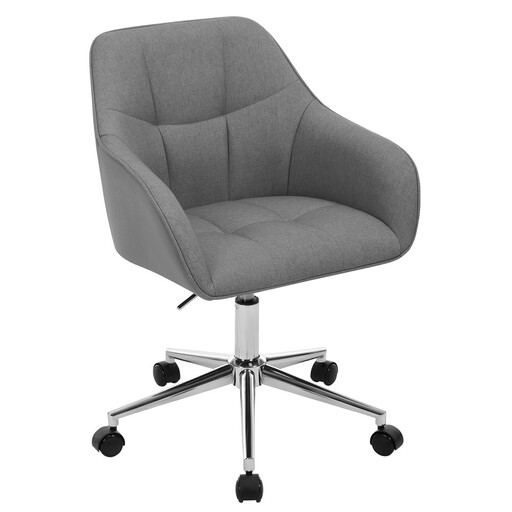
Why This Fits Their Persona: Ideal for users who want a chair that blends seamlessly into their living space without looking like traditional office furniture. It's suited for moderate work hours and prioritises aesthetics.
It avoids the unstable base trap with a chrome-plated steel base and a high stated load capacity of 150 kg, which is not a given in this design category.
Combines a homey design (linen look) with a robust construction. The integrated armrests and ergonomic shell provide solid foundational comfort.
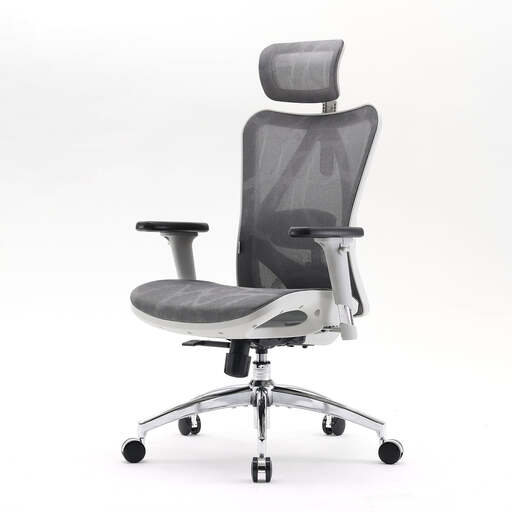
Why This Fits Their Persona: Designed for individuals who spend eight hours or more at their desk daily. The focus is on maximum adjustability and breathable materials to prevent fatigue.
This chair debunks the empty "ergonomics" promise with a multitude of specific adjustments: adjustable lumbar support, 3D armrests (height, depth, rotation), and an adjustable headrest.
The breathable mesh on the backrest and seat ensures excellent air circulation. The aluminium alloy frame provides stability with less weight.
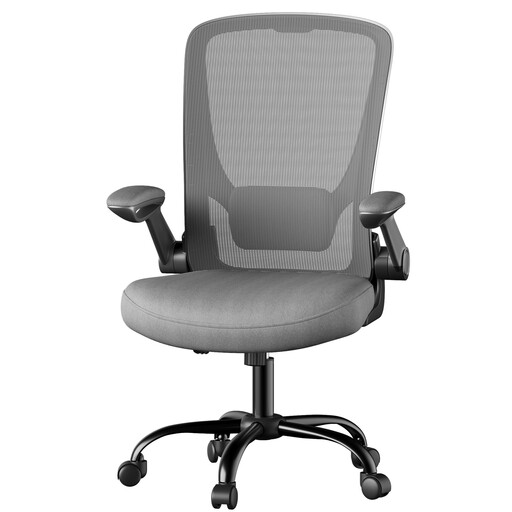
Why This Fits Their Persona: Perfect for students or home office users in smaller apartments where the workspace doubles as a living area. The space-saving feature is a critical criterion here.
It addresses the often-overlooked issue of bulky chairs. The flip-up armrests are not a gimmick but a practical solution for sliding the chair completely under the desk to save valuable space.
Offers a solid set of basic ergonomic features, including adjustable lumbar support and breathable mesh, combined with the crucial space-saving function of the flip-up armrests.
We have compiled a complete, up-to-date list of products that fully meet these strict selection criteria and all applicable safety regulations.
The lifespan of an office chair depends heavily on the material quality, frequency of use, and the user's body weight. A model with a steel or aluminium base and a high-quality gas lift can last 5 to 10 years with daily use. Cheaper models with plastic components often show signs of wear after just 1 to 2 years. Regularly tightening the screws can extend the chair's stability and lifespan.
No single material is universally better; the choice depends on personal preference and usage. Mesh office chairs offer excellent breathability, which is particularly beneficial during long sitting periods or in warmer environments as it prevents heat buildup. Padded chairs (e.g., with fabric or velvet) are often perceived as softer and more comfortable, but they can be less air-permeable.
The lumbar support is correctly positioned when it gently supports the natural S-curve of your lower spine. Sit upright and push your pelvis all the way back against the backrest. Adjust the support's height until it rests in your lumbar curve. You should feel a light, supportive pressure that is not uncomfortable or forces you into an unnatural posture.