
Lieferung heute & morgen

Qualitätsgarantie

Willkommens-Angebote freischalten: KOSTENLOSE Lieferung | Bis zu 80 % RABATT | Kostenlose 30-Tage-JoyPlus-Testphase
App herunterladen
The selection on the supermarket shelf can be overwhelming: dozens of bottles, various origins, and terms like "extra virgin" or "cold-pressed". Buying the right olive oil depends heavily on its intended use. An oil that's perfect for a fresh salad isn't necessarily suitable for high-heat searing.
This guide is designed to bring clarity. We'll explain the key quality characteristics and provide you with practical recommendations to help you find the perfect olive oil for your kitchen.
To make an informed decision, three criteria are particularly important: the quality grade, the intended use, and the origin.
In the EU, olive oil quality is divided into grades. The highest level is extra virgin olive oil.
For pure enjoyment, such as in an olive oil for salad, extra virgin olive oil is the top choice.
Not every olive oil is suitable for every temperature. The smoke point is the crucial metric here—the point at which an oil begins to smoke and break down.
The origin shapes the oil's flavour. Italian olive oil is often known for its grassy and peppery notes, while Greek olive oil frequently tastes milder and fruitier.
Look for seals that provide additional assurance:
Based on these criteria, we have curated a selection of olive oils for various uses.
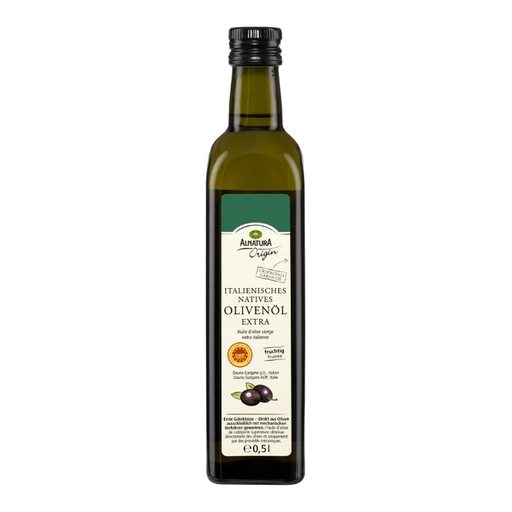
Why it stands out This oil from Alnatura offers a guaranteed origin from organic cultivation in the Dauno Gargano region of Italy. It is a classic extra virgin olive oil that scores points for its versatility in everyday cooking.
Advantages
Who it's for Ideal for health-conscious consumers looking for a reliable and versatile organic olive oil for daily use in Mediterranean cuisine.
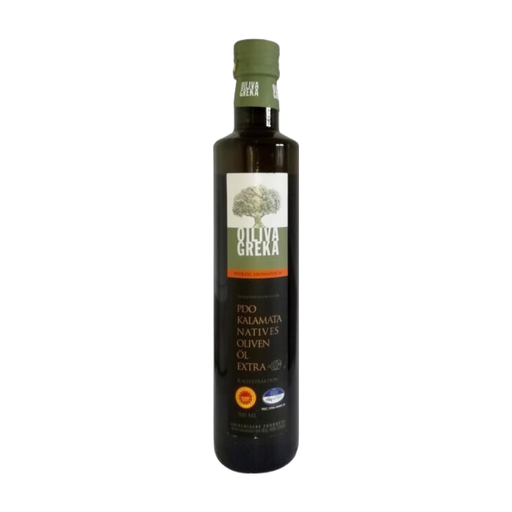
Why it stands out This oil bears the "Protected Designation of Origin" (PDO) seal for the Kalamata region in Greece. This guarantees an authentic flavour, typical of the terroir of this famous olive-growing region.
Advantages
Who it's for For home cooks and connoisseurs seeking a characterful Greek olive oil with a traceable origin to add the final touch to their dishes.

Why it stands out This product from Bertolli is specifically designed for cooking at high temperatures. It is a blend of refined and virgin olive oils that, according to the manufacturer, can be heated up to 195°C (383°F).
Advantages
Who it's for A practical choice for anyone who needs a stable and reliable oil for searing meat, fish, or vegetables at high heat.
If you haven't found the right oil for your needs yet, or if you'd like to compare more alternatives, our wide selection features products for every taste and purpose.
Explore our entire range of salad oils and find the perfect product for your kitchen.
You can recognise a high-quality olive oil by several objective characteristics: the grade extra virgin olive oil, a precise origin (ideally a specific region rather than just a country), a recent harvest or bottling date, and a dark glass bottle that protects the oil from light.
Yes, it's possible, but primarily for gentle frying and sautéing at low to medium temperatures. For high-heat searing, special frying oils with a higher smoke point, like the featured Bertolli product, are a safer and better choice as they are more heat-stable.
The term cold-pressed, or the more technically correct term "cold-extracted," describes a purely mechanical production process. The olive paste is processed at a temperature below 27°C (80.6°F). This gentle method is a prerequisite for the "extra virgin olive oil" classification and serves to preserve its valuable aromas and nutrients.