
Lieferung heute & morgen

Qualitätsgarantie

Willkommens-Angebote freischalten: KOSTENLOSE Lieferung | Bis zu 80 % RABATT | Kostenlose 30-Tage-JoyPlus-Testphase
App herunterladen
A storage ottoman promises to solve two common living space problems: a lack of guest seating and everyday clutter. However, not every model lives up to its promise. Many buyers quickly discover that the weight capacity was overstated, the fabric is wearing out, or the folding mechanism is losing its stability. This guide will help you avoid these pitfalls and make an informed decision.
Before we dive into the selection criteria, it's important to understand the typical flaws that often only become apparent after the purchase.
To avoid buyer's remorse, you should carefully examine three core parameters. These will determine the longevity and functionality of your new piece of furniture.
The foundation of any ottoman is its frame. There are two common options here:
The load capacity should always be considered in the context of its intended use. For something used purely as a footrest, a lower weight limit is sufficient. However, if the ottoman will be used regularly as a seat, a value of at least 130 kg is a good benchmark for a single person.
The upholstery defines not only the look but also the feel and durability.
A good upholstered storage ottoman combines a durable cover with shape-retaining padding on the lid.
Think carefully about what you want to use the ottoman for.
Here are three recommendations tailored to different needs and interior styles.
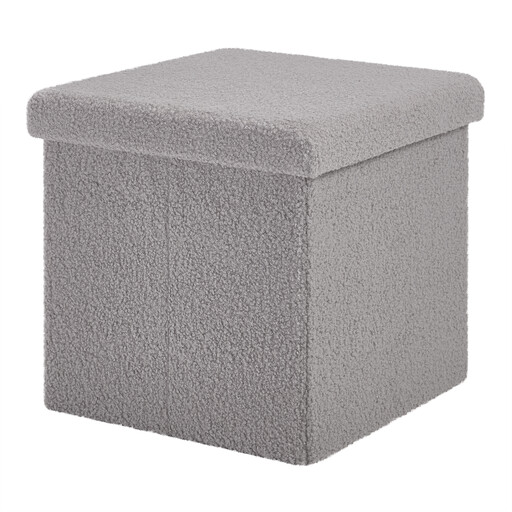
Why This Fits Their Persona: Ideal for anyone seeking a multifunctional and space-saving solution. The foldable design allows for easy storage, while the set of two offers flexibility for different rooms or as a combined seating group. The teddy fleece cover is modern and low-maintenance.
Addresses the pitfall of unstable folding designs by using a frame made of E1 grade MDF panels and a clearly defined load capacity of up to 200 kg according to the manufacturer, indicating a solid construction.
Very high load capacity for a foldable ottoman; practical set of 2; space-saving when not in use.
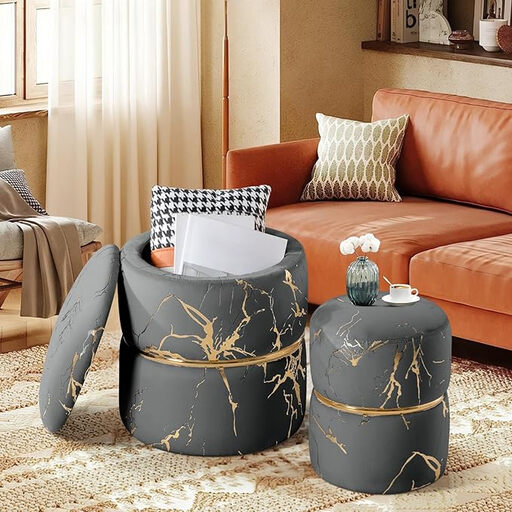
Why This Fits Their Persona: Perfect for users who prioritise elegant design. The round shape and soft velvet cover make this ottoman a chic accent in the living room or bedroom. The stackable set of two is both decorative and functional, ideal as a vanity stool or a side pouf.
Sidesteps the trap of low-quality materials by using a sturdy wooden frame instead of basic MDF and a velvet velour described as skin-friendly. This suggests higher material and manufacturing quality.
Elegant velvet look; clever, space-saving stacking design; sturdy wooden frame.
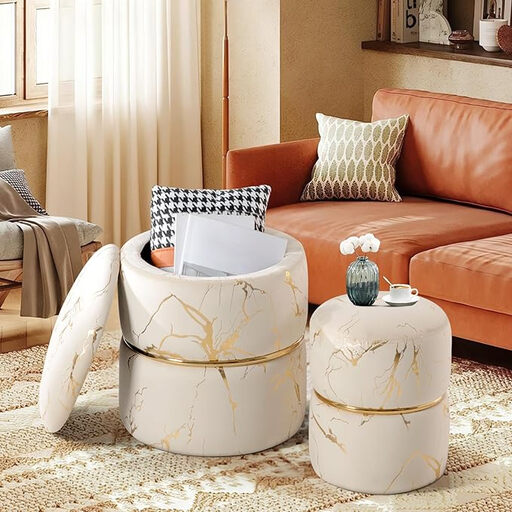
Why This Fits Their Persona: For those who love the cosy and trendy bouclé look. This ottoman brings texture and warmth to any room. Since it arrives fully assembled and features a sturdy wooden frame, it's a convenient and durable choice for a stylish home.
Prevents the problem of poor durability by relying on a robust wooden frame and requiring no assembly, which eliminates potential instability from incorrect setup. The bouclé velvet is a modern and often hard-wearing material choice.
Trendy bouclé cover for a cosy atmosphere; no assembly required; durable construction with a wooden frame.
Some ottomans also feature a lid that can be flipped over to be used as a tray. We've compiled a selection of models that offer this practical function.
1. How much weight can a storage ottoman really hold? The stated load capacity (e.g., 135 kg or 200 kg) typically refers to a static, evenly distributed load. For everyday use, which involves dynamic loads, the frame's construction is crucial. A model with a solid wooden frame or high-quality, thick MDF panels is better suited for regular use as a seat than an ottoman with thin walls.
2. Can a foldable storage cube be used daily? Yes, high-quality foldable models are designed for daily use. The critical component is the base plate that is inserted into the cube to stabilise it. Ensure this plate is thick and fits snugly. If the ottoman is stable and doesn't wobble after assembly, it is suitable for daily use as a seat or footrest.
3. How do I care for velvet or teddy fabric upholstery? For most stains, a slightly damp, lint-free cloth is sufficient. Gently dab the stain instead of rubbing. For general maintenance, the cover can be regularly vacuumed with a soft brush or an upholstery attachment on a low setting to remove dust and loose particles. Avoid harsh cleaning agents, as they can damage the colour and fibres.