
Lieferung heute & morgen

Qualitätsgarantie

Willkommens-Angebote freischalten: KOSTENLOSE Lieferung | Bis zu 80 % RABATT | Kostenlose 30-Tage-JoyPlus-Testphase
App herunterladen
Plant pots are more than decorative containers for houseplants, herbs or flowers. They also affect how much room the roots have, where excess water drains away and whether a spot on your balcony, terrace or windowsill is suitable. If you choose solely based on colour or design, you may only discover after buying that the pot is too heavy, too small or unsuitable for outdoor use.
A flower pot without a drainage hole cannot reliably remove excess watering. Particularly with sensitive plants and regular watering, water can collect around the roots. So look for the description “plant pot with drainage” or a removable drip tray.
Important: A cachepot is primarily a decorative outer container. In many cases, the actual plant pot should still have a drainage hole. With large planters, a suitable inner pot or a lining may also be required.
“Suitable for indoor and outdoor use” does not automatically mean that a product is suitable for frost. Check the details for UV resistance, moisture resistance and temperature range. A planter for the terrace should also be placed on a level, stable surface and protected in extreme weather conditions.
The external dimensions do not tell you how much compost the pot can actually hold. Wall thickness, shape and a necessary inner pot reduce the usable volume. Stability is also crucial for tall plants: a narrow, tall pot can tip over more easily in the wind than a wider model.
Compact flower pots are sufficient for small succulents, herbs or cuttings. The MADLAND pots in this selection each have a diameter of 16.5 cm and are offered as a set of three with matching saucers. For large houseplants or to divide a room visually, elongated planters may be more suitable. The black Beliani MYRA measures 60 × 29 × 30 cm and has a stated capacity of 42 litres.
Before buying, you should measure:
Ceramic flower pots such as the Yuri Ceramic Planter are usually heavier and well suited to indoor spaces, but they need a secure, level position. According to the product details, the Yuri Ceramic Planter is made from stoneware and measures approximately 14 × 14 × 14 cm. Ceramic is susceptible to impact and should not be dropped.
Fibre, stone and polyresin blends can offer a lower empty weight than solid materials for large planters. The ABDERA model is made from a blend of stone, polyresin and fibreglass and is listed as having UV and moisture resistance. The pre-formed opening can be drilled if required or sealed with the supplied plug.
A self-watering plant pot has a water reservoir from which the compost or plant can draw water. This does not automatically eliminate all maintenance: the reservoir, compost and roots still need to be checked regularly. Make sure the water passage is not blocked by compost or roots.
With pots that have a drainage hole, a saucer protects furniture and flooring from water stains. Excess water should be removed from the saucer after watering. This is particularly important for ceramic flower pots placed on wood, laminate or delicate windowsills.
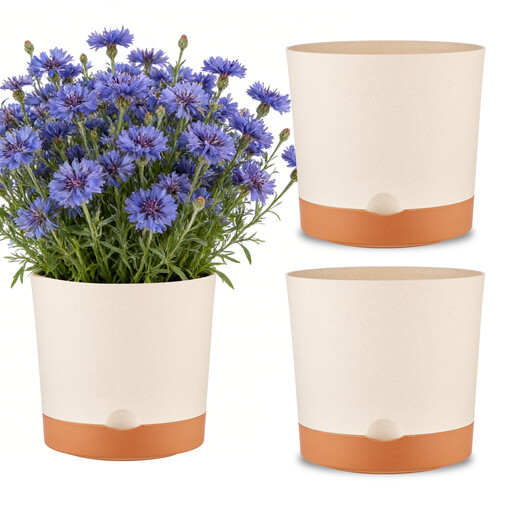
Why this product suits the profile: The set contains three equally sized plant pots with matching saucers, making it suitable for herbs, succulents or small houseplants on a windowsill or balcony.
The integrated water supply and saucers make watering easier to manage than with a decorative pot without a clearly defined collection system. However, the reservoirs must not be overfilled for extended periods.
Set of three, 16.5 cm diameter, beige plastic construction and matching saucers.
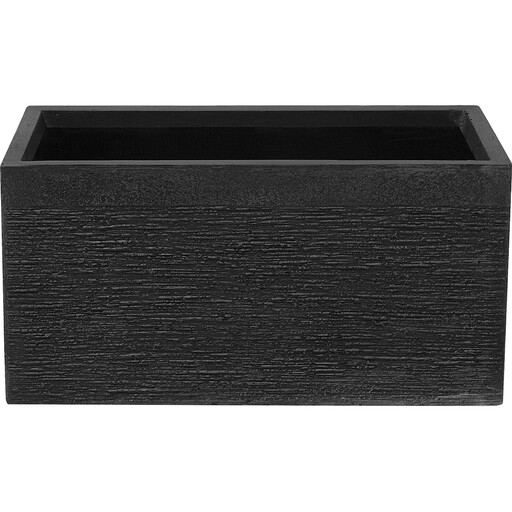
Why this product suits the profile: The elongated shape can be used as a room divider indoors or as a planted privacy screen on a terrace.
Two drainage holes are specified. According to the product information, an inner pot or lining is required when using compost, allowing water to be channelled away effectively.
42-litre capacity, black rectangular shape, UV resistance and a stated temperature resistance from -20 °C to 40 °C.
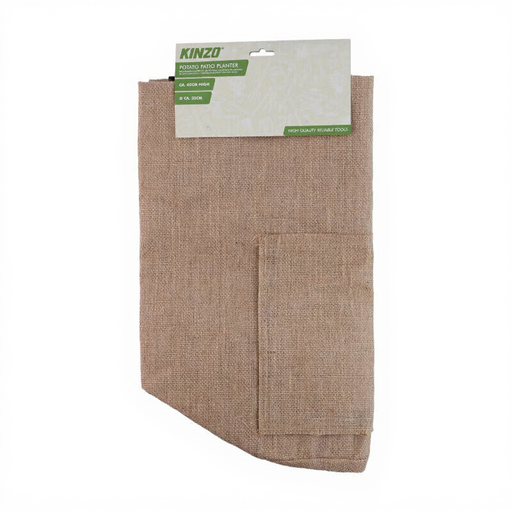
Why this product suits the profile: This potato planter is designed for balconies, terraces and small outdoor spaces, making it ideal for anyone who wants to grow vegetables while saving space.
The stated design takes drainage and ventilation into account. The PE material is lightweight, but the position should still be chosen before filling the planter with compost and plants.
35 cm diameter, 45 cm height, PE material and a product weight of 330 g.
We have put together a complete, regularly updated list of products that fully meet these strict selection criteria and the safety regulations applicable in the EU.
A black plant pot has an understated look that makes green leaves or light-coloured flowers stand out clearly. A beige plant pot often blends more discreetly into bright interiors. Green can add a splash of colour to a balcony or terrace, but the shade of green should be coordinated with railings, furniture and existing planters.
When it comes to shape, round models have a classic character, while rectangular planters can be positioned more efficiently against walls, on sideboards or as room dividers. Floor-standing models with metal frames increase the visible height of a plant, but require secure installation. According to the product details, assembly is required for the Trosa model by Premier Housewares; care involves wiping it with a damp cloth.
Not every cachepot needs an opening. However, a drainage hole is often useful in the actual plant pot, allowing excess water to drain away. With a closed container, you should be particularly careful with watering and avoid waterlogging. A suitable saucer protects the surface underneath.
For outdoor use, UV and weather resistance, a stable surface and a suitable weight are important. Large planters should not tip over easily in the wind. For locations exposed to frost, check the stated temperature range and store the pot in a sheltered place when necessary.
Their lifespan depends on the material, use, location and care. Plastic is usually lightweight and easy to move. Ceramic can break if knocked. Fibre or stone blends are, according to the manufacturers’ specifications, sometimes designed to withstand UV light and changing temperatures, but they should still be protected from strong impacts and extreme conditions. Regular cleaning with a soft or damp cloth helps preserve the surface.