
Lieferung heute & morgen

Qualitätsgarantie

Willkommens-Angebote freischalten: KOSTENLOSE Lieferung | Bis zu 80 % RABATT | Kostenlose 30-Tage-JoyPlus-Testphase
App herunterladen
Plant pots do more than just show off a plant – they also affect watering, stability and how much space you need. A good-looking design alone isn’t enough. Common mistakes happen when shoppers focus only on colour and shape, while overlooking drainage, internal measurements or material.
A plant pot without a plant pot with drainage hole can’t reliably let excess water escape. This is especially problematic for delicate houseplants. Even an existing hole only helps if there’s a saucer underneath or the pot sits on a waterproof surface.
For decorative pots without an opening, the plant should be placed in a suitable inner pot. This way, you can lift the inner pot out for watering and pour away any excess water.
The outer dimensions of a pot don’t always show how much room there is for roots and potting compost. With a decorative planter that has a thick rim, the internal measurement can be significantly smaller. Before buying, you should compare the following values:
A large plant pot also needs a stable base. Once filled with soil and a plant, the total weight can be much higher than the empty weight.
Not every flower pot is automatically suitable for a balcony, patio or garden. Ceramic can break on impact; also, water that has seeped in can be problematic during frost. For a planter intended for outdoors, details on water resistance, UV resistance and temperature range are important.
Even a pot described as weather-resistant should stand on a level surface. In strong wind, a tall, lightweight planter can tip over. Always check the manufacturer’s instructions for outdoor use before buying.
Ceramic plant pots and stoneware surfaces offer a solid, decorative look. They are particularly suitable for living rooms, hallways, studies or sheltered outdoor areas. At the same time, they are more sensitive to knocks than metal or fibre-composite containers. For cleaning, a soft, damp cloth is enough for many models. Abrasive cleaners can damage the surface.
For planters made from clay-fibre mixes or similar composite materials, details on weather and temperature resistance are crucial. A model may be designed for temperatures from -20 °C to 40 °C according to the product description. Nevertheless, the specific container should, if possible, be protected or emptied during winter if the manufacturer recommends this.
A plant pot with drainage hole should have a matching tray or suitable saucer. With several openings, water can drain away more quickly, making a waterproof surface especially important. A removable drip tray makes it easier to empty after watering.
For houseplants, an indoor plant pot with an inner pot is also a practical solution. The inner pot should not sit permanently in standing water. So check the outer pot after watering and remove any collected liquid.
Black plant pots look understated in modern, minimalist or industrial interiors. Light or patterned surfaces, on the other hand, create a visible accent. What matters is that the shape suits the plant and the available space:
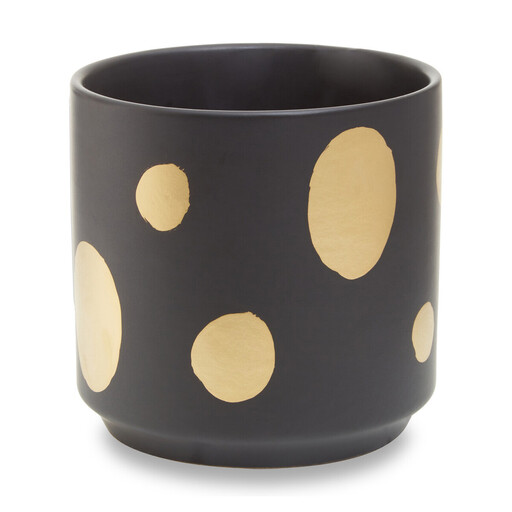
Why this product fits the profile: This compact ceramic planter measures 14 × 14 × 14 cm and is ideal for smaller plants, shelves or a desk. The black finish with warm metallic dots combines a manageable size with decorative styling.
The clear outer dimensions make it easy to plan where to place it. Before inserting a plant, check whether an inner pot is needed and whether a drainage solution is in place.
Stoneware material; compact, square dimensions; cleaning with a soft cloth recommended.

Why this product fits the profile: This rectangular container is designed for windowsills, shelves and desks. Two drainage openings and a removable ceramic tray support controlled water drainage indoors.
The drainage isn’t just decorative: two openings and a separate tray are specified in the product details. The tray should be emptied regularly.
Matte black ceramic; dimensions approx. 25 × 12 × 10 cm; removable drip tray included.
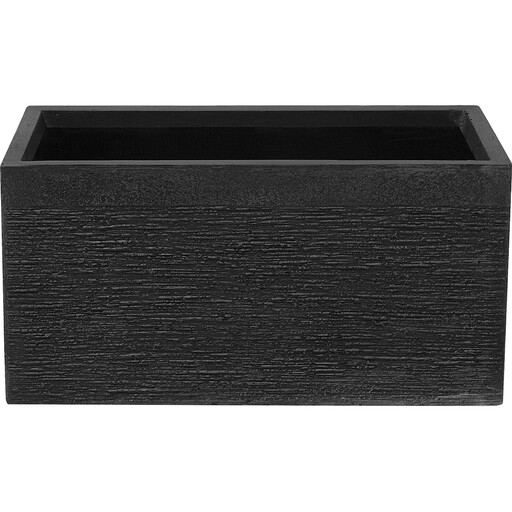
Why this product fits the profile: This rectangular planter with a 42-litre capacity can be used as a room divider indoors or as a planted privacy screen on the patio.
The product details mention two base openings, UV resistance and a temperature range of -20 °C to 40 °C. A liner or suitable inner pot should be used before filling.
60 cm width; 42-litre capacity; water, UV and weather resistance according to product details.
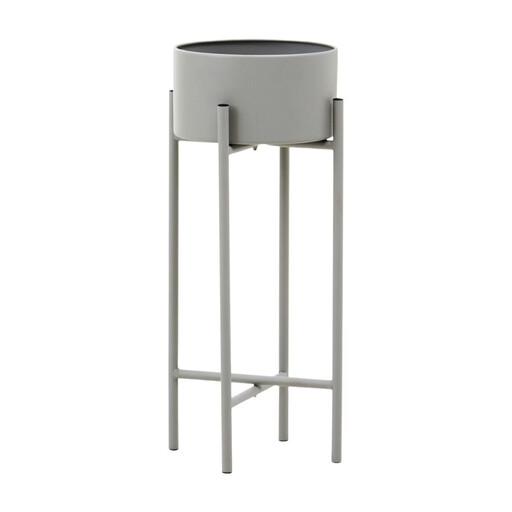
Why this product fits the profile: This model combines a planter with a four-legged iron frame. At 51 cm tall, it’s ideal for vertical greenery in small living spaces, balconies or sheltered outdoor areas.
The footprint is 23 × 23 cm, making it easy to estimate the space needed beforehand. As assembly is required, check all connections before setting it up.
Iron frame; 51 cm total height; grey colour; construction with crossed frame elements.
We’ve put together a full, regularly updated list of products that fully meet these strict selection criteria and the safety regulations in force in the EU.
Not necessarily, but drainage makes it easier to control excess liquid. With a decorative pot that has no hole, use an inner pot with an opening. After watering, water should not be allowed to collect permanently in the outer pot.
The new pot should match the size of the root ball and not be disproportionately large. As well as the diameter, also check the height and internal volume. For large plants, the footprint, total weight and stability against tipping are especially important.
For outdoor use, details on water resistance, UV resistance and frost or temperature resistance are helpful. In addition, the planter should stand securely and have suitable drainage. For ceramic, a sheltered position is recommended unless explicit frost resistance is stated.