
Lieferung heute & morgen

Qualitätsgarantie

Willkommens-Angebote freischalten: KOSTENLOSE Lieferung | Bis zu 80 % RABATT | Kostenlose 30-Tage-JoyPlus-Testphase
App herunterladen
A pushchair often accompanies families for several years. Even so, many buyers choose one based first on its colour, brand name or especially compact folded size. This can cause problems later: the pushchair may not fit in the boot, the recline may not be suitable for a newborn, or the wheels may be too small for daily journeys over cobbled streets.
This guide explains which details really matter when buying a pushchair and which models suit different everyday situations.
A compact, foldable pushchair is handy for small homes and travel. What matters, though, is whether you can actually fold it with one hand, whether it stands upright on its own and whether it fits in the storage space you have available. As well as the folded dimensions, check:
A travel buggy is often considerably lighter than a travel system, but usually offers less storage space and simpler suspension.
The description pushchair suitable from birth is only relevant in practice if the pushchair has a suitable lie-flat surface or an explicitly approved flat recline. A seat with a backrest that only reclines slightly is not the same as a carrycot.
So check for:
A pushchair that takes an infant car seat can make it easier to transfer your baby between the car and the pushchair frame. However, an infant car seat is designed for travel in a vehicle and is not a substitute for a permanent lie-flat surface.
Many models are described as pushchairs up to 22 kg. This figure primarily refers to the seat’s maximum permitted load. It tells you little about how easy the pushchair is to push or carry. The shopping basket also has its own weight limit, which you shouldn’t exceed.
With sibling pushchairs and twin pushchairs, you should also check whether the stated weight limit applies to each seat or to the entire frame.
A 2-in-1 model usually combines a carrycot and a pushchair seat. Some pushchairs have a reversible seat, so your child can face you or look ahead. This can be useful day to day, but it should be easy and safe to operate.
For babies, a suitable lie-flat position, correctly positioned harness and adequate ventilation are important. Once your child can sit up unaided, the backrest, footrest and an easily adjustable five-point harness become more important.
A lightweight pushchair, such as the CYBEX Gold BEEZY, which has a stated weight of 8.5 kg, is easier to manoeuvre on public transport or carry up stairs. A travel system with a carrycot, larger frame and more substantial suspension is often heavier.
Think about how you’ll use it:
Swivel wheels are usually enough for pavements and shopping centres. For gravel paths, cobbled streets or woodland tracks, larger puncture-proof wheels or air-filled tyres with suspension are more practical. An electric pushchair can help on hills, but it needs a battery, charger and safe controls.
Before each journey, check the locks, brake, harnesses and wheel attachments. Heavy bags should go in the designated basket, not on the handle, as they can affect stability.

Why this product suits this family: This 2-in-1 set is designed for families looking for a pushchair to use from birth until around 4 years old. According to the product details, it includes a carrycot, seat unit, footmuff, cup holder and adapters.
The included carrycot reduces the risk of planning to use a seat-only buggy too soon for a newborn. Air-filled tyres and four-way suspension are designed for uneven surfaces.
Suitable for children up to 22 kg, reversible seat unit, air-filled tyres and a compact fold with transport lock.
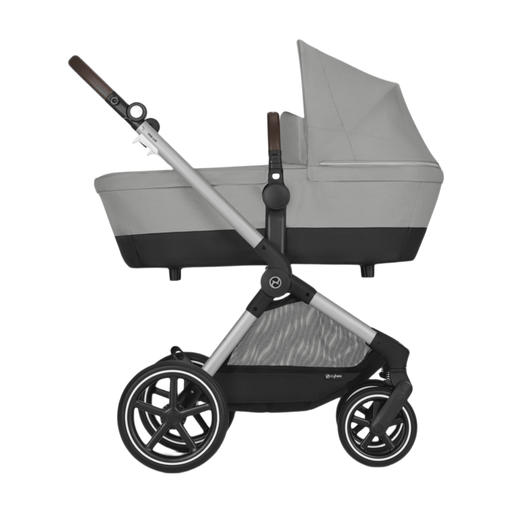
Why this product suits this family: This 2-in-1 pushchair has a convertible unit for newborns and toddlers, plus a reversible seat unit. The product details state that it’s suitable for children up to around 4 years old and 22 kg.
The flat recline, carrycot-to-seat combination and approved age guidance make the distinction between lying down and sitting clearer.
Puncture-proof all-terrain wheels, front-wheel suspension, height-adjustable handle and an XXL hood with UPF-50+ protection.
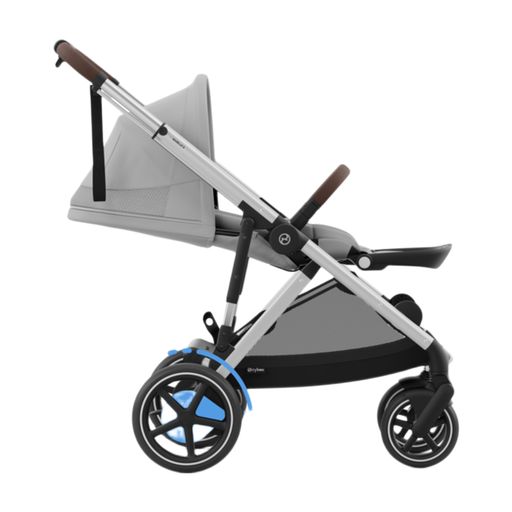
Why this product suits this family: This electric pushchair is designed for families who regularly tackle hills, uneven paths or changing surfaces and need a helping hand when pushing.
The electric assistance is controlled using the handle. This lets you use the extra support when you need it, without confusing it with a self-propelled function.
Over 20 configuration options, a weight capacity of up to 22 kg per seat when used as a double, and an integrated battery with charger.
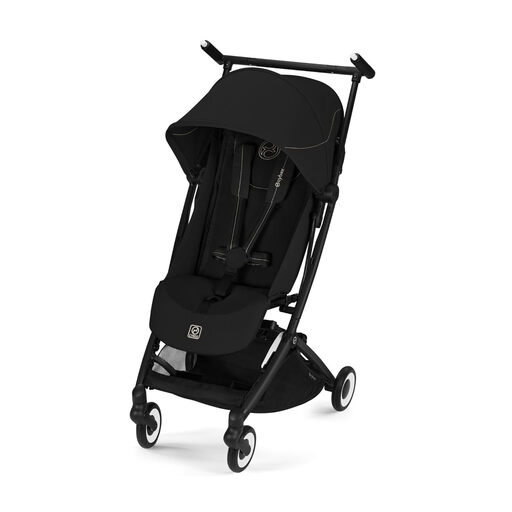
Why this product suits this family: This travel buggy is designed for children from around 6 months up to 22 kg. Its stated weight of 6 kg and folded dimensions of 20 × 32 × 48 cm make it a good fit for travel and small homes.
The clear age guidance helps prevent you from planning to use the buggy as a pushchair from birth. An adapter for an infant car seat is available separately.
Very compact when folded, lightweight, adjustable backrest and front suspension for city use.
There are different options for two children. A sibling pushchair can be a good choice if the children are different ages and you want to combine a carrycot with a seat unit. A twin pushchair, on the other hand, needs two equivalent seats or lie-flat spaces.
Before buying, check:
According to the product details, the CYBEX Gazelle S offers over 20 configurations for one or two children and can carry up to 2 × 22 kg when used as a double. The exact set-up depends on the additional seats, carrycots or adapters you need.
We’ve put together a complete, regularly updated list of products that meet these strict selection criteria and fully comply with the safety regulations in force in the EU.
Suitable options include models with a carrycot, lie-flat attachment or an explicitly approved flat recline. A seat-only buggy with a basic recline shouldn’t automatically be used for newborns. Always follow the manufacturer’s age and weight guidance.
Many travel systems and models with a lie-flat function are designed for use until around 4 years old or up to 22 kg. Depending on the model, a buggy may be suitable from 6 months. Always follow the manufacturer’s guidance and take into account your child’s development and the condition of the harnesses, brakes and locks.
As well as the purchase price, you may need to pay for a rain cover, footmuff, adapters, replacement wheels, replacement covers or a travel bag. With an electric pushchair, you’ll also need to factor in charging time and, potentially, replacing the battery later on. Before buying, check which accessories are included and which are sold separately.