
Lieferung heute & morgen

Qualitätsgarantie

Willkommens-Angebote freischalten: KOSTENLOSE Lieferung | Bis zu 80 % RABATT | Kostenlose 30-Tage-JoyPlus-Testphase
App herunterladen
If you’re buying salt online, you’ll find far more than classic table salt. Options include iodised salt, sea salt, rock salt, herb salt, seasoned salt, and products with added fluoride or folic acid. There’s also dishwasher salt and bath salt, neither of which is intended for consumption.
The biggest pitfall isn’t just the price: it’s choosing a product that isn’t suited to how you plan to use it. These criteria can help you narrow down the options for your household.
Dishwasher salt is also made mainly of sodium chloride, but it’s designed exclusively for the appliance’s water-softening system. It doesn’t belong in food. Conversely, table salt can affect a dishwasher’s dispensing and softening systems.
Bath salt is a cosmetic or personal care product, and it isn’t intended to be eaten. So check the product category and instructions for use first.
Fine salt dissolves quickly in soups, sauces, dough and cooking water. Coarse salt is better suited to salt mills, pickling, salt crusts or adding a visible finishing touch. Coarse sea salt isn’t automatically suitable for every mill: check the recommended use and the design of the grinding mechanism.
Labels such as iodised salt, salt with fluoride or salt with folic acid indicate that substances have been added. But the ingredients list, nutrition table and any warnings are what matter. If you already take fluoride supplements, follow the product guidance and only take additional supplements after seeking medical advice.
You should also check for potential allergens in herb and seasoned salts. Some seasoning blends, for example, contain celery, which must be labelled accordingly.
Kitchen options include:
For dishwashers, only dishwasher salt that is clearly labelled as such is suitable. For the bathroom, choose a product labelled as bath salt or a bath additive, and follow the instructions for external use.
Fine salt can be measured straight from the pack and distributes evenly. Depending on how you use it, coarse salt may need a mill or longer to dissolve. Don’t compare the pack price alone; check the quantity too. A 100 g pack of coarse sea salt and a 2.2 kg pack of dishwasher salt serve entirely different purposes.
Seasoned salt contains herbs, spices or other ingredients as well as salt. Its salt content per 100 g may therefore be lower than that of plain table salt. The nutrition table will help you compare.
Salt can absorb moisture and clump if stored somewhere damp. Both fine and coarse salt should be kept in a dry, tightly sealed container. For products with added ingredients, also check:
The information on the packaging you receive takes precedence over general online product information.
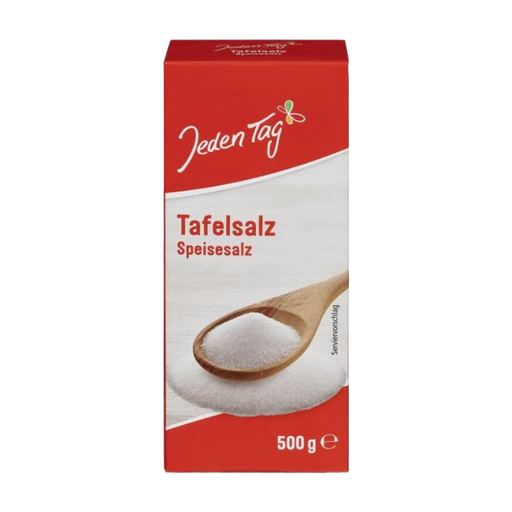
Why this product suits this profile: The 500 g pack of fine-grain salt is made for everyday cooking, baking and seasoning. It’s ready to use without a separate mill.
Clearly labelled as fine table salt, it reduces the risk of accidentally choosing a speciality or household salt for cooking.
500 g pack, fine grain and ingredients listed as evaporated salt and an anti-caking agent.
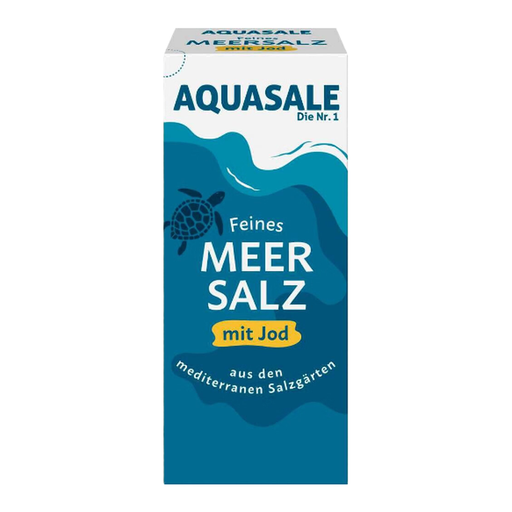
Why this product suits this profile: A good choice for households that prefer fine sea salt with iodine and want a grain that dissolves easily for everyday use.
The product details clearly distinguish its sea-salt origin, fine grain, added iodine and dry storage requirements.
500 g pack, fine grain and clearly stated potassium iodate addition.
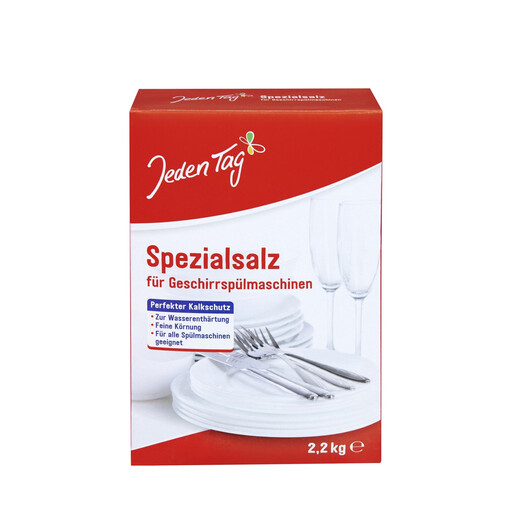
Why this product suits this profile: For households that use their dishwasher regularly and need a good-sized supply.
The label clearly states that it’s for use in dishwashers, and warns: do not eat or use for cooking.
2.2 kg pack, fine grain and stated compatibility with all dishwasher models.
We’ve put together a complete, regularly updated list of products that meet these strict selection criteria and fully comply with the safety regulations in force in the EU.
Fine table salt or iodised salt is a practical choice for most recipes, as it dissolves and distributes quickly. Sea salt and rock salt can also be used, provided they’re labelled as food products. With coarse salt, adjust the amount to suit the crystal size and recipe.
Iodised salt contains added iodine. Salt with fluoride contains added fluoride; some products combine these substances with folic acid too. Always check the ingredients list for the specific product. Take additional fluoride supplements only after seeking medical advice, as stated on the product label.
Pure salt generally doesn’t spoil quickly when stored in a dry place, but it can absorb moisture and clump. For iodised salt, herb salt, seasoned salt and bath salt, follow the information on the packaging. Keep all varieties sealed and dry. And remember: dishwasher salt must not be confused with food salt.