
Lieferung heute & morgen

Qualitätsgarantie

Willkommens-Angebote freischalten: KOSTENLOSE Lieferung | Bis zu 80 % RABATT | Kostenlose 30-Tage-JoyPlus-Testphase
App herunterladen
If you’re looking to buy salt, you’ll find plenty of options: table salt, cooking salt, sea salt, Alpine salt, Himalayan salt, iodised salt, and herb and seasoning salts. But the differences aren’t just about where the salt comes from or how it’s packaged. Grain size, additives, intended use and pack size all affect how practical a product is for everyday use.
Terms such as sea salt, Alpine salt and Himalayan salt mainly describe the salt’s origin or how it is produced. They don’t automatically mean it’s better for cooking or offers a health benefit. To choose the right product, look at specific details such as the ingredients, grain size, iodine content and intended use.
Herb and seasoning salts contain ingredients in addition to salt. This changes the flavour, and the amount of salt per 100 g may differ from that in classic table salt. If you’re using a seasoning salt, check the ingredients for herbs, garlic, pepper, chilli and any potential allergens.
Bulk packs of salt can be a good choice for catering businesses, barbecue fans or large households. However, if you only use salt occasionally, the pack may absorb moisture or remain open for a long time. Storing it somewhere dry and keeping it in a tightly sealed container are therefore important considerations.
Fine salt dissolves quickly and is ideal for soups, sauces, baked goods and cooking water. It’s also relatively easy to distribute evenly in recipes.
Coarse salt is suitable for salt mills, curing, salt crusts or finishing meat and vegetables. The size of the crystals affects how quickly the salt dissolves and how accurately you can measure it.
A product such as Kotányi Coarse Sea Salt 100 g is made from 100% sea salt and, according to the product details, contains no listed additives or anti-caking agents. Its coarse grains are intended for mills and certain cooking methods.
Depending on the product, classic cooking salt may contain anti-caking agents or potassium iodate, for example. Iodised salt is labelled accordingly. Some varieties also contain fluoride or folic acid. Always check the current information on the packaging for details of these additives.
If you already use other products containing fluoride, follow the instructions for those products and seek medical advice if you’re unsure. Salt should generally be used sparingly; the German Nutrition Society recommends that adults consume no more than around six grams of salt a day.
500 g packs suit many households. A kilogram or more may be worthwhile for frequent users, bakers, barbecue fans and catering businesses, provided the product is used regularly. A large pack of seasoning salt is particularly useful if you often use that flavour profile.
Store salt somewhere cool and dry, away from direct sunlight. Once opened, seal bags or tubs tightly. Moisture can cause the salt to clump and make it harder to measure.
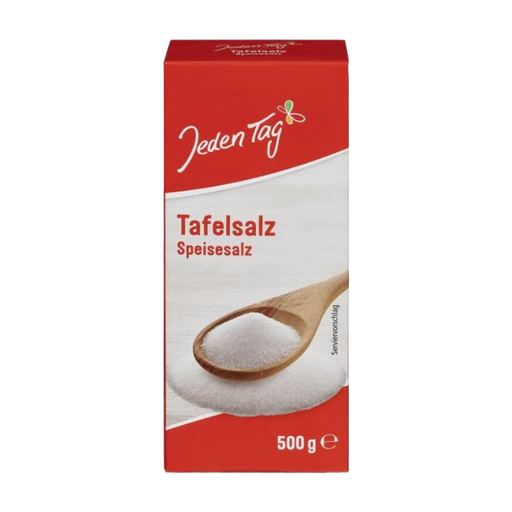
Why this product suits this profile: Fine cooking salt for everyday cooking, baking and seasoning, in a manageable 500 g pack.
The product details clearly state the fine grain size, 500 g quantity and anti-caking agent used.
Finely refined salt, 500 g pack and, according to the product details, no allergens that need to be declared.
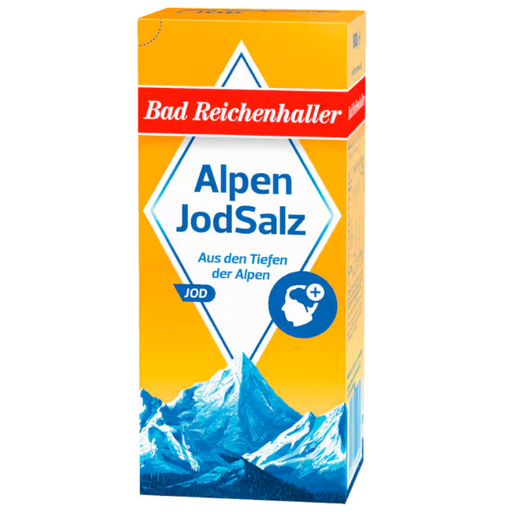
Why this product suits this profile: A finely ground Alpine salt for people who want to consider its origin and a short ingredients list.
The product description notes that the salt comes from natural brine and identifies the anti-caking agent it contains, rather than relying on its origin alone as proof of quality.
Fine grains, a 500 g pack and added iodine according to the product details.
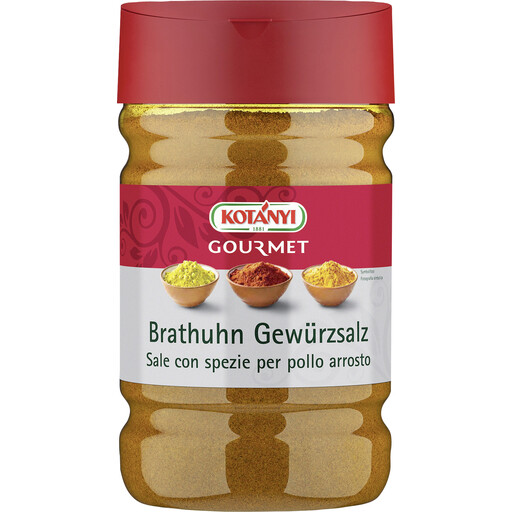
Why this product suits this profile: A large pack of seasoning salt for barbecues, meat, vegetables and slow-cooked dishes, with a consistent blend of seasonings.
The ingredients list includes iodised salt, paprika, garlic, pepper and herbs, making it clear that this isn’t plain table salt.
1,248 g pack and a clearly listed blend of seasonings for savoury dishes.
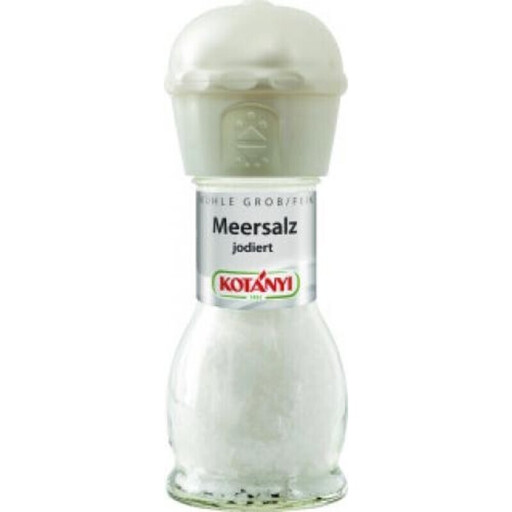
Why this product suits this profile: A compact salt mill for seasoning at the table, during barbecues or as a finishing touch for salads and vegetables.
The product details specify the quantity, the material of the grinder and that the mill isn’t refillable.
Ceramic grinder, glass container and iodised sea salt according to the product description.
We’ve put together a complete, regularly updated list of products that meet these strict selection criteria and fully comply with the safety regulations in force in the EU.
Fine cooking salt is practical for everyday cooking because it dissolves quickly and is easy to measure evenly. Iodised salt may be an option if you specifically want added iodine. Check the packaging and consider your own needs when choosing.
When stored properly in a dry place, salt keeps for a long time. You should still check the best-before date and follow any specific instructions from the manufacturer. Herb and seasoning salts may be more susceptible to moisture or loss of flavour because of the herbs and other ingredients they contain.
A large pack is most worthwhile if you use salt regularly, for example in a catering business or when barbecuing or baking often. For smaller households, 500 g packs are often easier to store somewhere dry and use up within a reasonable time.