
Lieferung heute & morgen

Qualitätsgarantie

Willkommens-Angebote freischalten: KOSTENLOSE Lieferung | Bis zu 80 % RABATT | Kostenlose 30-Tage-JoyPlus-Testphase
App herunterladen
A sofa has more of an impact on everyday life than many product descriptions suggest. So if you’re looking to buy a sofa, don’t focus solely on colour and upholstery. Unclear measurements, unsuitable materials or overestimating extra features can all lead to a sofa taking up too much room or not suiting your needs in everyday use.
The stated width is only one part of the planning. With a corner sofa, you also need to consider its depth, chaise and the space needed to move around it. You’ll also need to check doorways, stairwells and lifts. A sofa measuring 247 cm wide can take up considerably more room with a depth of 143 cm than a compact 2-seater measuring 160 to 170 cm wide.
Soft upholstery may feel comfortable, but that alone tells you little about how a sofa is made. More useful details include foam density, suspension, frame material, seat height and weight capacity. Sofas delivered compressed may also need around 24 to 72 hours to expand or settle.
A sofa bed is handy for guests or the occasional overnight stay, but it won’t necessarily replace a bed for everyday use. Check the sleeping area, opening mechanism and clearance needed. If you’re choosing a sofa with storage, make sure you can open the storage compartment under the seat easily.
Measure the space you have in mind, including skirting boards and walkways. A small sofa or 2-seater may be enough for one person or a couple. Families often need a living room sofa with more seating space. A corner sofa makes good use of corners, but you’ll need to check the dimensions of both sides carefully.
Check the:
A corduroy sofa has a ribbed fabric surface. A chenille sofa typically has a soft, textured finish. Both materials can create a warm look, but need regular vacuuming and should be kept out of strong, direct sunlight.
According to the product details for some models, faux leather can be cleaned with a damp cloth and may have water-repellent properties. This depends on the specific model, however, so always check the care instructions and avoid harsh cleaning products.
A frameless sofa made with moulded foam is different from a model with a wooden frame, zigzag springs or pocket springs. No construction type is automatically right for every use. Check the details provided by the seller, such as 32D foam, maximum weight capacity or the number of packages.
For furniture with electrical connections, such as USB and USB-C charging ports, make sure cables are routed safely. For all sofas, follow the manufacturer’s instructions on placing the sofa on a level surface, assembly, weight limits and fire safety.
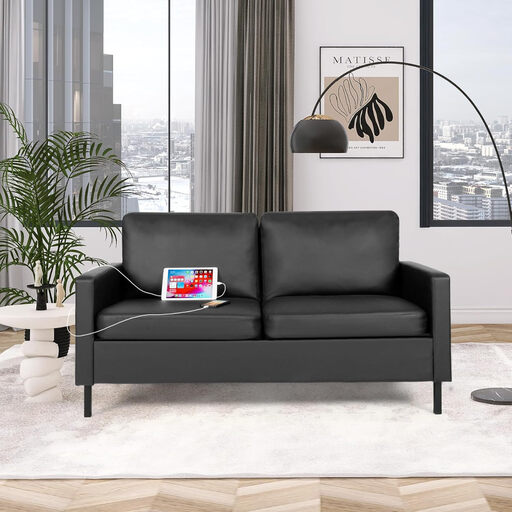
Why this product suits this type of buyer: At 143 cm wide, this mini sofa is suited to flats, student accommodation, bedrooms or a small home office.
Its compact dimensions make it easier to plan your space. The frame, seat dimensions and maximum weight capacity of 263 kg are all clearly stated.
Wooden frame with slats, USB and USB-C ports, and a choice of two upholstery options according to the product description.
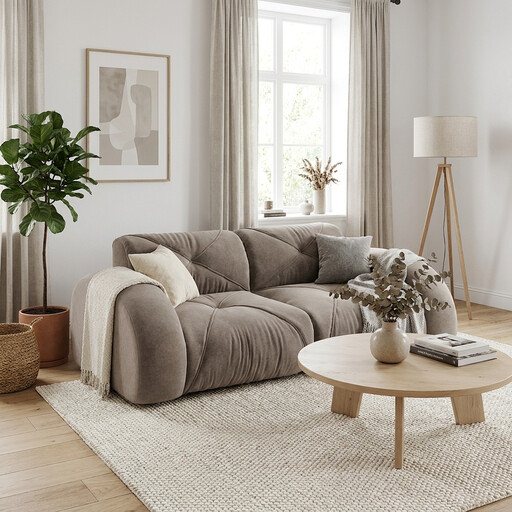
Why this product suits this type of buyer: At 204 cm wide, this modular sofa is designed for households that prefer flexible seating arrangements and a softer, frameless construction.
The product description specifies a foam density of 32D, a frameless construction and around 72 hours to recover its shape after unpacking.
Chenille upholstery, a modular design and no tools required for assembly, according to the seller.
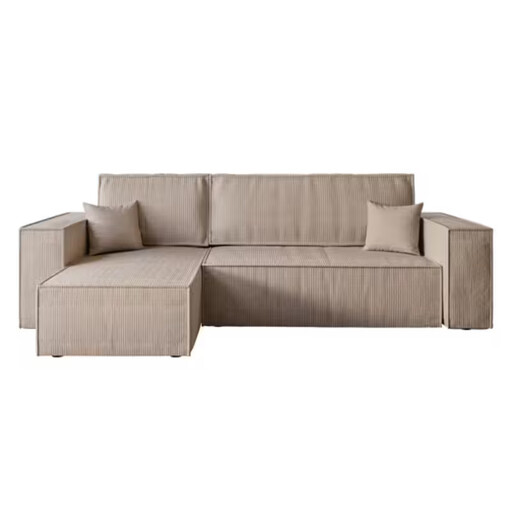
Why this product suits this type of buyer: This corner sofa bed is designed for families and households looking to combine seating, a guest bed and storage.
The technical details cover the sleeping area, seat construction, chaise position and storage. The chaise can be fitted on either the left or right.
Sleeping area measuring 200 × 130 cm, storage compartment and POSO corduroy upholstery with a stated abrasion rating of A and more than 35,000 Martindale cycles.
We’ve put together a complete, regularly updated list of products that meet these strict selection criteria and the safety regulations applicable in the EU.
Make sure there’s enough room in front of the sofa to move around comfortably. You’ll often need around 60 to 80 cm for a coffee table, a walkway and room to open a sofa bed. The exact distance depends on the shape of the room, the size of the table and the opening mechanism.
A sofa’s lifespan depends on factors such as its construction, how heavily it’s used each day, how well it’s cared for and how its upholstery is made. Frame material, suspension, foam density and upholstery are more useful indicators than general marketing claims. Regular vacuuming, avoiding jumping on the sofa and keeping it out of direct sunlight can help protect the upholstery and cushions.
A manual sofa bed usually has no ongoing energy costs. Instead, you’ll need to factor in cleaning products, possible replacement parts and, if it’s used frequently, the eventual replacement of cushion or upholstery components. Models with USB ports use only a small amount of electricity while charging devices.