
Lieferung heute & morgen

Qualitätsgarantie

Willkommens-Angebote freischalten: KOSTENLOSE Lieferung | Bis zu 80 % RABATT | Kostenlose 30-Tage-JoyPlus-Testphase
App herunterladen
Outdoor solar lights promise a simple and cost-effective way to illuminate gardens, patios, and pathways. With no wiring and no additional electricity costs, they are an attractive solution. However, the market is flooded with products whose performance often fails to live up to their promises. Many buyers quickly discover that their new garden lighting doesn't survive the first autumn storm or that the promised brightness fades to a dull glow.
To save you from such disappointments, we have identified the most common pitfalls and will explain which technical features you really need to pay attention to.
The 2 Most Common Mistakes When Buying Solar Lights:
To make an informed decision, it's crucial to understand the technical specifications. Instead of being guided by marketing buzzwords, you should check three core parameters.
The brightness of a light is measured in lumens (lm), not watts (W). Watts indicate energy consumption, whereas lumens describe the actual amount of light emitted.
The IP rating (Ingress Protection) indicates how well an electrical device is protected against the intrusion of foreign objects (first digit) and water (second digit).
The performance of the battery determines how long your solar light will stay on after dark. The capacity is specified in milliampere-hours (mAh)—the higher the value, the longer the potential runtime. The battery type is also relevant. Lithium-ion (Li-ion) batteries are often more durable, perform better in colder temperatures, and have a lower self-discharge rate compared to older Nickel-Metal Hydride (Ni-MH) batteries.
Based on these objective criteria, we have compiled a selection of products for different use cases.
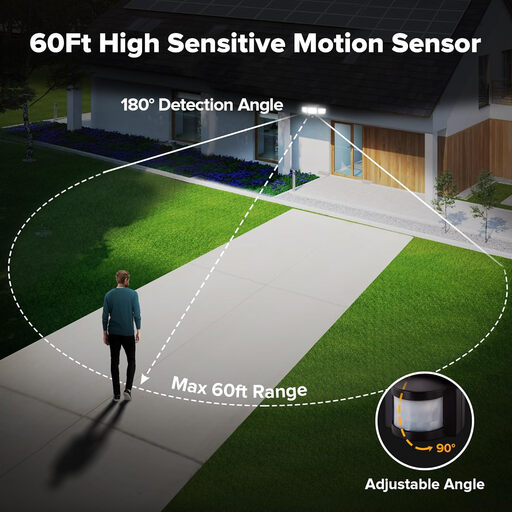
Why it's a great fit: Ideal for illuminating driveways, garages, or dark corners of your property. The integrated motion sensor provides light exactly when it's needed, which optimises battery life and enhances security.
The IP65 rating ensures reliable protection against rain and weather. With a stated brightness of 3000 lumens, this solar floodlight provides intense illumination that goes far beyond the dim glow of simple decorative lights.
Three adjustable light heads allow for flexible aiming of the light over a wide 270-degree area. The motion sensor has a range of up to 18 metres.
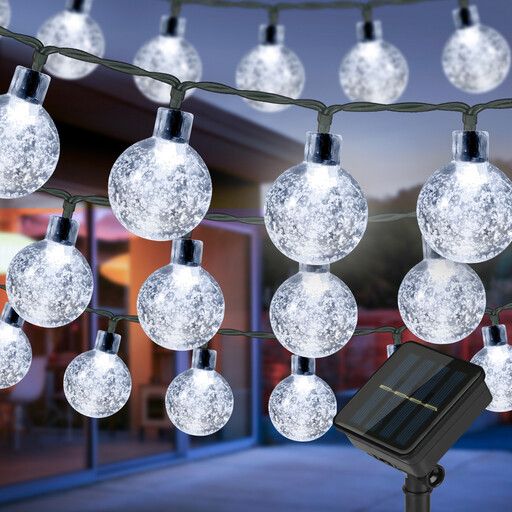
Why it's a great fit: These solar string lights are perfect for decorating balconies, patios, pergolas, or for garden parties. The 11-metre string with 60 LEDs creates an inviting and festive atmosphere without any cable clutter.
With an IP65 rating, these string lights are designed for year-round outdoor use. The specified runtime of 8 to 14 hours (weather-dependent) is a realistic figure for a product with an efficient solar panel.
Eight different lighting modes (from steady on to flashing) allow for customised illumination. The memory function saves the last selected setting.
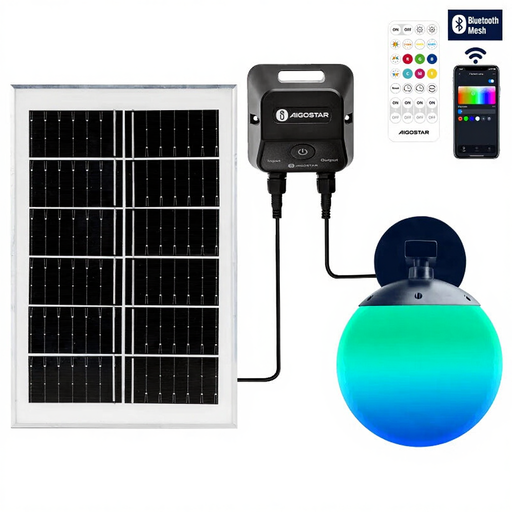
Why it's a great fit: This solar wall light is for users who want more than just on and off. Using Bluetooth Mesh technology and an app, you can control colours (RGBCCT), brightness, and schedules, and network multiple lights together.
The IP65 certification ensures durability in all weather conditions. The transparent technical data, such as the 4000 mAh battery capacity and the monocrystalline solar panel, enable a fact-based purchasing decision.
Full control over the lighting mood: from warm white to cool white light, as well as millions of RGB colours. The up-and-down lighting also creates appealing architectural effects on house walls.
Finding carefully vetted solar garden lighting that can withstand tough weather conditions can be a challenge. We have compiled a comprehensive selection of products that meet objective criteria for durability and performance.
Yes, solar lights do work in winter, but with reduced performance. The shorter days and the lower angle of the sun's rays result in less charge for the battery. This leads to a shorter runtime. Models with high-efficiency monocrystalline solar panels and powerful lithium-ion batteries are better suited for winter operation than basic models.
The lifespan depends on the quality of the components. A well-made solar-powered outdoor LED light with a robust housing and high-quality electronics can last for several years. The LEDs themselves have a very long lifespan (often over 30,000 hours). The battery is typically the component with the shortest lifespan and may need to be replaced after about 1 to 3 years, depending on the type and usage.
For maximum energy harvesting, the solar panel should be placed in a location that receives direct, unshaded sunlight for many hours of the day. A south-facing orientation is ideal in the Northern Hemisphere. Make sure the panel is not obstructed by trees, eaves, or other buildings. Regularly cleaning the panel's surface of dust and dirt with a soft cloth will ensure charging efficiency.