
Lieferung heute & morgen

Qualitätsgarantie

Willkommens-Angebote freischalten: KOSTENLOSE Lieferung | Bis zu 80 % RABATT | Kostenlose 30-Tage-JoyPlus-Testphase
App herunterladen
An organised home creates space for clarity and well-being. But the path to getting there is often paved with the search for the right storage shelves. Whether for books, kitchen utensils, or bathroom items, the selection is vast, but not every shelf delivers on its promise. Many buyers invest in furniture that proves to be impractical or unstable after a short time. This guide will show you which critical details to look for to find a durable and functional solution.
Before you make a decision, it's important to know the most common flaws that often only become apparent after the purchase.
To avoid the problems mentioned above, focus on three verifiable criteria. These will help you objectively assess the quality of a shelf.
The foundation of any good shelf is its material. Look for clear specifications from the manufacturer:
Always check the maximum load capacity per shelf. A good bookshelf should be able to support at least 10 kg per shelf, while 5 kg may be sufficient for lighter decorative items.
The surface determines the durability and maintenance effort.
Another crucial point is safety. Especially for a tall freestanding shelf or a kids' shelf, an anti-tip kit for securing it to the wall is essential. For a wall shelf or floating shelf, the included or separately purchased wall plugs and screws must be suitable for your wall type (e.g., concrete, plasterboard).
Instead of looking for a one-size-fits-all solution, choose a model designed for a specific purpose. A shoe cabinet with flip-drawers makes optimal use of depth in a hallway. A shelf with hooks combines storage space with hanging options and is ideal for an entryway. Such space-saving furniture is often more thoughtfully designed than universal shelving systems.
Here are some recommendations tailored to specific living situations and requirements.
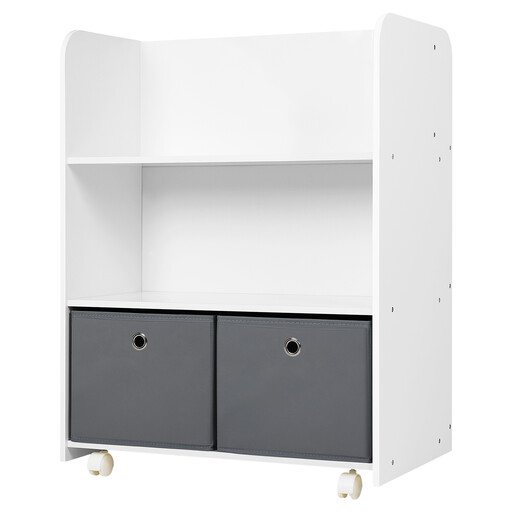
Why it's a great fit: This shelf solves a core problem for families: organising toys and books. Its double-sided design and casters make it extremely flexible for a child's room or play area. It promotes independence, as everything is within easy reach for kids.
The design is specifically conceived as a kids' shelf, which prevents a lack of functionality. The MDF construction with a melamine veneer is robust and easy to clean. The manufacturer explicitly notes the need for a wall anchor to prevent stability issues.
Double-sided storage for toys and books; mobile thanks to casters; includes fabric bins for small items.
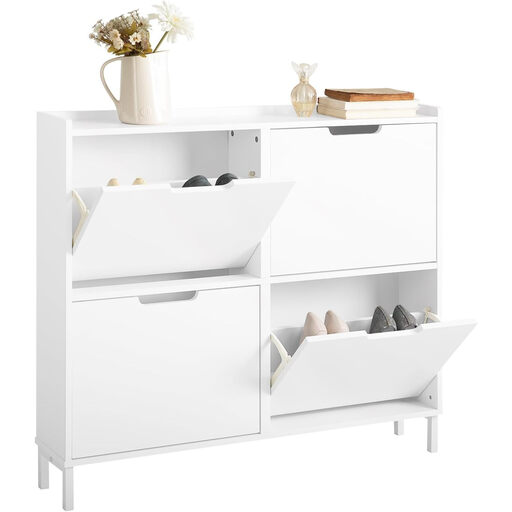
Why it's a great fit: Perfect for the narrow hallways or entryways common in many apartments. This shoe cabinet is a prime example of space-saving furniture, as it utilises vertical space and keeps the floor clear.
This design solves the problem of misleading dimensions, as it is explicitly designed for narrow spaces with a depth of just 19 cm. The closed flip-drawers ensure a tidy appearance. An included anti-tip kit addresses the stability issue common with tall, narrow furniture.
Extremely slim depth of 19 cm; concealed storage for up to 12 pairs of shoes; top shelf for keys or decor.
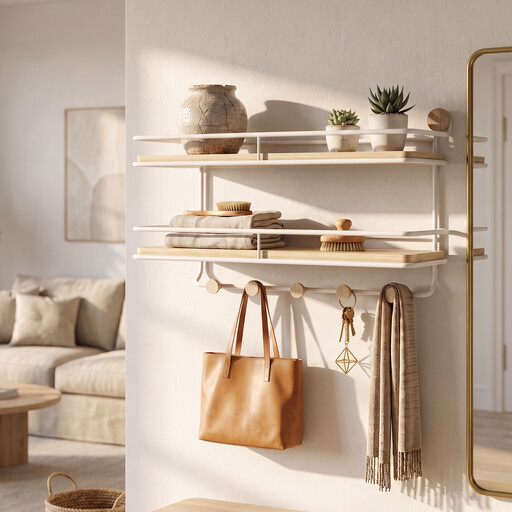
Why it's a great fit: For anyone looking for more than just a shelf. This floating shelf combines two tiers with a hook rail, making it a stylish and practical solution for the entryway, bedroom, or even the bathroom.
It avoids the material pitfall by using clearly defined, high-quality materials: FSC-certified rubberwood and powder-coated steel. The stated maximum load capacity of approx. 20 kg is a reliable figure that prevents stability issues. The guardrails on the shelves are a thoughtful detail.
Combination of a shelf with hooks; waterproof and rust-resistant materials; winner of the New York Design Award 2023, according to the manufacturer.
We have compiled a complete, up-to-date list of products that fully meet these strict selection criteria and safety regulations.
Safety depends on correct installation. First, check the composition of your wall (e.g., concrete, brick, plasterboard). Always use wall plugs and screws that are appropriate for your wall type. These are often not included and must be purchased separately. Follow the manufacturer's assembly instructions precisely and use a spirit level to ensure the shelf is straight.
MDF stands for "medium-density fibreboard." It is an engineered wood product made by pressing finely shredded wood fibres together. The E1 class is a European standard that limits formaldehyde emissions. E1-class furniture is considered safe for use in living spaces.
This varies greatly depending on the material, construction, and size. There is no one-size-fits-all answer. Never rely on estimates. The maximum load capacity per shelf is a crucial manufacturer specification that you must check before buying. For heavy books, it should be at least 10-15 kg per shelf. Always distribute the weight evenly and place the heaviest items on the bottom shelves.