
Lieferung heute & morgen

Qualitätsgarantie

Willkommens-Angebote freischalten: KOSTENLOSE Lieferung | Bis zu 80 % RABATT | Kostenlose 30-Tage-JoyPlus-Testphase
App herunterladen
Choosing the right table tennis racket can be the difference between victory and defeat, but more importantly, it defines your enjoyment of the game. However, the market is flooded with marketing promises and technical specs that often confuse more than they help. Many players, whether beginners or advanced, invest in equipment that doesn't match their playing style or loses its quality after a short time. As your Joybuy Product Recommendation Officer, I'll help you navigate these pitfalls and make an informed decision.
Two common mistakes repeatedly lead to disappointment:
To avoid a bad buy, you should focus on the objective core components that define a racket's performance.
The racket wood, also called the blade, is the heart of the racket. It usually consists of several glued wood veneers. The number and type of layers determine the basic properties:
The rubber is the direct contact surface with the ball and is crucial for spin and speed. Most modern rackets use inverted rubbers. More important than the type of rubber itself is the underlying sponge thickness:
A grip that doesn't fit your hand leads to tension and imprecise shots. In Europe, the flared grip is the most common. It widens towards the end of the handle, ensuring a secure hold and preventing it from slipping during fast movements. When choosing, especially for a children's table tennis racket, look for an adapted, ergonomic grip shape for smaller hands.
Based on these objective criteria, we have selected some products for different requirement profiles.

Why This Fits Their Persona: Ideal for recreational entry-level play. This set provides two solidly built rackets and balls to start playing immediately, without worrying about durability.
Unlike low-quality sets, the blade is made of all-wood for stable ball control. The special edge guard significantly increases its lifespan.
The all-wood blade provides direct feedback on every shot, making it easier to learn the technique. The highly elastic rubbers are forgiving.

Why This Fits Their Persona: Perfect for players who train regularly and want to boost their performance at the club. It offers a balanced mix of speed and control for intensive training.
This racket offers the performance boost of carbon without sacrificing control. The hybrid construction is the logical next step after an all-wood blade and won't overwhelm the player.
The carbon-reinforced hybrid base delivers explosive speed. The enlarged sweet spot ensures higher shot consistency during fast rallies.
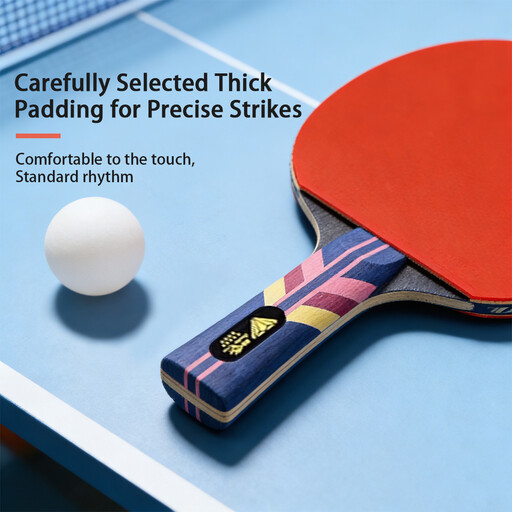
Why This Fits Their Persona: Designed for performance-oriented players who need maximum speed and power in competition. This racket is built for uncompromising offense.
Instead of just focusing on speed, this racket combines power with precision. The enlarged blade and ergonomic grip ensure that the immense power remains controllable.
The dual-layer carbon construction provides an extremely large sweet spot and explosive power. The solid wood handle absorbs sweat and offers optimal grip even during long matches.
We have compiled a complete, up-to-date list of products that fully meet these strict selection criteria and German safety regulations.
Proper care is crucial for the longevity of your racket. Clean the rubbers after each use with a soft, slightly damp cloth or a special rubber cleaner to remove dust and grease. Store the racket in a case to protect it from UV radiation, extreme temperatures, and mechanical damage. The blade itself does not require special care.
ITTF stands for the International Table Tennis Federation. An ITTF approval on rubbers or table tennis balls (like the Double Fish WTT Match 3-Star V40+ Balls) means the material complies with official competition rules. For players participating in tournaments or official league play, a racket with ITTF-approved rubbers is a mandatory requirement.
The tackiness of a rubber diminishes over time. Hobby players who play once or twice a month should change their rubbers every 1-2 years. Ambitious club players who train several times a week often notice a significant drop in performance after just 6-12 months and should replace the rubbers accordingly sooner. An indicator is when the ball no longer grips well when you rub it against the rubber.