
Lieferung heute & morgen

Qualitätsgarantie

Willkommens-Angebote freischalten: KOSTENLOSE Lieferung | Bis zu 80 % RABATT | Kostenlose 30-Tage-JoyPlus-Testphase
App herunterladen
Buying a new tent seems simple at first glance. But the selection is vast, and marketing promises often outweigh the product's actual performance. Whether for a camping holiday, a festival weekend, or growing plants at home, the requirements are fundamentally different. Many buyers only realise they've made the wrong choice after the first downpour or during a tedious setup. This guide will help you avoid common pitfalls and find a tent that truly fits your needs.
Two issues in particular often lead to disappointment: unrealistic claims about water resistance and a complicated setup that fails the real-world test.
To make an informed decision, you should focus on a few critical technical features. These determine whether a tent is suitable for occasional summer use, demanding trekking tours, or as an indoor greenhouse.
The type of tent defines its purpose. A classic camping tent in a dome or tunnel shape is an all-rounder. For larger groups, spacious family tents are ideal, often offering separate sleeping and living areas, such as a 4-person tent or a 6-person tent. Those seeking comfort and style will find a suitable option in a glamping tent, often designed as a spacious tipi tent. For the garden or events, a gazebo is a practical, open-sided alternative.
Grow tents, also known as plant tents, are in a completely different category. The focus here isn't on weather protection but on creating a controlled environment for plant cultivation. Key features include a highly reflective inner lining (e.g., Mylar), light-proof zippers, and adjustable openings for ventilation systems.
The waterproof rating (hydrostatic head) indicates how much water pressure the material can withstand before moisture penetrates. For use in the UK, where rain showers are always a possibility, a waterproof tent with a rating of at least 2000 mm for the outer tent and 3000 mm for the groundsheet provides a solid foundation. Look for PU-coated (polyurethane) polyester or durable Oxford fabric. Equally important are sealed or taped seams, as this is where water is most likely to get in.
The setup is a crucial convenience factor.
Here are some models tailored to specific use cases that meet the criteria mentioned above.
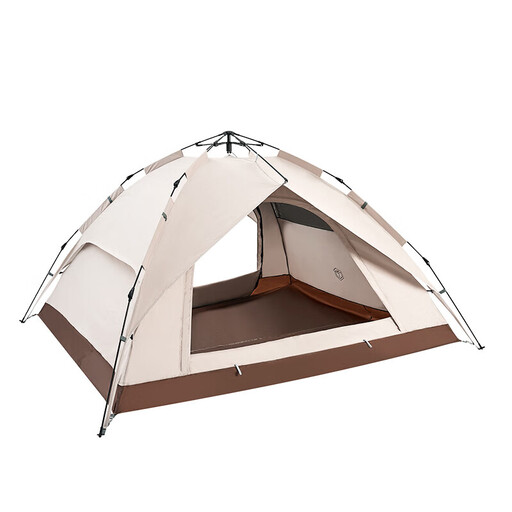
Why This Fits Their Persona: Ideal for users who value a straightforward and fast setup. Perfect for weekend trips or festivals where you don't want to waste time with complicated instructions.
The automatic pop-up mechanism bypasses the pitfall of a complicated setup. The specified 3000 mm waterproof rating provides reliable protection against rain and is designed for typical UK weather conditions.
Dual-layer construction for better insulation and weather protection. Quick setup and takedown without tools.
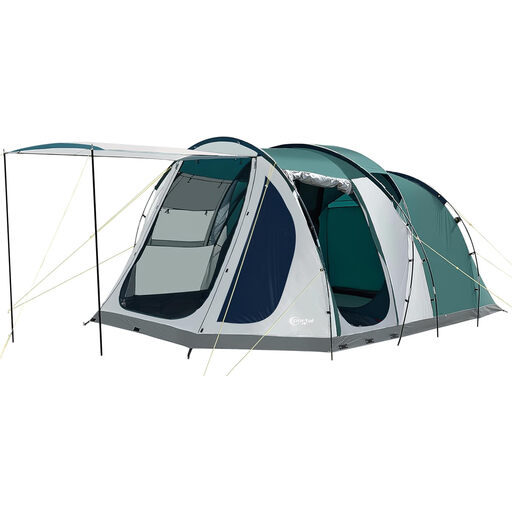
Why This Fits Their Persona: Designed for families or small groups who value space and comfort on their camping trips. The separate living and sleeping areas allow for gear organisation and provide a retreat in bad weather.
With a 3000 mm waterproof rating and a fully sewn-in groundsheet, it offers high protection against moisture. The tunnel tent design, while manual to set up, is known for its stability and space efficiency.
Spacious interior with 7.05 m? of sleeping area and 5.8 m? of living space. Good ventilation system with multiple doors and windows to reduce condensation.

Why This Fits Their Persona: Specifically designed for indoor plant cultivation. It provides a controlled environment to optimise the growth of seedlings and sensitive plants, regardless of external conditions.
This product is not a camping tent, thus avoiding false expectations. It focuses on the crucial features for plant cultivation: a highly reflective Mylar inner lining to maximise light efficiency and a sturdy steel frame.
Made from robust 602D Oxford fabric for durability. Equipped with an observation window to monitor plants without disturbing the climate inside the tent.
We have compiled a complete, up-to-date list of products that fully meet these strict selection criteria and UK safety regulations.
Clean the tent after each use with a damp cloth and mild soap. Avoid harsh cleaning agents as they can damage the waterproof coating. It is crucial that the tent is completely dry before being packed away to prevent mould and material damage. Store it in a cool, dry place.
The waterproof rating (or hydrostatic head) is a unit of measurement for the water resistance of technical fabrics. It indicates how high a column of water (in millimetres) can be placed on the material before water penetrates. A rating of 3000 mm means the material can withstand the pressure of a 3-metre-high column of water. For camping in Central Europe, this is a good benchmark for reliable rain protection.
Yes, a grow tent or plant tent only creates the controlled environment. For successful plant growth, a special grow light (e.g., LED or HPS) is required to provide the light spectrum necessary for photosynthesis. The tent's highly reflective inner lining serves to maximise the use of this light and distribute it evenly.