
Lieferung heute & morgen

Qualitätsgarantie

Willkommens-Angebote freischalten: KOSTENLOSE Lieferung | Bis zu 80 % RABATT | Kostenlose 30-Tage-JoyPlus-Testphase
App herunterladen
Tinned vegetables are a staple in many British households because they’re ready to use without washing or chopping and can be stored at room temperature. Whether as a side dish, soup ingredient, salad component or the base of a hearty stew, canned vegetables save time and can simplify your store-cupboard planning.
However, a few common pitfalls when shopping can lead to unnecessary costs. Large tins aren’t automatically better value if you end up with leftovers after opening. Labels like “fine”, “tender” or “natural-style” also tell you very little about the ingredient list, salt content or drained weight. Similarly, organic or sustainability claims should be verifiable on the label and not serve as the sole reason to buy.
With tins and jars, the total weight includes the vegetables, water and any brine. For price comparisons, the drained weight is what matters. Two packs with a similar total fill can therefore contain very different amounts of vegetable.
Many products only need vegetables, water and salt. Others contain added sugar, acidity regulators, thickeners or preservatives. If you’re looking for the simplest vegan vegetables, check the ingredient list. For beans, you should also look out for any mention of possible traces of soya, gluten or sulphites.
Unopened, shelf-stable vegetables are generally fine for the store cupboard. Once opened, however, the contents need to go in the fridge and should be used within one to seven days, depending on the product. It’s best to transfer leftovers into a suitable container, especially from tins.
Tinned green beans go well with potatoes, fish alternatives, bakes and salads. Tinned peas are ideal for soups, rice dishes, spreads or quick sides. Peas and carrots offer a ready-combined vegetable side.
For stews and salads, cannellini beans provide a satisfying base. Kidney beans are often used in chilli, wraps and hearty salads. Your choice should therefore match your actual meal plan, not just the pack size.
For an objective assessment, look at the energy, fat, carbohydrates, fibre, protein and salt per 100 grams. These values may refer to the drained product or to the entire tin contents. This information is stated on the label and should be taken into account when comparing.
For example, Bonduelle Cannellini Beans contain 6.6 grams of protein and 6.7 grams of fibre per 100 grams, according to the product information. Bonduelle Kidney Beans show 7.2 grams of protein and 6.0 grams of fibre per 100 grams of drained product, according to the product data. These are nutritional facts, not medical claims.
With organic tinned vegetables, a recognised organic certification or, for Demeter products, the corresponding mark should be present on the packaging. Campo Verde lists Demeter-certified, biodynamic farming for its cut green beans, with ingredients of cut green beans, water and sea salt.
Vegetables in jars can be appealing for households that prefer a resealable container. Jars do, however, take up more space and are heavier to transport. Here too, the drained weight, ingredients, best-before date and storage instructions are what matter.
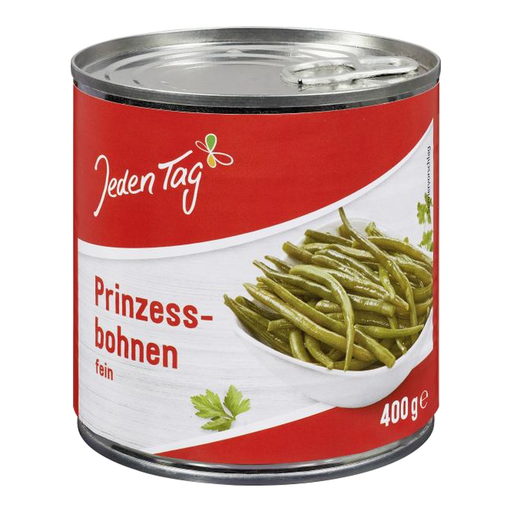
Why this product fits the profile: The handy size is ideal for single-person households, smaller families and occasional side dishes. The beans can be served cold in salads or warmed up.
According to the product information, the nutritional values refer to the drained product. Ingredients and allergens are clearly listed.
425 ml jar, 24 kcal per 100 g and to be consumed within two to three days after opening.
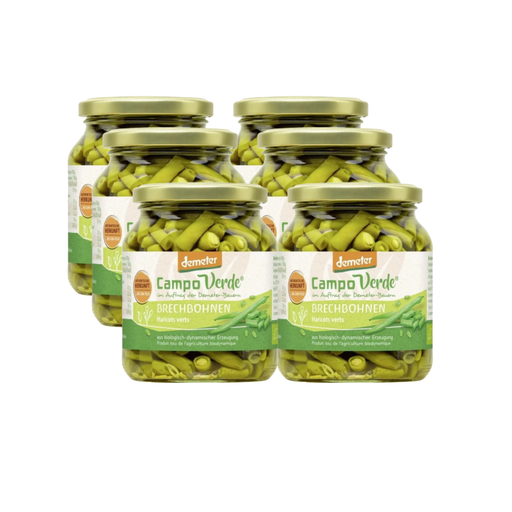
Why this product fits the profile: The multi-pack is aimed at households that regularly use organic tinned vegetables and look for Demeter certification.
The product information states the farming certification, ingredients and absence of declarable allergens, rather than vague quality promises.
18 kcal per 100 g, ingredients of cut green beans, water and sea salt, plus six units of 340 g each.
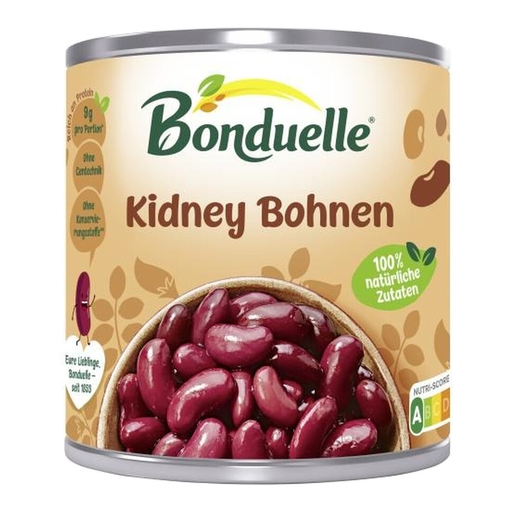
Why this product fits the profile: Kidney beans are ideal for chilli, salads, wraps and stews. The smaller pack makes portioning easier for individual dishes.
The ingredient list is short; possible traces of soya and gluten-containing cereals are explicitly stated.
94 kcal, 7.2 g protein and 6.0 g fibre per 100 g of drained product according to product information; labelled as vegan.
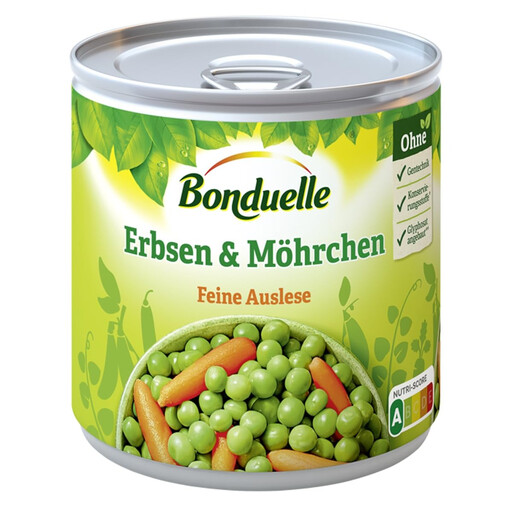
Why this product fits the profile: Peas and carrots are already combined and can be used as a side dish, in risotto or in a vegetable sauce.
The information lists sugar and salt in the ingredient list. This makes it easier to plan the combination with other foods.
61 kcal and 4.2 g fibre per 100 g according to product information; labelled as vegan and with no declared allergens.
We’ve put together a full, regularly updated list of products that fully meet these strict selection criteria and the safety regulations in force in the EU.
Yes, unopened products can normally be stored at room temperature. The specific best-before date and the manufacturer’s instructions are what matter. Regular stock checks will prevent packs from sitting unused for too long.
Many products are ready to eat. They can be used cold after draining or briefly warmed up. The individual usage instructions should take priority. Prolonged boiling can change the texture.
Not necessarily. Compare the price per 100 grams of drained weight and take into account the shelf life after opening. For families or heavy users, a larger pack may be suitable; for single-person households, a smaller unit may result in less food waste.