
Lieferung heute & morgen

Qualitätsgarantie

Willkommens-Angebote freischalten: KOSTENLOSE Lieferung | Bis zu 80 % RABATT | Kostenlose 30-Tage-JoyPlus-Testphase
App herunterladen
By the Joybuy Product Recommendation Officer, August 28, 2026
If you're considering buying Vitamin D, you'll be faced with a huge selection of products. The need for this nutrient becomes a key focus, especially during the darker months from autumn to spring. However, the variety of dosages, combinations, and forms can be confusing. Many products advertise features whose practical benefits are not always immediately clear. This guide is designed to help you understand the crucial criteria and find a product that fits your needs.
Before choosing a product, it's helpful to be aware of common ambiguities and exaggerated marketing claims that can lead to an unsuitable choice.
To make an informed decision, you should evaluate three central aspects of a Vitamin D supplement: dosage, nutrient combinations, and delivery form.
The dosage of Vitamin D is indicated in International Units (IU) or micrograms (?g). The conversion is simple: 1 ?g is equivalent to 40 IU. Common daily doses for adults range from 800 IU (20 ?g) to 4000 IU (100 ?g) or more in high-dose supplements.
Some nutrients work closely together in the body. Combining them in one supplement can therefore be advantageous.
Pay attention to the exact name of the vitamin. Cholecalciferol (Vitamin D3) is the form that the body also produces itself when exposed to sunlight and is used in most supplements. Since it is fat-soluble, taking it with a meal that contains some fat is recommended to optimise absorption. A look at the ingredients list also reveals whether unnecessary fillers, artificial colours, or allergens are included.
Based on the criteria above, we have compiled a selection of products suitable for different needs and preferences.
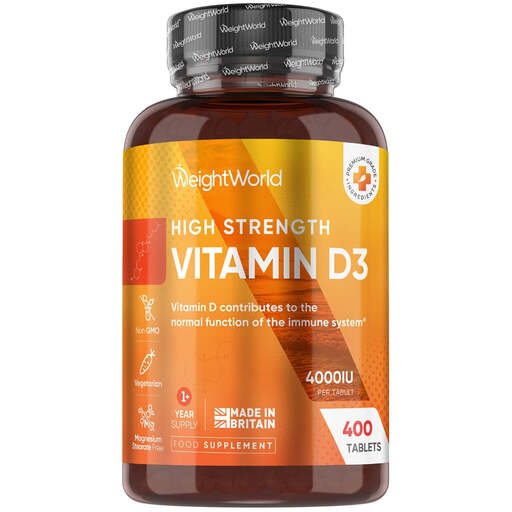
Why This Fits Their Persona: Ideal for users seeking a straightforward, high-dose, and long-term supply. With 400 tablets, this product provides a supply for more than a year, eliminating the need for frequent repurchases.
The clear dosage of 4000 IU per tablet prevents confusion. The large pack size is designed as a year's supply of Vitamin D, offering clear value for money without hidden costs.
High-dose formula with 4000 IU of Cholecalciferol. The micro-tablets are easy to swallow. The supply for over 13 months is extremely convenient.
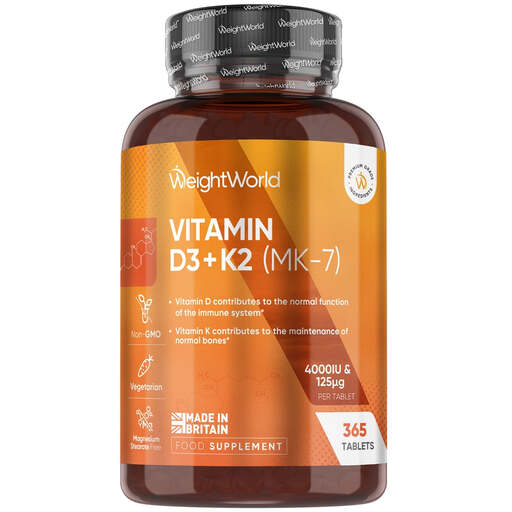
Why This Fits Their Persona: Perfect for health-conscious users who want to leverage the synergistic effect of Vitamin D3 and K2 to support calcium utilisation in the body.
This product bypasses the "unnecessary combinations" trap by offering a scientifically well-documented and effective partnership with Vitamin D3 K2. The use of K2 as MK-7 signifies high bioavailability.
Combines high-dose D3 (4000 IU) with bioactive K2 (125 mcg MK-7). The year's supply of 365 tablets is convenient and cost-effective.
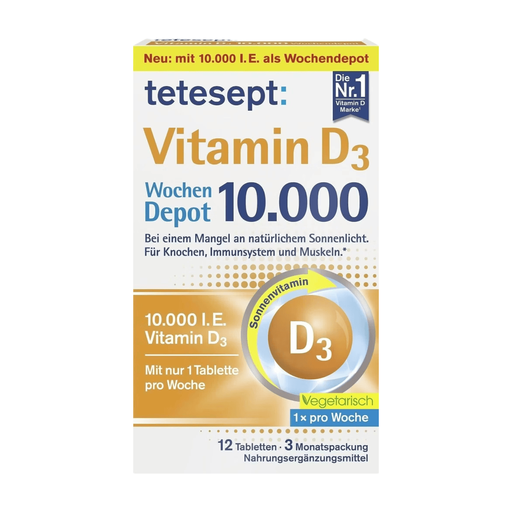
Why This Fits Their Persona: Designed for individuals who prefer a simplified routine. Instead of daily intake, one tablet per week is enough to provide the body with a continuous supply.
This product takes advantage of the body's ability to store the vitamin. The high dosage is explicitly intended for weekly intake as a Vitamin D depot, thus preventing accidental daily overdose.
Very convenient with just one dose per week. The depot effect ensures a steady supply. Ideal for forgetful people or travellers.
We've compiled a complete, up-to-date list of products that fully meet these strict selection criteria and comply with quality regulations.
Supplementation can be particularly useful in months with low sun exposure (October to March), as the body primarily produces Vitamin D through UVB radiation on the skin. Individuals who spend little time outdoors, older adults, or people with darker skin types also have factors that can affect the body's own production. Consulting with a doctor or pharmacist can clarify whether an individual need exists that suggests a possible Vitamin D deficiency.
"IU" stands for "International Units" and is a unit of measurement for the biological activity of a substance. For Vitamin D, the conversion is: 40 IU = 1 microgram (?g). A product with 2000 IU therefore contains 50 ?g of Vitamin D. This conversion is important for objectively comparing the dosages of different products.
A combination is not strictly necessary, but it can be beneficial. Vitamin D promotes the absorption of calcium from the intestine. Vitamin K2 supports the deposition of this calcium into the bones and teeth. Especially with long-term, high-dose intake of Vitamin D, the combination with K2 is often recommended to help manage calcium distribution in the body.