
Lieferung heute & morgen

Qualitätsgarantie

Willkommens-Angebote freischalten: KOSTENLOSE Lieferung | Bis zu 80 % RABATT | Kostenlose 30-Tage-JoyPlus-Testphase
App herunterladen
Watercolour pencils combine the control of drawing with the effects of watercolour painting. When dry, they can be used like classic coloured pencils; with water and a brush, they create soft transitions and transparent washes. But not every product labelled "water-soluble" suits every project. If you're looking to buy artist-grade pencils, watercolour pencils or a watercolour set, it's worth comparing the materials, leads and intended uses.
Water-soluble coloured pencils differ in how completely their dyes or pigments dissolve with water. A product description may mention water solubility, but that alone tells you little about how the colour actually performs on paper. For controlled glazes and blends, details about the softness of the lead, pigment application and recommended paper type are far more helpful.
Watercolour techniques introduce moisture to the paper. Thin copier paper can buckle, fray or absorb colour unevenly. For wet effects, watercolour paper with a sufficient weight is recommended. For dry sketches, drawing paper is often sufficient; if you plan to apply several layers of water, a sturdier paper makes sense.
A set with many colours may look appealing, but it could contain numerous similar shades. For beginners and students, a manageable watercolour set with basic colours is often easier to control. Ambitious hobby artists, on the other hand, benefit from graduated colour ranges if they frequently paint landscapes, portraits or illustrations.
A soft lead usually releases colour quickly and is easier to blend. It is ideal for areas, shading and watercolour washes. A harder lead allows for more precise outlines and fine details. With watercolour coloured pencils, the lead diameter is also important: the Faber-Castell Albrecht Dürer watercolour pencils in the 30-piece set, for example, are described as having a 3.8 mm lead diameter.
Check whether the manufacturer specifies concrete application methods:
These techniques are explicitly mentioned for the STAEDTLER Karat Aquarell pencils. The product details describe a soft, water-soluble lead and use on watercolour paper. This provides clear guidance for buyers who want to switch between dry drawing and flowing colour washes.
A hexagonal barrel can offer a stable grip for precise drawing and helps prevent the pencil from rolling off the table. FSC-certified wood is a verifiable material reference regarding the origin of the wood, but it does not replace information about the product's overall environmental footprint. For frequent users, a sturdy tin, a roll-up case or organised storage is also sensible.
Different criteria apply to markers: the Faber-Castell Watercolour Marker Albrecht Dürer has a brush tip and a fibre tip. This makes it more suitable for dynamic areas and lines than the classic handling of a wooden pencil.
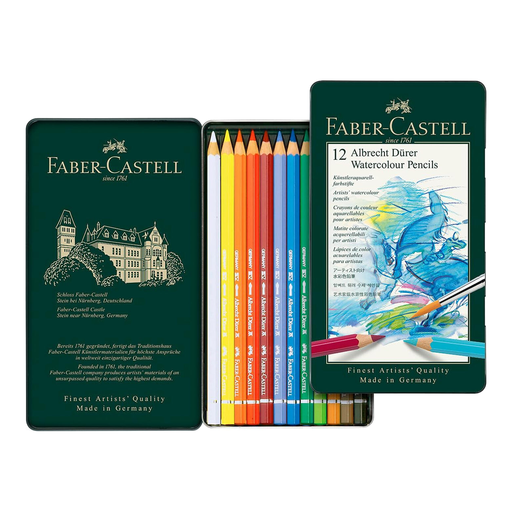
Why this product fits the profile: The 12-piece set offers a manageable colour selection for first drawings, colour gradients and simple watercolour effects. The metal tin supports storage at home or on the go.
The number of colours remains manageable. The product details mention water-soluble pigments and use either dry or with a damp brush.
12 colours, 3.8 mm lead, water-soluble dyes and a metal tin for storage.
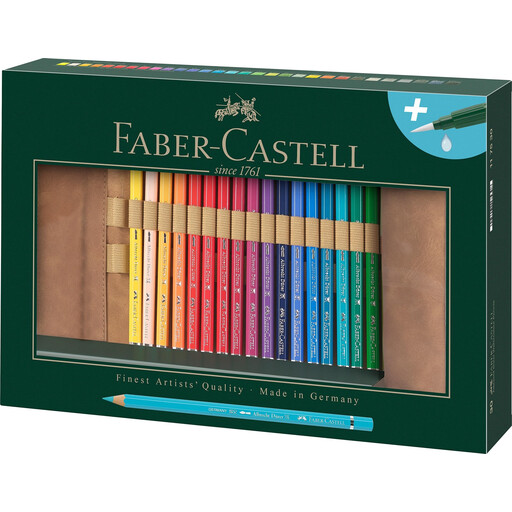
Why this product fits the profile: The range of 30 colours is aimed at illustrators, artists and ambitious hobbyists who frequently mix, layer and switch between detailed drawing and watercolour.
The roll-up case organises the pencils and protects them during transport. The product description also mentions dry and wet techniques.
30 colours, 3.8 mm leads, roll-up case and a water brush included.
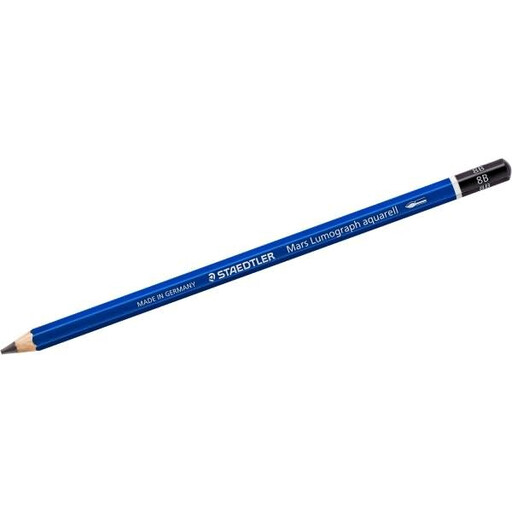
Why this product fits the profile: This water-soluble graphite pencil is designed for monochrome sketches, dark tonal values and washed drawings. It complements coloured watercolour pencils rather than replacing them.
The product type is clearly defined: it is water-soluble graphite in hardness grade 8B, not a coloured watercolour pencil.
8B graphite, water-soluble lead, break-resistant construction and PEFC-certified cedar wood according to product details.
We have compiled a complete, regularly updated list of products that fully meet these strict selection criteria and the safety regulations in force in the EU.
For clean colour gradients, a watercolour brush with a fine tip or a water brush is ideal. Start by applying a small amount of colour and dissolve it gradually with water. This keeps the intensity controllable. After use, pencils should be stored dry and markers closed tightly. For markers with two tips, the product description for the Faber-Castell Albrecht Dürer Watercolour Marker recommends horizontal storage.
For children's products, age recommendations, choking hazards from small parts and the need for adult supervision should be considered. Children's markers and craft paints are not automatically suitable for every surface. Warnings such as "from 3 years" or "not for consumption" should be taken into account before purchase and during use.
First, draw dry. Then dissolve the colour with a damp brush. Work with little water and test the colour intensity on a scrap piece of watercolour paper.
Durability depends on use, pressure and storage. Frequent large-area work uses up the lead faster than fine outlines. Pencils stored dry, protected and with a suitable sharpener generally remain usable for longer.
For pure dry drawings, drawing paper is sufficient. As soon as larger amounts of water or several glazes are planned, textured watercolour paper with a higher weight is advisable, as it absorbs moisture better and is less prone to buckling.