
Lieferung heute & morgen

Qualitätsgarantie

Willkommens-Angebote freischalten: KOSTENLOSE Lieferung | Bis zu 80 % RABATT | Kostenlose 30-Tage-JoyPlus-Testphase
App herunterladen
By Joybuy Product Recommendation Officer, July 28, 2026
The search for the right wooden toy can quickly become overwhelming. The market offers a plethora of products that promise durability, educational value, and sustainability. However, not every toy made of wood meets these criteria. Certain design flaws or misleading product descriptions can mean the joy of a new toy is short-lived. This guide will help you recognise the crucial features and make an informed choice.
Before we delve into quality characteristics, it's helpful to know the most common problems that can arise with wooden toys.
To avoid the pitfalls mentioned above, you should check two or three key aspects before buying. These parameters are crucial for the product's safety, durability, and play value.
The choice of wood and its processing are fundamental. Pay attention to the following points:
A toy must match the child's developmental stage to be safe and enjoyable.
Instead of a one-size-fits-all recommendation, we present products here that are tailored to different needs and age groups.
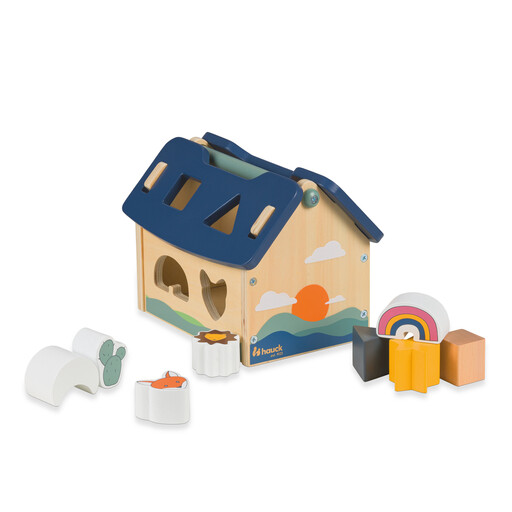
Why it's a great fit: Ideal for toddlers from 12 months who are beginning to discover shapes and colours. It's a classic educational toy that promotes basic motor skills in a simple and understandable way.
By combining shape sorting and stacking, this toy offers extended play value and won't become boring as quickly as a simple stacking toy.
According to the manufacturer, FSC-certified wood is used. The blocks can be stored inside the house, which makes tidying up easier.
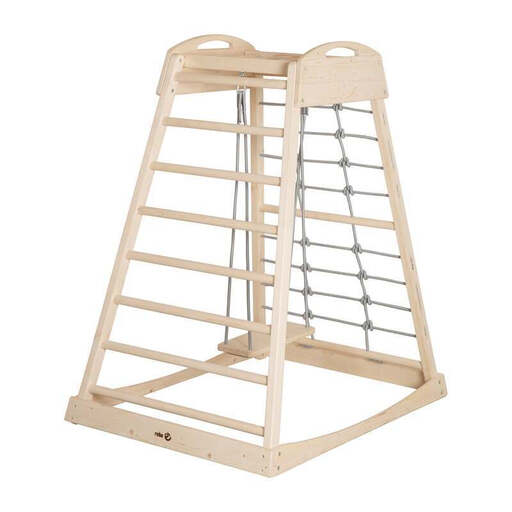
Why it's a great fit: For families looking for a durable and versatile indoor play option. It encourages the natural urge to move and promotes gross motor skills in children from 24 months.
This climbing frame is made of solid natural wood and, according to the manufacturer, can support up to 70 kg. It is designed for long-term use, thus avoiding the problem of short-lived toys.
Its versatility, with climbing ropes, gymnastic rings, and an interchangeable swing, provides long-lasting play appeal and can be expanded with other accessories like a slide.
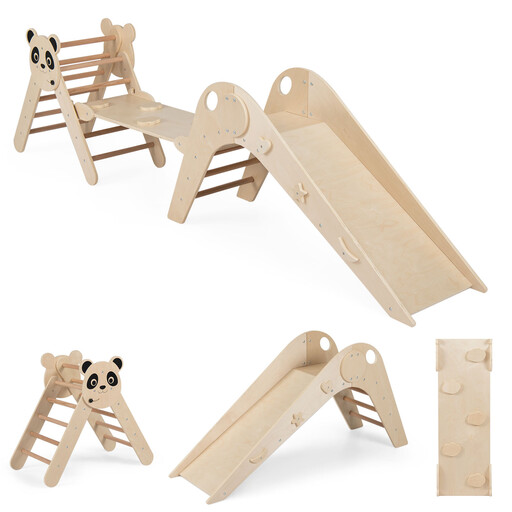
Why it's a great fit: This climbing triangle is a classic Montessori toy. It promotes independent motor skill development, balance, and self-confidence in children who are discovering their climbing abilities.
Unlike toys with only one function, the climbing triangle offers open-ended play possibilities. It can be a cave, a mountain, or part of an obstacle course, thus stimulating the imagination.
The design is foldable, allowing for space-saving storage – a practical aspect for many living spaces. The sturdy wooden construction provides the necessary safety for climbing.
Whether it's a wooden play kitchen, a play shop, or a mud kitchen for the garden – the principles of material quality, safety, and age-appropriate play value remain the same. A thoughtfully chosen wooden gift can bring joy for many years.
We have compiled a comprehensive, up-to-date list of products that fully meet these strict selection criteria and German safety regulations.
Untreated wood should only be wiped with a slightly damp cloth to prevent the material from swelling. Painted wooden toys can also be cleaned with a damp cloth and, if necessary, a mild soap solution. Disinfectants or harsh cleaning agents should be avoided as they can damage the surface and the colours.
The European standard EN 71 regulates the safety of toys. It consists of several parts. Particularly relevant for wooden toys is EN 71-3, which limits the migration of certain chemical elements from the toy material. This ensures that no danger arises from paints and varnishes when children put the toy in their mouths.
A strong indicator of a sustainable toy is the FSC seal. It guarantees that the wood used comes from forests that are managed according to strict ecological and social criteria. In addition, manufacturers of sustainable toys often pay attention to environmentally friendly packaging and durable product designs.