
Lieferung heute & morgen

Qualitätsgarantie

Willkommens-Angebote freischalten: KOSTENLOSE Lieferung | Bis zu 80 % RABATT | Kostenlose 30-Tage-JoyPlus-Testphase
App herunterladen
A kettle is part of the daily kitchen equipment in many German households, offices and shared flats. Tea, coffee, instant soups and hot water for cooking can usually be prepared with ease. Nevertheless, some purchasing decisions can lead to unnecessary costs or reduced convenience later on.
Typical pitfalls include choosing a capacity that is too large for a small household, hard-to-clean interior surfaces and a lack of safety features. High wattage is also often equated with particularly short boiling times, although the actual time required also depends on the amount of water, its starting temperature and the heating system. It is therefore worth taking a close look at the technical specifications before buying an electric kettle.
A 1.5-litre kettle is suitable for several cups and offers a practical middle ground for many kitchens. With a cup holding around 250 millilitres, this theoretically provides up to six portions. For individuals or couples, however, a compact 1-litre model may take up less space and help avoid boiling more water than necessary.
A 1.7-litre kettle is better suited to families, offices or users who regularly prepare several drinks at once. It is important not to fill the kettle to the maximum mark as a matter of course: the more water it contains, the more energy and time are required. Always observe the minimum and maximum markings.
A stainless-steel kettle is often robust and has a smooth, easy-care interior. Models with a concealed heating element are generally easier to wipe clean than appliances with an exposed heating coil. However, limescale can build up in stainless steel and glass kettles too, particularly in hard-water areas.
A glass kettle made from heat-resistant borosilicate glass lets you see the water level and boiling process directly. At the same time, visible limescale marks can be spotted more quickly. Glass surfaces can become hot, so the kettle should only be handled using the designated handle.
If you want to avoid plastic coming into contact with water, look for a BPA-free kettle. This specification should specifically apply to the water-contacting parts. According to the product details, the plastic parts of the Midea model are BPA-free and do not come into contact with the water. Even so, a material specification does not replace regular cleaning.
An automatic switch-off ends the heating process when the water reaches the intended boiling point. Boil-dry protection is designed to prevent the kettle from continuing to heat when too little or no water has been added. Both features are among the most important for everyday use.
The following features are also useful:
A cordless kettle is not actually without a power supply: the jug simply lifts off a separate base, making it easier to pour. Before cleaning, disconnect both the kettle and its base from the mains.
A kettle with temperature control can be useful if you regularly prepare different types of tea, coffee or hot water at a specific temperature. This means the water does not need to be brought fully to the boil every time. According to the product description, the Midea model offers seven preset temperatures between 45 and 100 °C.
A keep-warm function can be practical in the office, for several people or for a breakfast spread over different times. According to the supplier, the Midea appliance keeps the selected temperature for up to one hour. A thermal model such as the LIFEPAL BUFFI5 JOY, on the other hand, stores the heat inside the container; it is not a conventional electric kettle for boiling water. According to the product details, this model is not suitable for direct heating, use in a microwave or oven, or cleaning in a dishwasher.
When preparing baby food, follow the temperature information for the product in question and the preparation instructions provided by the food manufacturer. Keeping food warm is not a substitute for hygienically correct storage. Hot liquids should also be kept out of children’s reach.
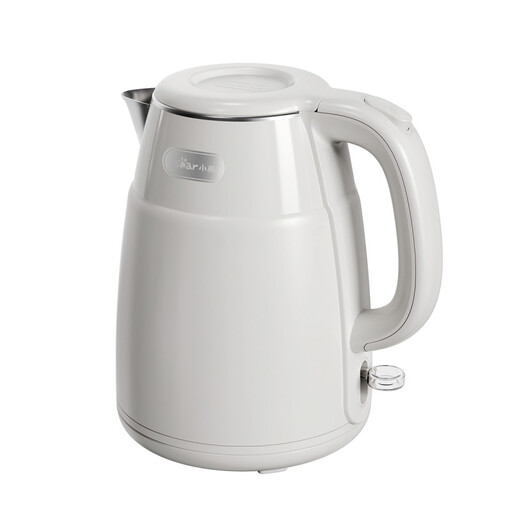
Why this product suits this profile: This compact stainless-steel kettle offers a practical capacity and simple one-button operation for tea, coffee or instant meals.
The stated automatic switch-off and boil-dry protection address two safety features that are often overlooked.
1.5-litre capacity, stainless-steel interior, automatic switch-off and cable storage.
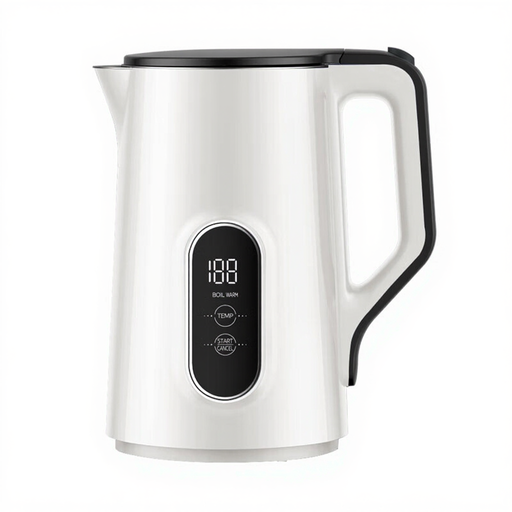
Why this product suits this profile: Tea drinkers and coffee lovers can choose between seven temperature settings from 45 to 100 °C and read the display directly on the appliance.
Temperature control reduces unnecessary full boiling; the product details also specify BPA-free plastic parts that do not come into contact with water.
2,200 watts, 1.5 litres, digital display and a keep-warm function for up to one hour according to the product description.
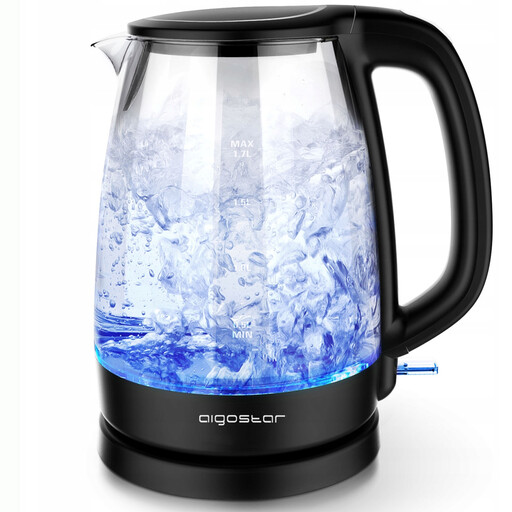
Why this product suits this profile: The larger capacity is suitable for preparing several cups in one go. The glass wall makes the water level and boiling process visible.
Automatic switch-off and boil-dry protection are explicitly specified. The glass surface makes it easier to monitor the fill level.
1.7 litres, 1,850–2,200 watts, removable 360-degree base, BPA-free product specification and blue operating light.
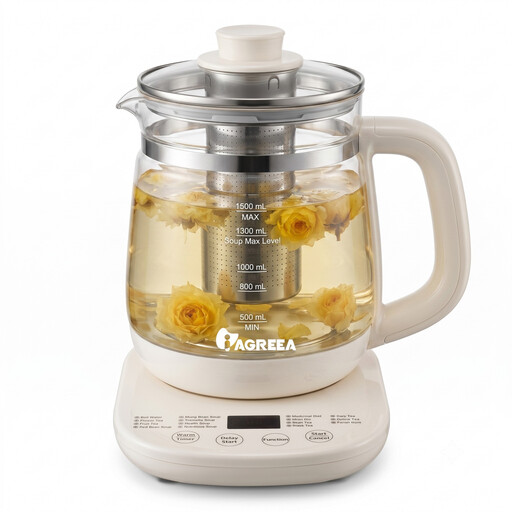
Why this product suits this profile: This model is aimed at users who want to prepare tea infusions as well as hot water, and are looking for programmes and adjustable keep-warm options.
According to the product description, the wide opening and removable tea infuser make cleaning easier than in hard-to-reach interior areas.
14 preset programmes, six temperature levels from 40 to 90 °C and a 304 stainless-steel tea infuser according to the supplier’s details.
We have put together a complete, regularly updated list of products that fully meet these strict selection criteria and the safety regulations applicable in the EU.
A kettle’s power consumption is given in watts. A fast kettle rated at 2,000 to 2,200 watts can heat larger quantities of water quickly. However, when heating the same amount of water, it does not automatically use significantly more energy than a less powerful model if the heating time is correspondingly shorter. The key factors affecting electricity costs are the amount of water, the temperature and the actual duration of use.
For a longer service life, we recommend:
Fill the kettle with at least the marked minimum amount and no more than the maximum amount. For a single cup, considerably less than 1.5 or 1.7 litres is usually sufficient. Too much water increases heating time and energy consumption.
The service life depends, among other things, on water hardness, frequency of use, cleaning and build quality. It is not possible to reliably determine a fixed service life from the wattage. Descaling and following the operating instructions can help keep the appliance working effectively.
This depends on the amount of water, your electricity tariff and the efficiency of the hob used. In everyday use, a kettle can be convenient because it is designed for heating defined quantities directly. The key is still to heat only as much water as you actually need.