
Lieferung heute & morgen

Qualitätsgarantie

Willkommens-Angebote freischalten: KOSTENLOSE Lieferung | Bis zu 80 % RABATT | Kostenlose 30-Tage-JoyPlus-Testphase
App herunterladen
A lunchbox should transport meals safely, be easy to clean and fit in with your daily routine. In practice, however, unclear material specifications, incorrectly assessed closures or an unsuitable compartment layout can quickly lead to disappointing purchases. This is why working adults, school pupils, students and families in particular should take a close look at the technical specifications.
A box described as a leakproof lunchbox is not automatically suitable for every type of food. Liquid soups, sauces or very full containers place greater demands on the seal and closure. Look for:
Even an intact seal cannot reliably prevent leaks if the lid is fitted at an angle or the container is overfilled.
‘Heat-resistant’ does not automatically mean ‘microwave-safe’. With many containers, the lid must be removed completely or a steam valve opened. A microwave-safe food container must not be used on the hob, under the grill or in the oven unless this is expressly stated.
According to the product description, the LocknLock glass container is suitable for use in the oven without its lid at temperatures of up to 400 °C, and may also be used in the microwave without the lid. The lid itself must not be placed in either the oven or the microwave.
A lunchbox with compartments can keep bread, fruit and side dishes neatly separated. However, this does not necessarily mean that the individual sections are watertight. For dry snacks, a flexible divider is often sufficient. For yoghurt, dressing or sauces, a separate container is usually more practical.
Plastic is generally lightweight and suitable for everyday transport in a rucksack or work bag. Check details such as BPA-free construction, the temperature range and dishwasher suitability. Polypropylene, or PP for short, is used in several of the models listed.
Stainless steel is durable and resistant to many odours. A stainless-steel lunchbox such as the PURECOOK models may be suitable for dry meals, filled sandwiches and snacks. Metal is generally not intended for microwave use. Also pay attention to the lid seal, as stainless steel itself does not guarantee leakproof performance.
Borosilicate glass is transparent, making it easier to check the portion inside. Depending on the manufacturer's specifications, it may be suitable for use in the freezer, microwave and oven. At the same time, it can break if dropped or subjected to a strong impact. A glass food storage container is therefore particularly suitable for use at home, in the office or in a sturdy bag.
A compact lunch box may be sufficient for a small snack. As a guide:
Do not compare capacity alone; check the external dimensions as well. A 1,000 ml box may be more practical in a narrow bag than a wide container with a similar capacity.
A dishwasher-safe lunchbox saves time, provided that every component is genuinely suitable for dishwasher use. Lids, seals and valves often have different care instructions from the main container. Removable silicone rings can be cleaned and dried more thoroughly.
Thermal containers often need to be washed by hand. According to the product information, the Maxcook 316 Stainless Steel Insulated Food Jar with a capacity of 1.5 litres should be cleaned by hand and is not suitable for microwave use. Briefly preheating or pre-cooling it with water before filling may help it maintain the intended temperature.
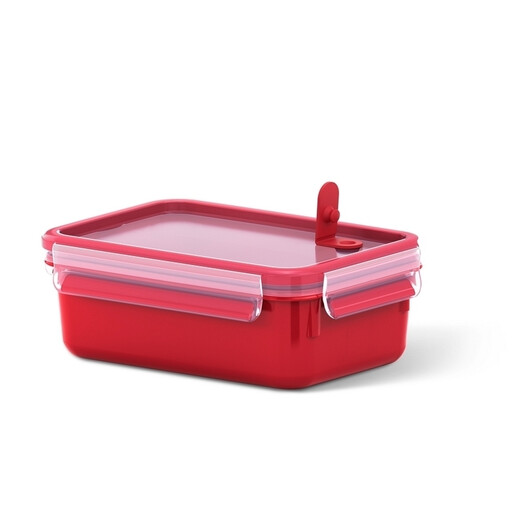
Why this product suits this profile: The compact 0.8-litre box is designed for the office, school and short journeys. According to the product information, it features an integrated steam valve and internal portion markings.
The steam valve indicates exactly how the box should be used when heating food. It must be opened before using the microwave; the container is not intended for use on the hob or in the oven.
0.8-litre capacity, PP construction, BPA-free, and according to the supplier, suitable for the microwave, freezer compartment and dishwasher.
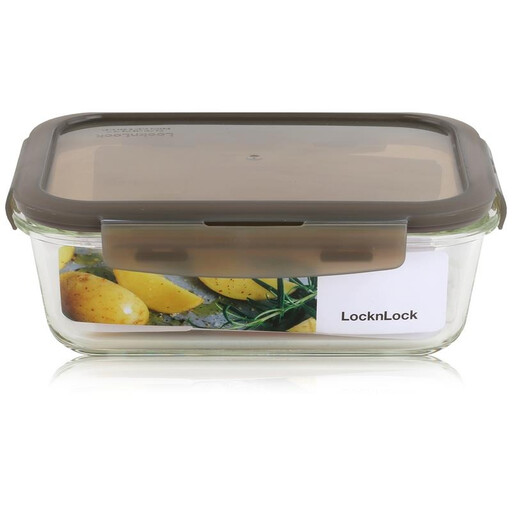
Why this product suits this profile: The transparent borosilicate glass container is ideal for users who want to keep food visible and use one container for storage, heating and serving.
The usage instructions clearly distinguish between the glass container and the lid: the lid must be removed completely when using the oven or microwave.
630 ml, four-sided closure, silicone seal, and according to the product information, suitable for freezing down to -20 °C and dishwasher-safe.
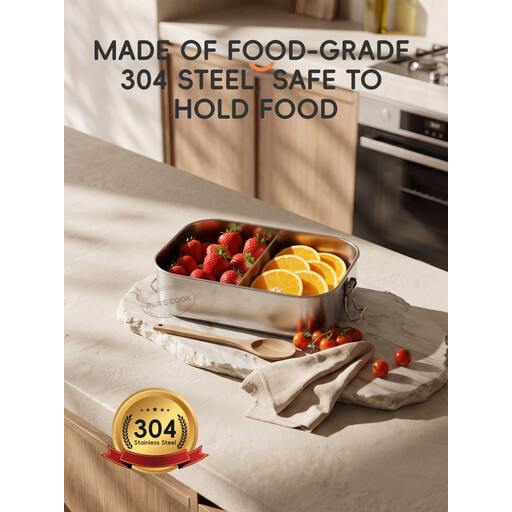
Why this product suits this profile: The rectangular box with two sections provides space for separate parts of a meal and, measuring 18 × 15 × 6,7 cm, fits into many bags.
The product information lists sealable clips and a removable silicone seal. This means the closure and seal can be checked and cleaned separately.
304 stainless steel, two compartments, reusable design and, according to the product information, suitable for the dishwasher.
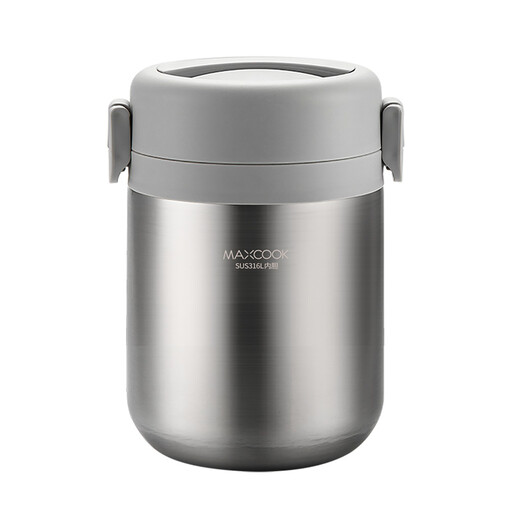
Why this product suits this profile: The wide 1.5-litre insulated container is designed for soups, stews and larger portions when insulated storage is more important than a flat shape.
The product description explicitly states that it should be washed by hand, closed correctly and not used in the microwave. This helps avoid false expectations about cleaning and heating.
316 stainless steel, vacuum insulation, wide opening, 1.5-litre capacity and a tightly sealing lid according to the product information.
We have put together a complete, regularly updated list of products that fully meet these strict selection criteria and the safety regulations applicable in the EU.
A thermal lunchbox with vacuum insulation is practical for soups and stews. For heating food immediately before eating, glass or plastic containers with appropriate microwave approval are more suitable. Depending on the model, the lid must be removed or opened using a steam valve.
Its service life depends on the material, closure and care. Check the silicone ring, clips and lid regularly for cracks or deformation. Damaged containers should no longer be used. With glass containers, you should also look out for chips and cracks.
That depends on its construction. A lunchbox with compartments can keep dry foods separate, while liquids may seep between the sections. For dressing, yoghurt or sauces, a separately sealed container is the safer choice.