
Lieferung heute & morgen

Qualitätsgarantie

Willkommens-Angebote freischalten: KOSTENLOSE Lieferung | Bis zu 80 % RABATT | Kostenlose 30-Tage-JoyPlus-Testphase
App herunterladen
An air fryer can cook chips, vegetables, chicken, baked goods and reheated food using very little oil. Before you buy, however, it is worth taking a close look at capacity, controls and cleaning. Many appliances look similar at first glance, but can differ considerably when it comes to basket layout, footprint and everyday practicality.
An air fryer with a capacity of 9 litres sounds spacious. However, with an air fryer with two chambers, this volume is usually divided between two baskets. That is useful for cooking two different foods, but it does not automatically provide enough space for one large item that needs to remain together.
The key factors are therefore:
For several portions of chips or vegetables, a large, wide cooking chamber may sometimes be more suitable than two small baskets. For different cooking times, however, a dual-zone air fryer offers greater flexibility.
A long list of programmes may seem convenient, but it says little about how easy the appliance is to use in practice. Adjustable temperature, cooking time and separate chamber controls are more important. For delicate foods, manual adjustments are often more useful than a preset menu.
You should also check whether the control panel is easy to read. An air fryer with a touchscreen can provide a clear interface, but depending on the model, it may respond differently to damp or greasy fingers. Traditional buttons or a clearly readable display can be more practical for everyday kitchen use.
As a rule, only removable baskets, racks or grill plates can be placed in the dishwasher. The housing, heating element, electronics and fan must not be immersed in water. Check which components are genuinely dishwasher-safe and whether the coating is designed to be cleaned with mild washing-up liquid.
A compact model may be sufficient for one person or a couple. An air fryer for families, on the other hand, should provide enough space for several portions. As a general guide:
The term XXL air fryer is not used consistently. Always compare the actual dimensions and basket layout.
The wattage indicates the appliance’s electrical power consumption, not automatically the quality of its cooking performance. Models rated at 2,000 watts or more may offer suitable technical performance for large cooking chambers. However, energy consumption also depends on how long the appliance runs and whether it replaces a large oven for small portions.
A useful temperature range should cover common applications such as low-fat frying, baking, reheating and roasting. Settings such as 40 to 200 °C or up to 230 °C should be compared with the recipes you want to prepare.
Look for:
A viewing window can reduce the need to open the appliance while food is cooking. With an air fryer with a viewing window, you should still check whether it also has an interior light. Without lighting, the practical benefit of the window may be limited depending on where the appliance is positioned.
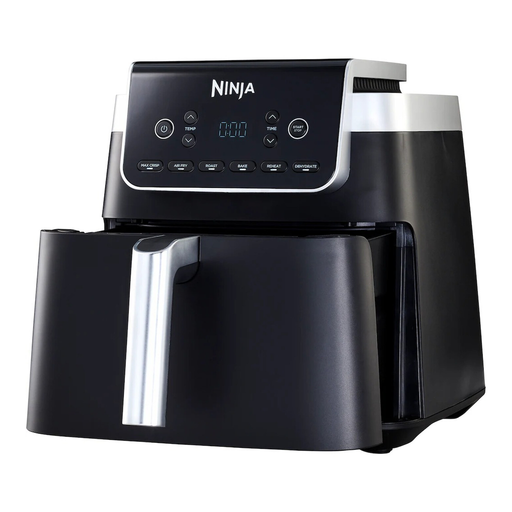
Why this product suits this profile: The single 6.2-litre cooking chamber is suitable for classic dishes and several side dishes, without the added complexity of a dual-zone air fryer. Digital controls allow you to set the time and temperature manually.
The stated capacity and 2,000-watt output are clearly specified. The single chamber avoids misleadingly dividing the total capacity between two small baskets.
6.2 litres, 2,000 watts, functions for frying, roasting, baking and reheating, plus a coated basket.

Why this product suits this profile: This model combines a 6.2-litre capacity with 13 preset programmes and optional app connectivity. It is well suited to users who value digital recipe guidance and structured controls.
The features go beyond simply listing programme names: manual temperature control, digital operation and removable dishwasher-safe parts are all clearly specified.
13 programmes, app connectivity, 6.2-litre capacity and removable dishwasher-safe parts.
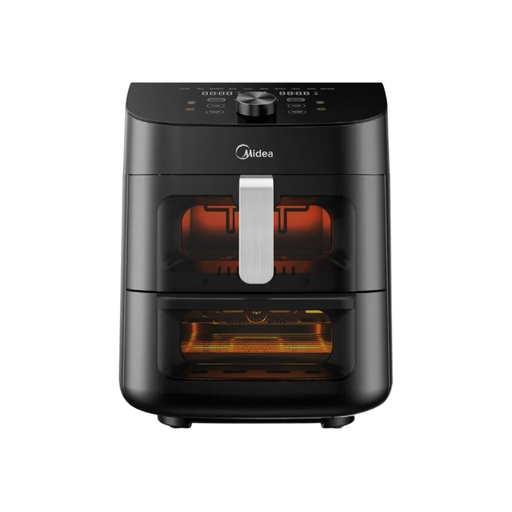
Why this product suits this profile: The two independent cooking chambers and vertical design are aimed at households that want to prepare different foods at the same time while saving worktop space.
The chambers are explicitly described as separate. A viewing window, LED touchscreen and removable dishwasher-safe accessories make checking and cleaning easier.
11-litre total capacity, two independent chambers, 10 automatic programmes, viewing window and keep-warm function.
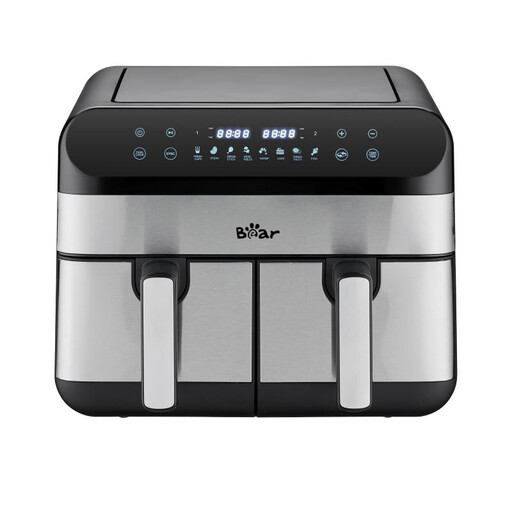
Why this product suits this profile: The two baskets, with a combined capacity of 9 litres and independent temperature control, allow you to prepare, for example, a side dish and main course at the same time.
The capacity is stated as a total volume divided between two chambers. The appliance also features eight programmes, a touchscreen and removable dishwasher-safe parts.
9 litres, 2,400 watts, separate temperature controls, digital touchscreen control panel and dishwasher-safe accessories.
We have put together a complete, regularly updated list of products that fully meet these strict selection criteria and the safety regulations applicable in the EU.
Place the appliance on a level, heat-resistant surface. Leave sufficient space between it and walls, curtains and other appliances; many instruction manuals specify at least 10 centimetres at the sides and rear. Do not cover the ventilation openings.
For even results, do not overfill the basket. A single layer helps air circulate. Chips, vegetables and smaller pieces may need shaking during cooking. Oil is not essential, although a small amount can affect browning with certain ingredients.
Consumption depends on the power rating, running time, temperature and how full the appliance is. A 2,000-watt appliance theoretically uses 2.0 kWh when operated for one hour. In practice, it often runs for less time. Compare the time required with using an oven and take the actual quantity being prepared into account.
There is no universally applicable lifespan. It depends on how often the appliance is used, how it is cleaned, the coating and the quality of its individual components. Allow the appliance to cool before cleaning removable parts, and do not use abrasive products or metal utensils on coated surfaces.
This depends on the model and recipe. Some appliances do not need preheating, while other instructions recommend a few minutes. The manufacturer’s guidance is the deciding factor. With frozen foods or delicate batters, the starting temperature can affect the result.