
Lieferung heute & morgen

Qualitätsgarantie

Willkommens-Angebote freischalten: KOSTENLOSE Lieferung | Bis zu 80 % RABATT | Kostenlose 30-Tage-JoyPlus-Testphase
App herunterladen
A pressure cooker, also known as a steam pressure cooker or pressure cooking pot, can prepare soups, stews, pulses and braised dishes while saving space. However, it is worth taking a close look at the design, capacity and safety features before buying. Not every model is suitable for every hob or household.
A 6-litre pressure cooker does not automatically offer 6 litres of usable cooking space. With pressure cookers, part of the pot must remain empty so that steam and pressure can build up safely. For example, the Cecotec model is listed as having an internal volume of 6 litres, while the product description states that its usable capacity is 5 litres.
For a pressure cooker for families, 5 to 6.5 litres is often a practical size. For individuals or couples, a smaller model of around 3.8 to 4 litres may be sufficient.
A pressure cooker for induction hobs requires a suitable magnetic base. The specification “suitable for all hob types” should be stated explicitly in the technical details. The key hob types are:
Models with multi-layer or sandwich bases generally distribute heat more evenly. However, this does not mean that every hob ring will be ideally suited to the size of the pot. For example, a diameter of 22 cm should match the cooking zone being used.
A timer, multiple cooking programmes or a voice function can be useful, but they do not replace essential safety features. Look for a locking mechanism, controlled steam release and an indicator showing whether residual pressure is present.
Never force the lid open while the pot is under pressure. The sealing ring, valve and lid mechanism should be checked and cleaned in accordance with the instruction manual.
As a general guide:
The most suitable size also depends on the dish. Foods that swell considerably, such as rice, beans and lentils, often have special filling limits. These manufacturer instructions should be followed.
A stainless steel pressure cooker made from 18/10 stainless steel contains 18 per cent chromium and 10 per cent nickel. This material specification describes the composition and is not a general guarantee of quality. Stainless steel is easy to care for and is often combined with an aluminium core in the base.
A multi-layer base can transfer heat from the hob to the pot more evenly. With enamelled cast-iron pots, on the other hand, heat retention is the main focus. Models with a “micro-pressure” function should not automatically be considered equivalent to a conventional high-pressure cooker.
Removable lid handles make cleaning easier. Some pots and inserts are dishwasher-safe, while sealing rings, valves and handles must be cleaned by hand. Before buying, check:
A pressure cooker with a steaming insert offers additional options for preparing vegetables, fish and dumplings. An electric pressure cooker also provides programmes and keep-warm functions, but requires a permanent place on the worktop and a power socket.
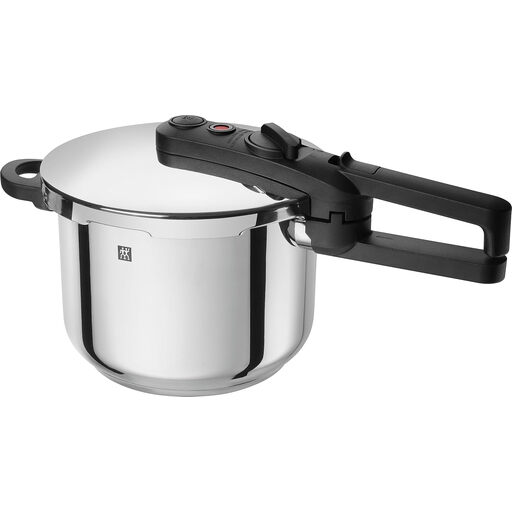
Why this product suits the profile: This 4-litre model is suitable for smaller households and offers two adjustable pressure settings. According to the product details, the SIGMA-Classic base is suitable for induction, gas, electric and ceramic hobs.
Hob compatibility, capacity and the two pressure settings are clearly specified. This makes it easier to choose than products that rely solely on promotional claims about their programmes.
18/10 stainless steel, 4-litre capacity and an integrated safety valve; according to the product details, it is not dishwasher-safe.
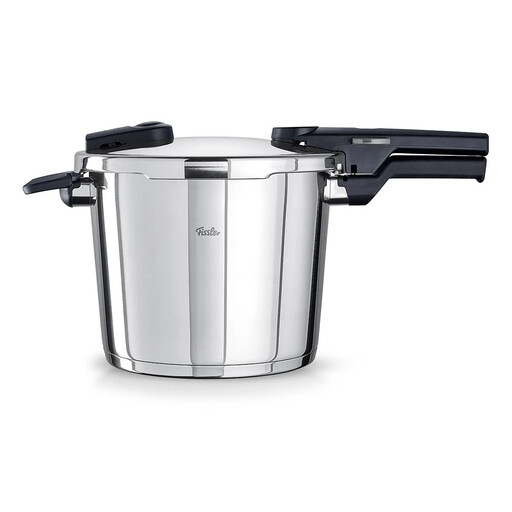
Why this product suits the profile: This 6-litre pressure cooker made from 18/10 stainless steel is designed for households looking for a traditional hob-top model for regular family meals.
The locking indicator and positioning aid support correct lid placement. Induction compatibility is explicitly stated.
6-litre capacity, removable handle, stackable design and Superthermic base for various hob types.
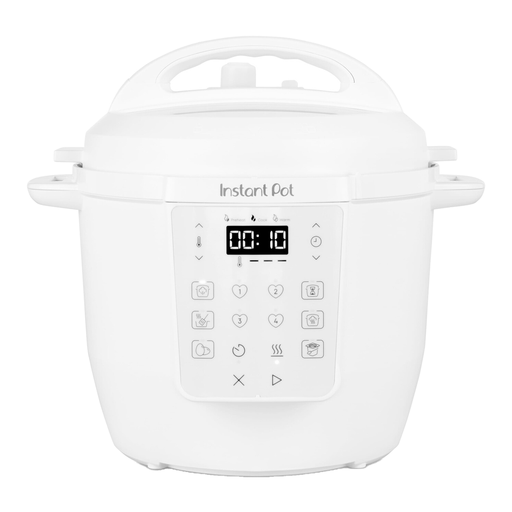
Why this product suits the profile: This electric pressure cooker combines pressure cooking, slow cooking, steaming, sautéing, yoghurt making and keep-warm functions in one appliance.
The programmes are clearly named, while safety features such as overheating protection, a locking lid and controlled steam release are listed in the product description.
5.7-litre stainless steel insert, pre-set programmes and dishwasher-safe parts according to the product details.
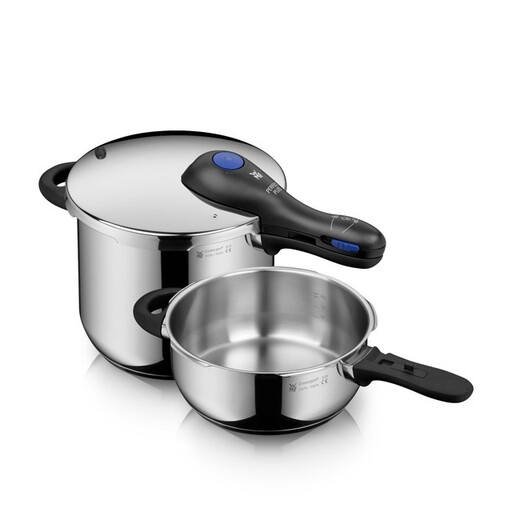
Why this product suits the profile: This set combines a 6.5-litre pressure cooker with a 3-litre braising pan and steaming insert. It is well suited to families planning different cooking methods and larger quantities.
The usable accessories and the two pot sizes are clearly specified. However, the 6.5- and 3-litre filling limits must still be observed in accordance with the instructions.
18/10 Cromargan stainless steel, TransTherm base, two cooking settings and a removable lid handle; according to the product description, it is suitable for induction, gas and ceramic hobs.
We have put together a complete, regularly updated list of products that fully meet these strict selection criteria and the safety regulations applicable in the EU.
For three to five people, 5 to 6.5 litres is usually a sensible choice. As the pot must not be filled to the brim, the usable capacity will be lower. For larger batch-cooking portions, a pressure cooker of 6 litres or more may be a practical option.
This can be checked by looking at the base and the manufacturer’s specifications. A pressure cooker for induction hobs should be explicitly approved for use on induction hobs. A magnetic multi-layer base supports heat transfer, but does not replace a specific compatibility statement.
Its lifespan depends on the material, usage and care. The stainless steel body and lid can remain usable for many years when handled correctly. The sealing ring and valve are wear parts and should be checked regularly and replaced if visibly damaged or according to the manufacturer’s instructions.