
Lieferung heute & morgen

Qualitätsgarantie

Willkommens-Angebote freischalten: KOSTENLOSE Lieferung | Bis zu 80 % RABATT | Kostenlose 30-Tage-JoyPlus-Testphase
App herunterladen
The right lighting affects the atmosphere of a room, visual comfort and energy consumption. When buying lamps, many people initially focus on colour and shape. However, this can mean overlooking important details: a light may look decorative but be unsuitable for its intended location, provide too little light or prove difficult to operate flexibly later on.
Modern lamps and decorative lighting are often marketed based on their appearance. However, a slim lamp base, striking shade or unusual metal finish says little about light output or operation. For a reading chair, desk or dining table, direction, brightness and switch position are more important than the shape alone.
LED lamps often require less electrical power than conventional bulbs. Nevertheless, when comparing products, you should check the details for watts, lumens, energy efficiency class and operating time. An integrated LED is not always replaceable either. If the module fails, some models may require the entire light fitting to be replaced.
A lamp for a balcony, patio or garden needs a suitable IP rating. IP20 is intended for dry indoor areas and not for outdoor use. IP44 provides protection against solid foreign objects above a certain size and against splashing water from various directions. This does not mean that the light can be exposed continuously to rain, snow or standing water. The cable, charging port and surface it is placed on must also be suitable for the intended use.
Brightness is measured in lumens (lm). Watts, on the other hand, primarily describe power consumption. For a reading lamp or task light, directional and sufficiently bright illumination is useful. A table lamp for a hallway or a decorative lamp on a sideboard can get by with less light.
Colour temperature is measured in Kelvin (K):
Models with a CCT function allow you to switch between different colour temperatures. With dimmable lamps, you should also check whether the brightness can be adjusted continuously or only in set levels.
Measure the intended space before buying. With floor lamps, height, base diameter and cable length are important. An arc lamp needs enough room not only for its base but also for the curved arm. Table lamps should not extend beyond the edge of the table and must not obstruct walkways.
For flexible use, rechargeable lamps with a USB connection are practical. Check whether a charging cable and mains adapter are included, how the light is switched on and off, and whether the battery can be removed. For mains-powered lamps, the plug type, cable length and switch position are important buying criteria.
With lamps that use replaceable bulbs, the fitting must be compatible with the bulb you want to use. E27 and E14 are common options. Check the stated maximum wattage, the installation instructions and whether the bulb is included.
For indoor areas, pendant lights, ceiling lamps, table lamps and floor lamps with IP20 are standard, provided they are installed in a dry location. Outdoor lamps should have an IP rating specified by the manufacturer. A light with IP44 is not automatically suitable for every weather condition.
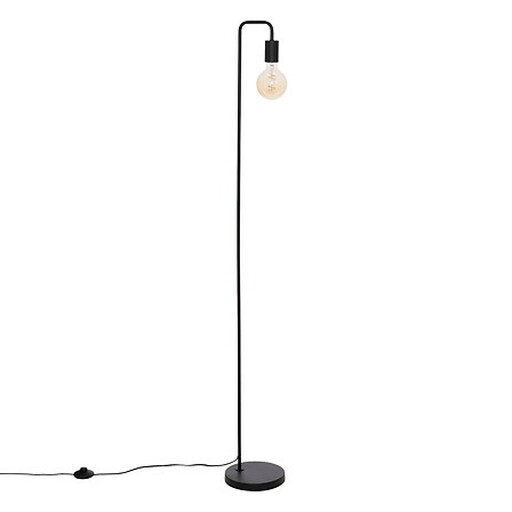
Why this product suits the profile: This straight-lined floor lamp is designed for living rooms, bedrooms or studies and uses a replaceable E27 bulb with a maximum output of 40 W.
The product details clearly state the fitting, maximum wattage and cable length. The bulb is not included, so you can choose one that suits your needs.
150 cm height, metal construction, concrete base, E27 fitting and 180 cm cable.
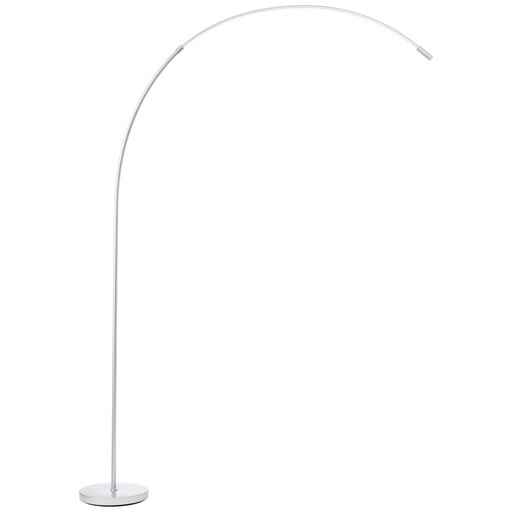
Why this product suits the profile: This LED arc lamp combines a defined light output with an adjustable colour temperature and continuous control via a touch switch.
The product data includes lumens, Kelvin, power consumption and energy efficiency class F. This makes it easier to assess brightness and energy use before buying.
1300 lm, 14 W, 3000–6500 K, continuous dimming, 179 cm height and 228 cm cable.
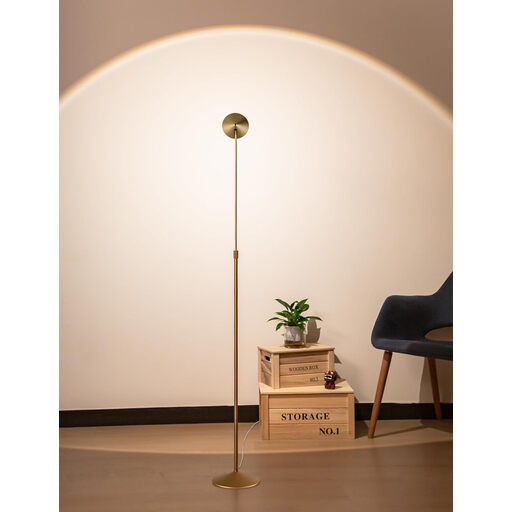
Why this product suits the profile: This lamp is designed for anyone who needs an adjustable light position when reading, working, sewing or crafting.
The height adjustment, 150° movable lamp head and three dimming levels are clearly specified. This makes it easier to adapt the light to different seating and working heights.
Integrated LED, 150° adjustment, telescopic function and touch control with three brightness levels.
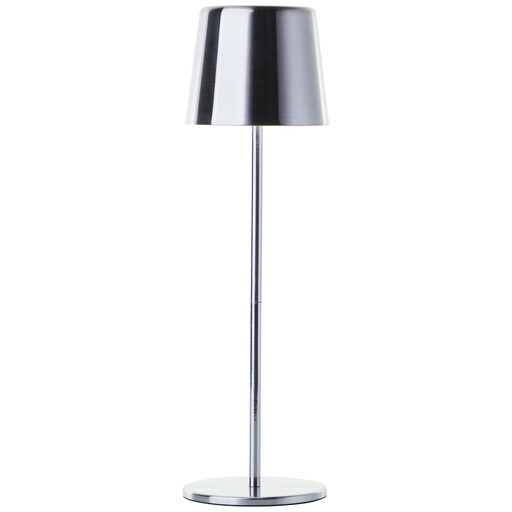
Why this product suits the profile: This rechargeable table lamp can be placed on a balcony, patio or indoors without a permanently connected power cable.
The intended use can be assessed from its IP44 rating. USB charging, integrated LED, CCT adjustment and a touch dimmer are listed separately in the product data.
37 cm height, 4 W power consumption, 3000–6500 K, 300 lm, battery and USB connection.
We have put together a complete, regularly updated list of products that fully meet these strict selection criteria and the safety regulations applicable in the EU.
That depends on the intended purpose. Floor lamps or arc lamps can provide an additional light source beside a sofa or armchair. Ceiling lamps usually provide the main lighting, while table lamps create accent lighting. For reading and working, adjustable reading lamps with a sufficient lumen rating are more practical than purely decorative models.
The cost depends on power consumption, daily usage time and your electricity tariff. A simple calculation is: Watts ÷ 1,000 × operating hours × electricity price. For example, a 14-W LED used for two hours a day consumes 0.028 kWh per day. For a realistic comparison, you should not consider wattage in isolation; also take the brightness in lumens into account.
The actual lifespan depends on factors including heat generation, electronics, frequency of use and build quality. With integrated LED lamps, check whether the LED module can be replaced. With lamps featuring an E27 or E14 fitting, the bulb can be replaced separately. Also pay attention to the installation instructions, adequate ventilation and the maximum wattage specified for the product.