
Lieferung heute & morgen

Qualitätsgarantie

Willkommens-Angebote freischalten: KOSTENLOSE Lieferung | Bis zu 80 % RABATT | Kostenlose 30-Tage-JoyPlus-Testphase
App herunterladen
Anyone looking to buy small kitchen appliances will quickly find numerous models boasting high wattages, multiple programmes and extensive accessories. However, the key question is not how long the product description is, but whether the appliance suits your household, the quantity of food you want to prepare and the kitchen space available. For individuals, families and home cooks, the most important factors are clear technical specifications, safe operation and a level of cleaning that is realistic for everyday use.
A high power rating may sound impressive at first. However, it does not by itself determine how evenly a blender, hand blender or chopper will work. The blade design, container construction, permitted running time and type of ingredients are also important. A 500-watt appliance may be suitable for smoothies, soups or soft vegetables, while hard or frozen ingredients may require different specifications.
The container size shown on the appliance is not automatically the maximum working capacity. With blenders, you must observe the mark for the maximum liquid fill level. Large containers are practical for family portions, but require more storage space. Smaller working bowls are suitable for onions, herbs or small amounts of baby food, but take more time when preparing several portions.
Not every accessory is dishwasher-safe, and some motors may only be operated for short periods. Processing meat, nuts or firm foods can also leave residue on blades and seals. Before buying, check the removable parts, ease of handling, drying requirements and the maximum running time stated in the instructions.
Compare the rated power, rather than focusing only on a maximum power figure advertised for short-term use. A 300-watt chopper may be sufficient for vegetables, herbs and smaller quantities of meat if the blades and bowl are suitably designed. Depending on the model, a blender with 500 to 1,000 watts offers more scope for frozen ingredients or an ice-crushing function. Even so, the manufacturer’s instructions still apply: some appliances need a break after a short operating period.
For families, containers of around 1.2 to 2.1 litres may be worth considering. The actual maximum fill level remains the decisive factor. Glass containers are heavier, but may be less likely to retain odours; plastic containers are lighter and often easier to handle. Look for clearly described, rust-resistant stainless-steel blades and a secure lid-locking mechanism.
With an electric food slicer, cutting thickness, cutting travel, blade type and whether the carriage can be removed are the key considerations. Models with adjustable cutting thickness are more versatile for bread, vegetables or fruit. Momentary and continuous safety switches can make everyday operation more controlled.
A hand blender with a whisk, measuring jug and chopper can replace several individual appliances. If you want to prepare minced meat or homemade sausages, look for a meat grinder with cutting discs, a reverse function, pusher and a sausage stuffer. Also check for overload and overheating protection, locking mechanisms and the power supply specifications. For households in Germany, clear manufacturer and EU responsible-person details, easy-to-understand instructions and the correct mains voltage are important points of reference.
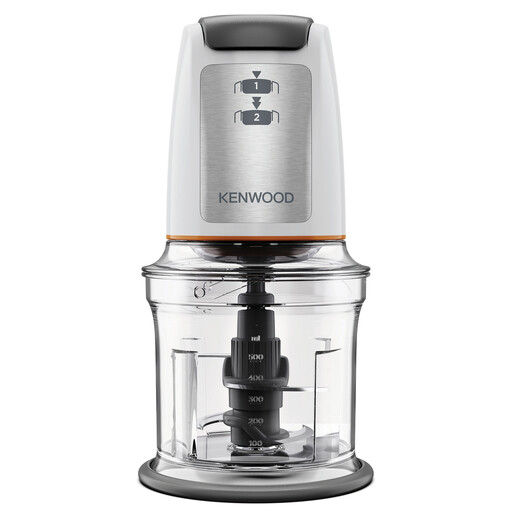
Why this product suits this profile: This electric mini chopper has a 0.5-litre working bowl, 500 watts and two speed settings. It is therefore suitable for smaller preparation tasks in one- and two-person households.
The bowl size, power rating and two speed settings are clearly defined. This means buyers are not led to expect an oversized multifunction appliance for large quantities.
Compact design, 500 watts and two speed settings for everyday small chopping tasks.
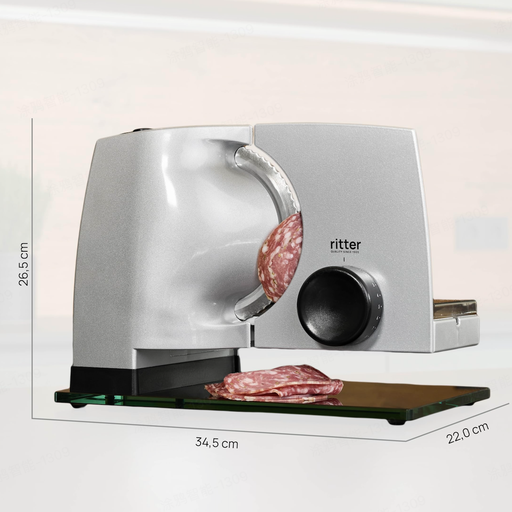
Why this product suits this profile: According to the product specifications, this food slicer made in Germany has a safety-glass base plate, a removable carriage with an 18 cm cutting travel and an adjustable cutting thickness of up to around 20 mm.
The cutting thickness and removable carriage are specific details. This makes it easier to assess the product than claims that provide no measurements.
Safety-glass base plate, ECO motor and removable carriage; the manufacturer also mentions repair options.
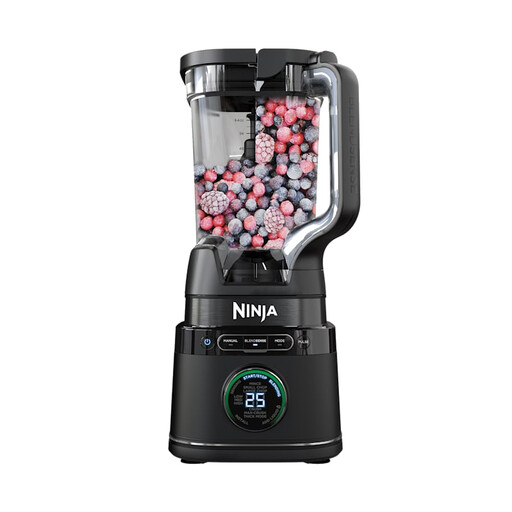
Why this product suits this profile: The large container is designed for preparing larger quantities of smoothies, juices or frozen drinks. Three speed settings and a pulse function allow you to create different textures.
The maximum liquid capacity of 1.9 litres is stated explicitly. The product description also specifies a maximum running time of 60 seconds per cycle.
1,000 watts, a 2.1-litre jug, a six-part stainless-steel blade system and removable dishwasher-safe parts, according to the product specifications.
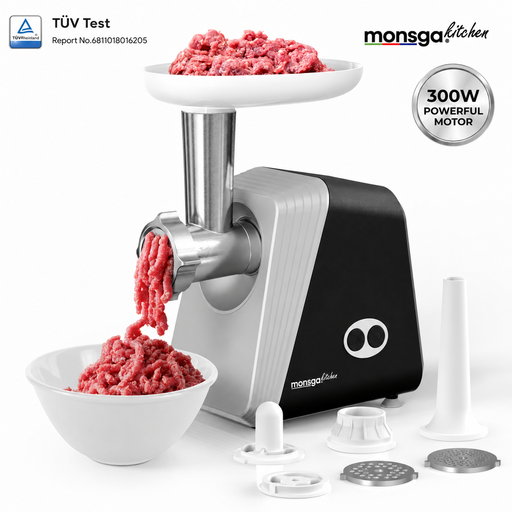
Why this product suits this profile: This meat grinder is an interesting option for households that want to prepare minced meat, kibbeh or homemade sausages. The package includes three cutting discs, a sausage stuffer and further accessories.
The equipment is listed in detail, including fine, medium and coarse discs as well as the accessories. This lets you compare the functions with your own requirements before buying.
Reverse function, overload and overheating protection, plus accessories for minced meat, sausage filling and kibbeh.
We have put together a complete, regularly updated list of products that fully meet these strict selection criteria and the safety regulations applicable in the EU.
That depends on how you plan to use it. Compact choppers with around 300 watts may be sufficient for herbs, onions and soft vegetables. For larger quantities, frozen fruit or an ice-crushing function, models with 500 to 1,000 watts offer greater power reserves. Wattage should always be considered together with blade design, container size and the permitted running time.
Depending on the recipe, a blender, hand blender or chopper can be used to purée soft ingredients. Important factors include a small, easy-to-control portion size, thorough cleaning and observing the container’s temperature limits. The appliance’s suitability does not replace guidance on hygienic food preparation.
Electricity consumption is determined by the power rating and actual running time. A 500-watt appliance uses around 0.083 kilowatt-hours during ten minutes of operation; the exact cost depends on your electricity tariff. Material quality, the availability of spare parts or repairs, observing the correct breaks and regular cleaning also affect service life. Choose an appliance whose functions you will use regularly and whose care requirements fit your everyday routine.