
Lieferung heute & morgen

Qualitätsgarantie

Willkommens-Angebote freischalten: KOSTENLOSE Lieferung | Bis zu 80 % RABATT | Kostenlose 30-Tage-JoyPlus-Testphase
App herunterladen
Hard tap water from 15 °dH upwards can quickly become noticeable in everyday life: white deposits form in the kettle, the iron becomes clogged and tea or coffee may taste slightly of chlorine or other substances that affect the flavour, depending on the water quality. The right BWT water filter cartridge can be a practical solution – provided it is compatible with your jug water filter and the local water hardness.
However, it is not only technical details that can lead to the wrong choice. Cartridges are often selected based on a generalised litre capacity, even though the actual capacity depends on water hardness and consumption. Terms such as “against limescale” or “for pure water” also say little on their own about the filter technology used.
A cartridge for soft tap water is not automatically suitable for households with 15 °dH or more. The harder the water, the greater the strain on the ion exchange material. If you ignore the regional water hardness, you may need to replace the cartridge sooner or receive less protection against limescale deposits.
Figures such as “up to 120 litres” are not a universal time-based value. A two-person household that only occasionally drinks tea uses less filtered water than a family that needs water every day for drinks, cooking and household appliances. Water hardness also affects the actual service life.
A cartridge may look similar on the outside and still not be designed for every filter system. Before ordering, check the name of the jug water filter, the cartridge type and the insertion direction according to the user manual. The product description of the relevant jug water filter replacement cartridge should match the model you already own.
For a household with hard water, it makes sense to choose a cartridge whose suitability from 15 °dH upwards is expressly stated. This applies, for example, to the BWT Soft Filtered Water Extra. According to the product description, it uses a combination of activated carbon and ion exchange.
The ion exchange process helps reduce water hardness and therefore the tendency for limescale to form. Activated carbon is used to reduce substances that affect taste and odour. If you are looking for a water filter against limescale or a limescale filter for hard water, you should therefore look beyond marketing claims and check the specific filter method and stated hardness range.
According to the product information, the BWT Soft Filtered Water Extra is designed to reduce substances including limescale, chlorine, lead and copper. This makes the cartridge interesting for users looking for a filter against chlorine or a water filter against lead and copper.
That said, a jug water filter is intended for microbiologically safe water from a known source. It does not replace an inspection of the household plumbing or official drinking water treatment. If you suspect old pipes or a specific contaminant, the water quality should be professionally tested.
One of the available product descriptions states that the BWT cartridge has a filter capacity of approximately 3 × 120 litres, or around 360 litres in total. It should be replaced after approximately 120 litres per cartridge. Check this information in the relevant product listing and user manual.
Reducing limescale can help reduce the frequency of visible deposits in a kettle. Filtered water can also be practical for irons or for preparing tea. However, the cartridge should be replaced in good time, as its stated capacity is not unlimited.
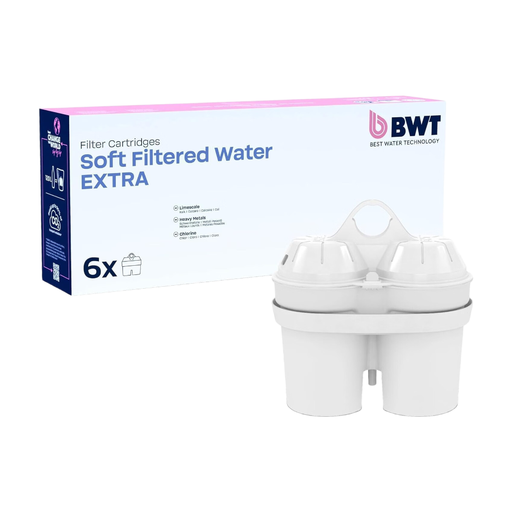
Why this product suits this profile: The cartridge is designed for households with water hardness from 15 °dH upwards, making it a suitable introduction to regular filtration with a BWT jug water filter.
The hardness range is clearly stated. This makes it easier to match the cartridge to the water hardness in your household, rather than choosing based on price alone.
Activated carbon and ion exchange; according to the product description, designed to reduce limescale, chlorine, lead and copper.
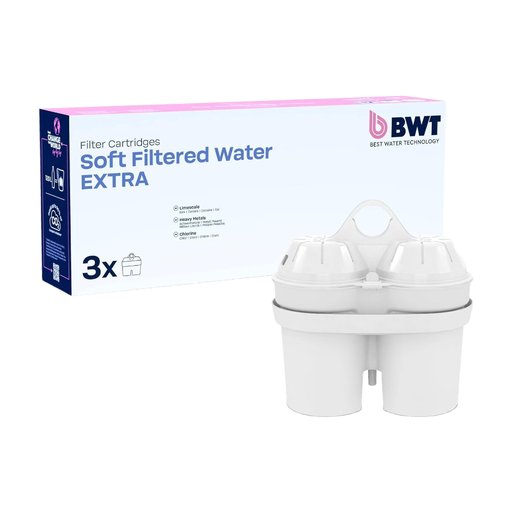
Why this product suits this profile: The product description specifies the filter method, hardness range and a capacity of approximately 3 × 120 litres, making planned use easier.
The stated replacement volume helps prevent the cartridge from being used for too long without a clear guide. The BWT instructions remain decisive for your specific application.
Compatible with BWT jug water filters according to the product information; suitable for water hardness from 15 °dH upwards.
Why this product suits this profile: If you prepare tea or coffee every day and also filter water for the kettle or iron, this cartridge offers a clearly stated capacity.
The usage limit of approximately 120 litres per filter cartridge makes it easier to plan replacements when consumption is high.
Activated carbon ion exchange system; according to the supplier, suitable for reducing limescale and substances that affect flavour.
We have put together a complete, regularly updated list of products that fully meet these strict selection criteria and the safety regulations applicable in the EU.
Before first use, fit the cartridge according to the user manual, soak it thoroughly in water and rinse it. Depending on the model, the first filtered water may need to be discarded. The filter container should be cleaned regularly to prevent residue from building up.
Also observe the following points:
This depends on water hardness and consumption. For the BWT Soft Filtered Water Extra mentioned above, the product information states approximately 120 litres per cartridge. With high consumption, it may therefore need to be replaced sooner than with occasional use.
According to the product description, the Soft Filtered Water Extra cartridges mentioned are designed for households with water hardness from 15 °dH upwards. Nevertheless, check the exact model compatibility and local water hardness before buying.
According to the product information, chlorine, lead and copper are reduced alongside limescale and other substances that affect flavour. This performance applies under the intended conditions of use. If you have a specific concern about contamination in your tap water, a separate water analysis is advisable.