
Lieferung heute & morgen

Qualitätsgarantie

Willkommens-Angebote freischalten: KOSTENLOSE Lieferung | Bis zu 80 % RABATT | Kostenlose 30-Tage-JoyPlus-Testphase
App herunterladen
Cables, wires and ropes may look similar at first glance, but they place very different demands on a pair of pliers. A cable cutter for copper and aluminium cables is not automatically suitable for steel wire rope. Conversely, a wire rope cutter can be unnecessarily cumbersome for soft electrical cables. Anyone who focuses only on a low price or maximum cutting power can easily end up with a tool that jams, frays the material or is unsuitable for the intended application after only a short time.
Specifications such as “for metal” or “for hard wires” are not very meaningful without details of the material and diameter. Copper and aluminium are comparatively soft, while stainless steel wire rope, spring wire and nails place considerably greater demands on the cutting edges and joint. A tool designed for large cross-section copper cables should not be used for steel wire rope or piano wire.
180 mm combination pliers are suitable for gripping, bending and cutting various wires. However, they are not always the most practical choice for frequent cable cutting or wire stripping. The cutting edges can be damaged by unsuitable materials, while specialist cable pliers offer cleaner, more controlled results.
A non-slip handle improves handling, but it does not mean that pliers are suitable for working on live circuits. A plastic or TPR handle without the appropriate marking is not electrical insulation. Before working on electrical installations, the circuit must be professionally isolated and secured against being switched on again. When working near live electrical equipment, only tools and protective measures specifically designed and appropriately marked for this purpose should be used.
For frequent use, Cr-V steel or CR-MO steel are common material specifications for robust pliers. The designation alone is not decisive. The construction of the cutting edges, heat treatment and stated maximum cutting capacity are also important.
Look out for the following details:
The length of the pliers affects leverage and the amount of space required. A 210 mm bolt cutter provides greater cutting force through its lever mechanism than short side cutters, while remaining relatively compact for tool bags and smaller repairs. Longer pliers can transfer more force, but are less manoeuvrable in confined installation spaces.
An ergonomic pliers handle with TPR or rubber elements can make operation more comfortable. Also check whether the handles are non-slip, whether the joint moves smoothly and whether a transport lock is included.
Never use cable pliers on steel wire rope if the manufacturer expressly excludes this application. Similarly, a wire rope cutter should not be considered a substitute for a wire stripper.
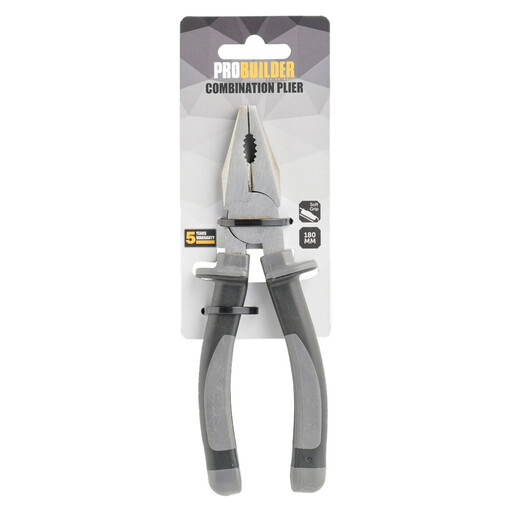
Why this product suits this profile: The 180 mm combination pliers cover typical household tasks, bicycle repairs and smaller assembly jobs: gripping, bending and cutting suitable wires.
The product description specifies the gripping areas and warns against cutting hardened steel or materials beyond its capacity.
180 mm length, flat and round gripping surfaces, plus cutting edges for nails and soft to hard wires.
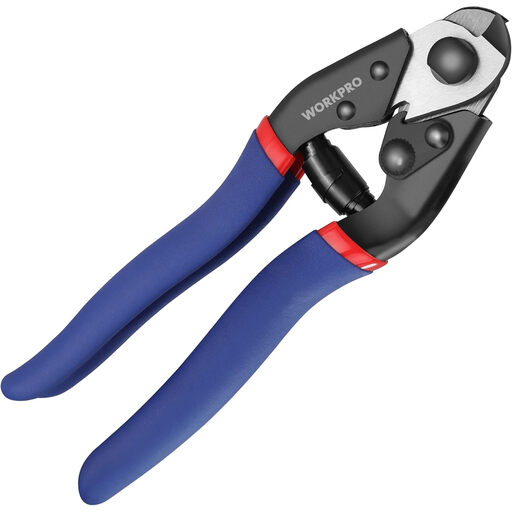
Why this product suits this profile: For regular work on wire rope, stainless steel cables or bicycle brake cables, a purpose-designed cutter is more suitable than a general-purpose pair of pliers.
The product details limit the intended use to wire rope and cables and specify a safety lock for storage.
CR-V steel, heat-treated cutting edges, return spring and cutting edges for stainless steel and bicycle cables.
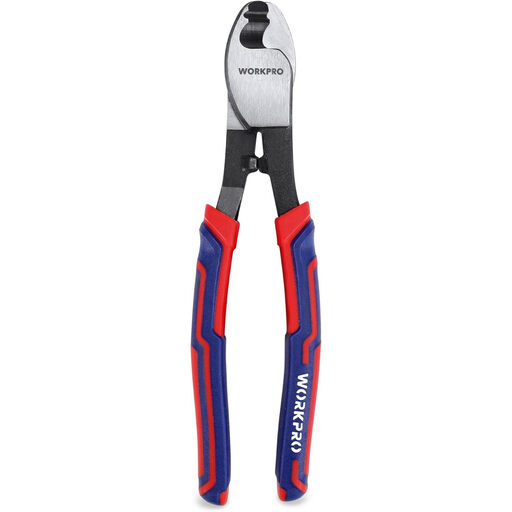
Why this product suits this profile: These cable cutters are designed for work on copper and aluminium cables, where a defined cable cross-section is more important than universal cutting power.
The capacity of up to 33.6 mm² applies to copper and aluminium; according to the product information, steel, brake and piano wires are expressly excluded.
210 mm length, TPR handle, HRC 64–66 cutting-edge hardness and an additional wire-stripping function for suitable cables.
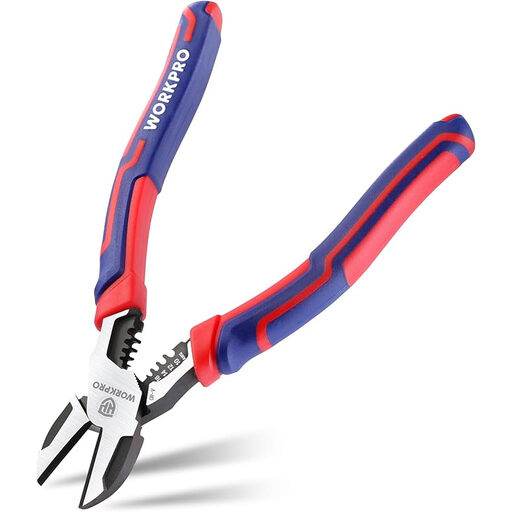
Why this product suits this profile: If you want to cut cables and work on defined insulation sections at the same time, this tool combines two functions in one.
The stripping sections are specified for 10/12/14/16 AWG; the cutting capacity for hard wires is up to 2.0 mm.
2-in-1 design, Cr-V steel, TPR handle and an eccentric lever system according to the product description.
The WORKPRO Mini Bolt Cutter 210 mm is an interesting option for users who need compact pliers with a classic lever mechanism. According to the product details, the jaws are made from CR-MO steel with heat-treated cutting edges, while the maximum cutting capacity is 2.3 mm diameter. The model is suitable for hard chains, wires and certain metal materials. The stated limit must not be exceeded. Safety goggles and gloves are essential when carrying out cutting work.
If you only want to cut food, a stainless steel cheese cutter belongs to a completely different tool category. A cutter of this type, for semi-hard cheese for example, is not designed for cables, wire or metal and should not be confused with cable pliers.
We have put together a complete, regularly updated list of products that fully meet these strict selection criteria and the safety regulations applicable in the EU.
A specialist cable cutter with a suitable cross-section specification is the sensible choice. The tool must be approved for use with copper or aluminium. The measurement in millimetres or mm² is crucial, as it cannot automatically be applied to steel or stainless steel cables.
Side cutters are generally designed for wires, nails and smaller metal components. Wire rope cutters have a cutting-edge profile adapted to wire rope, stainless steel cables or bicycle brake cables. The appropriate cutter should be used to achieve clean rope ends.
Their service life depends on the material, frequency of use, storage and compliance with the capacity limits. Regular cleaning, occasional oiling of the joint and use on approved materials help reduce wear. Once the cutting edges chip or the joint develops play, replacement is preferable.