
Lieferung heute & morgen

Qualitätsgarantie

Willkommens-Angebote freischalten: KOSTENLOSE Lieferung | Bis zu 80 % RABATT | Kostenlose 30-Tage-JoyPlus-Testphase
App herunterladen
A cable lock for bicycles and e-scooters is a practical basic security measure for many commuters. It can be attached quickly to bike stands, lampposts or railings, and takes up little space in a rucksack. However, not every model is suitable for every vehicle or parking location.
The most common buying mistakes arise from three typical pitfalls:
A cable lock is therefore best suited to short to medium parking periods in areas with a manageable level of risk. For longer periods of unattended parking or particularly valuable bicycles, an additional or differently designed security measure may be advisable.
The length determines whether the lock can actually be used at the intended parking location. For a single bicycle at a typical bike stand, 120 cm may be sufficient. If you also want to secure a wheel, a wide frame or an e-scooter, you should estimate the required circumference in advance.
A 150 cm bicycle lock offers more flexibility than a shorter model. The additional length is particularly useful when the fixed object is thicker or several components need to be secured together. At the same time, a longer cable may be more difficult to store.
The cable diameter is also important. When comparing a steel cable lock, buyers should consider not only the length but also the stated diameter and construction. A spiral lock is flexible and space-saving, but its shape can place it under tension. Before buying, check specifications such as an 8 mm diameter or a stated tensile strength.
A braided steel cable combines flexibility with a more robust construction than a simple plastic cord. A PVC coating can protect the bicycle frame from scratches and prevents the metal from coming into direct contact with the paintwork.
Key and combination locks are the main options for the locking system. A bicycle combination lock or e-scooter combination lock is convenient because there is no key to keep track of. However, you should memorise your personal code securely and never store it together with the lock. According to the product specifications, the Ninebot model mentioned features five number wheels and 100,000 possible combinations.
Important: A high number of possible codes does not mean that a lock is protected against every form of theft. Its actual suitability depends, among other things, on the cable strength, lock head, parking location and length of time it is left unattended.
A lock will only be used consistently if it is easy to carry. A bicycle lock with a mount stays attached to the vehicle more securely while riding than a cable left loose in a rucksack. Weight and packed size are also relevant for commuters.
With an e-scooter, check whether the lock can be stored on the handlebars, steering column or in the transport compartment. A flexible cable lock can offer advantages over a rigid U-lock in this situation. At the same time, the cable must not get caught in the wheels, brakes or moving parts while riding.
The following products differ in length, operation and intended use. Technical details are based on the respective product descriptions.
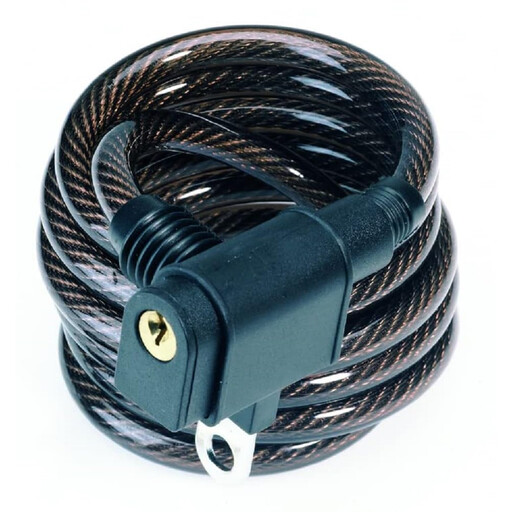
Why this product suits this profile: For everyday short stops and budget-conscious cyclists, this spiral lock offers straightforward operation and sufficient reach for many standard bike stands.
The 150 cm length reduces the risk of the cable being too short at the parking location. The included saddle-clamp mount prevents it from being carried loose in a rucksack.
150 cm length, 8 mm cable diameter and flexible spiral design; includes a bicycle mount.
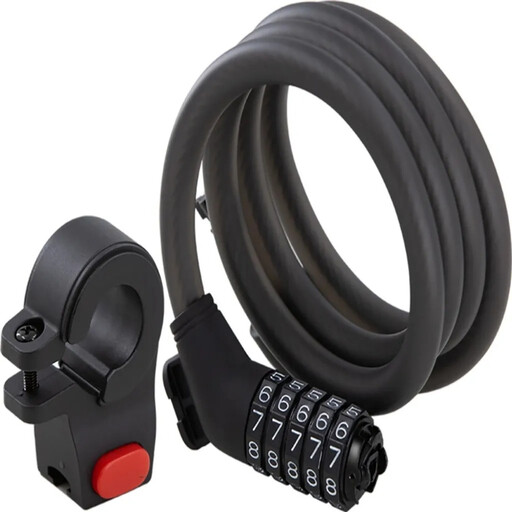
Why this product suits this profile: This model is aimed at users who prefer a keyless combination lock with clearly stated technical specifications for bicycles or e-scooters.
The product specifications state a tensile strength of 1400 N, a braided steel cable and a PVC coating. This makes it possible to assess the technical details before buying.
Five-digit combination lock, 1.2 m cable length, 340 g weight and a zinc-alloy lock head with rust protection treatment, according to the product description.
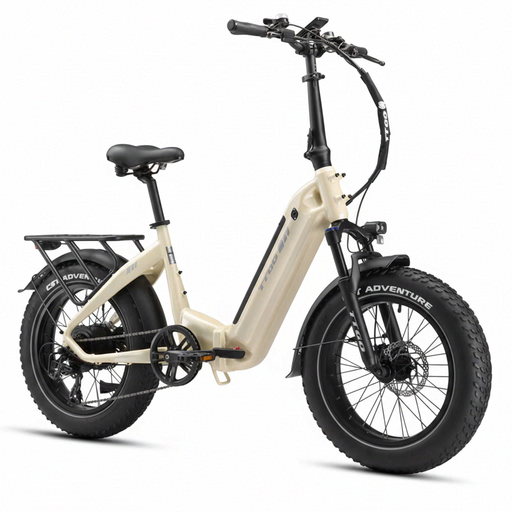
Why this product suits this profile: For frequent users looking for a folding e-bike for commuting. The bicycle is not a lock; an additional suitable cable or frame lock is required for security.
Clearly separating the vehicle from its security measure prevents a lock from being treated as the sole solution for securing the entire setup.
20-inch folding design, torque sensor and lockable suspension fork, according to the product description; suitable for users with limited storage space.
We have put together a complete, regularly updated list of products that fully meet these strict selection criteria and the safety regulations applicable in the EU.
For effective bicycle theft protection, the cable should not simply be threaded through the front wheel. The following approach is recommended:
With an e-scooter, the cable should be passed through a sturdy part of the frame or an opening designed for this purpose. Handlebars, detachable accessories or easily removable mudguards are unsuitable as the sole attachment point.
That depends on the parking location, how long the bicycle will be left unattended and its value. A cable lock can be a practical basic security measure for short stops in busy areas. For longer periods of unattended parking or when a higher level of security is required, combining it with a second type of lock may be advisable.
For many everyday situations, lengths of 120 to 150 cm are practical. A flexible 150 cm cable lock offers greater reach around wide bike stands, posts or several components that need to be secured. Before buying, roughly measure the circumference of the frame and fixed object.
It is not possible to give a reliable fixed service life. This depends on moisture, dirt, frost, mechanical strain and frequency of use. Check the number wheels and cable regularly for stiffness, corrosion and damage. If you notice visible cracks, frayed wires or a mechanism that does not lock reliably, the lock should be replaced.