For a growing CAD archive, a desktop HDD may be a good fit if you mainly need to store projects. If you transfer files frequently, consider a portable SSD, while a portable HDD offers a mobile archiving option. Choose your capacity based on complete project folders, references and the older versions you want to keep. If you have problems working on AutoCAD projects stored on an external drive, try editing the complete project locally – and keep important data on a separate, recoverable backup too.
Who is this storage option for?
CAD users with a growing project archive
If you keep completed projects and older versions, plan your storage around the space already in use, future projects and a separate backup. The Federal Office for Information Security recommends backing up data regularly and checking that it can be restored.
CAD users who transfer projects frequently
If you move complete project folders between computers, capacity, connection and transfer process all matter. Autodesk Support recommends comparing files stored on an external drive with the complete project – including references – on a local drive when troubleshooting AutoCAD files.
CAD users handling confidential client data
If you may be carrying personal data, consider access protection and recoverability as well as storage space. The European Data Protection Board describes safeguards that are appropriate to the level of risk, while the Federal Commissioner for Data Protection and Freedom of Information particularly emphasises encryption for portable storage devices.
What should you consider when choosing?
First, decide whether the drive will mainly be an archive, storage you carry around regularly, or part of a workflow where projects are edited locally. Calculate the capacity you need based on complete project folders, and factor in separate backup copies.
| Consideration |
What to check before buying |
Who should pay particular attention? |
| Capacity and growth |
Measure the space used by complete project folders; include references, planned projects and the versions you want to keep. |
As my CAD library grows, I want to know how much space drawings, references and older versions need altogether. Around 33% of consumers put capacity and growth first. |
| Backups and versions |
Allow for extra storage for separate copies; test restoring a complete project folder. |
If I need to keep working after a failure, an archive drive on its own isn’t enough; I also want to be able to restore older versions. Around 27% of consumers prioritise a recoverable backup. |
| Transfers and portability |
Check that the USB connection is compatible with the drive, computer and cable; test the transfer process with complete projects. |
If I regularly move project folders between workstations, I want to transfer them in a way that suits my computer and be able to open them in full. Around 20% of consumers put transfers and portability first. |
| Compatibility and confidentiality |
Check the operating system, file system and connection for the specific model; for client data, assess security needs and encryption. |
If I use the drive with different devices or carry client data, its format and access protection need to suit the way I use it. Around 20% of consumers prioritise device compatibility or confidentiality. |
Avoid common buying mistakes
-
Confusing an archive drive with an independent backup
If project files are stored on just one external drive, a failure or loss leaves you with a single point of failure. The Federal Office for Information Security recommends regular backups and points out that you also need to be able to restore the data.
Keep your archive and an additional copy separate, and occasionally test restoring a complete project.
-
Moving only DWG files instead of complete projects
Drawings may rely on external references and other linked files. When testing AutoCAD files locally, Autodesk Support recommends including the complete project and all its components.
Transfer related drawings, references and other project files together, then check that they open on the destination computer.
-
Assuming advertised peak SSD speeds reflect CAD performance
The maximum speeds quoted by Samsung for the T7 Shield depend, among other things, on a suitable host, compatible cable and UASP. Autodesk Support also describes potential issues when working with AutoCAD files stored externally.
Check the USB capabilities of your computer and cable, and test your own project workflow rather than choosing on peak speed alone.
-
Assuming the file system and bundled software work with every device
Toshiba says the Canvio Advance model described needs reformatting for macOS. Verbatim states that its bundled Nero backup software is compatible with Windows only.
Check the operating system, file system and software support for the specific model before relying on it for your intended workflow.
Relevant brands and product ranges
Toshiba
According to Toshiba, the portable Canvio Advance range includes models with capacities of up to 4 TB and could work as a project archive you can take with you.
- Toshiba lists backup and security software for the product range.
- The model described is formatted as NTFS for Windows; reformatting may be needed for macOS. This does not necessarily apply to every Canvio model.
Seagate
According to Seagate, the desktop Expansion range offers a choice of capacities for large archives.
- For the range described, Seagate lists models with capacities of 4, 8, 16, 20, 24 and 30 TB.
- Check the availability and terms of any data recovery service for your specific model and country; such a service is no substitute for your own backup.
Western Digital
Western Digital offers an 8 TB Elements Desktop hard drive as a desktop storage option.
- The 8 TB model is listed as an Elements Desktop hard drive.
Samsung
The portable T7 Shield is an SSD range; the German product page lists a 2 TB model for frequent transfers.
- For the model described, Samsung quotes read speeds of up to 1,050 MB/s and write speeds of up to 1,000 MB/s, provided the host, cable and UASP meet the requirements.
- The IP65 rating applies under specified test conditions; according to the product page, liquid and dust damage are not covered by the warranty.
Verbatim
The Pocket SSD #32196 is a compact 2 TB SSD with USB-C for carrying project folders.
- Verbatim quotes read and write speeds of up to 1,000 MB/s; actual speeds depend, among other things, on file size, computer and operating system.
- According to Verbatim, the bundled Nero backup software is compatible with Windows only.
Joybuy products for CAD projects
This selection includes portable and desktop external HDDs for CAD archives. Check that the specific model’s capacity, connection and file system suit your workflow.
 No image available
WD Elements Portable 5TB USB-C
For a portable project archive when you’re planning for 5 TB of storage.
Portable HDD with USB-C and USB 3.2 Gen 1, according to the product description. Keep important data on another storage device as well.
View at Joybuy
No image available
WD Elements Portable 4TB USB-C
For a portable archive if 4 TB is right for your measured project library.
Portable 2.5-inch drive with USB-C and USB 3.2 Gen 1. The product description says it is preformatted for use with Windows and Mac; protect the drive from knocks and moisture.
View at Joybuy
 No image available
WD Elements Portable 2TB USB-C, exFAT
For project files on the go, if 2 TB is enough for the library you need to store.
Portable, USB-powered 2.5-inch HDD with USB-C, USB 3.2 Gen 1 and exFAT. The product description says it is preformatted for compatibility with Windows and macOS; don’t use the drive as the only storage location for important files.
View at Joybuy
 No image available
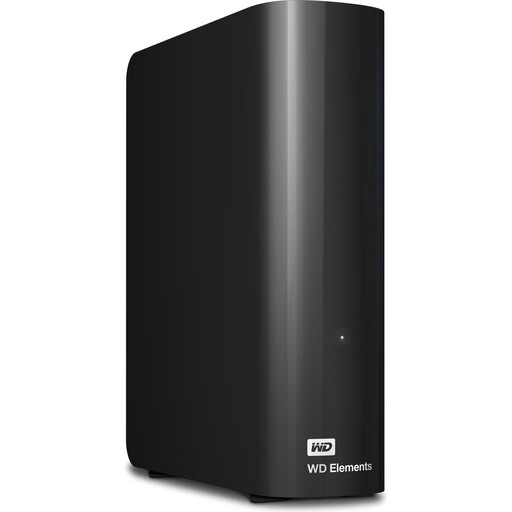
WD Elements Desktop 6TB, USB 3.0, NTFS
For a desktop archive if you need 6 TB and have a permanent place for the drive.
3.5-inch desktop HDD with USB 3.0, NTFS and a mains adaptor included. The product description says reformatting is required for macOS; don’t keep important files on this drive alone.
View at Joybuy
 No image available
WD Elements Desktop 8TB, USB 3.0, NTFS
For a large desktop project archive if 8 TB suits your planned storage needs.
3.5-inch desktop HDD with USB 3.0, NTFS and an external power supply. The product description says reformatting is required for macOS; don’t use the drive as the only copy of important files.
View at Joybuy
Frequently asked questions
Can I edit AutoCAD projects directly on an external drive?
It depends on your workflow. Autodesk Support describes potential delays and recommends, if you encounter problems, comparing the complete project – including external references – on a local drive.
Is an AutoCAD BAK file enough to keep versions?
No, not if you want to keep several older versions. Autodesk Support explains that a BAK file contains the previous drawing version, and a newly created backup file with the same name replaces the older one. To keep multiple versions, plan a separate versioning or backup process.
What should I check before using a drive with Windows and macOS?
Check the connection, cable and file system for the exact model. Toshiba says the Canvio Advance model described is formatted as NTFS for Windows and needs reformatting for macOS. Back up any existing data before reformatting a drive.
Are a data recovery service or warranty a substitute for a backup?
No. The Federal Office for Information Security recommends regular backups and testing that data can be restored. Seagate notes that its data recovery service may not be available in every country; check the coverage and terms for the specific model and country.
Does a drive containing CAD client data need to be encrypted?
For personal data, safeguards should be appropriate to the level of risk. The European Data Protection Board recommends appropriate technical and organisational measures; the Federal Commissioner for Data Protection and Freedom of Information particularly emphasises encryption for portable storage devices. Assess the type of data, access and risk of loss for your specific use.


