
Lieferung heute & morgen

Qualitätsgarantie

Willkommens-Angebote freischalten: KOSTENLOSE Lieferung | Bis zu 80 % RABATT | Kostenlose 30-Tage-JoyPlus-Testphase
App herunterladen
A Chinese chef's knife, often recognizable by its distinctive rectangular shape, is an exceptionally versatile tool in the kitchen. It's perfect for slicing vegetables, mincing herbs, and precisely cutting boneless meat. However, the market is flooded with models whose differences are barely noticeable at first glance. Many buyers invest in a knife that quickly loses its edge or is unsuitable for their needs. This guide will help you identify the crucial features and avoid common purchasing pitfalls.
Before you make a decision, you should be aware of the typical issues that can lead to a bad purchase. Often, it's the subtle flaws, not the obvious ones, that separate a durable tool from a short-term acquisition.
To avoid these mistakes, you should carefully examine three technical aspects. These significantly determine the performance and lifespan of your knife.
The heart of any knife is its steel. For an Asian chef's knife, two factors are crucial: the steel alloy and its hardness. Hardness is measured in Rockwell (HRC).
The shape and thickness of the blade determine its intended use. A wide-bladed chef's knife is not automatically a cleaver.
The way the blade is secured in the handle is an indicator of quality and durability. A full tang means that the steel of the blade extends through the entire length of the handle. This provides excellent balance, stability, and power transfer. Knives with a partial tang (where the steel is only partially anchored in the handle) are often more top-heavy and less durable, especially with intensive use.
Based on the criteria above, we have identified a few models suitable for different needs and budgets.
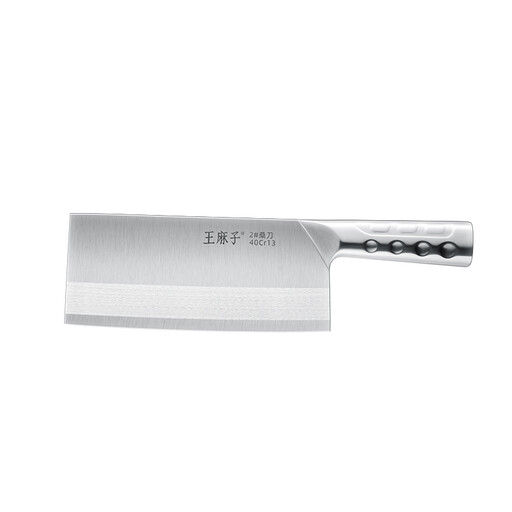
Why it's a good fit: This knife from the traditional brand Wangmazi offers an authentic and affordable entry into the world of Chinese chef's knives. It is ideal for home cooks who want to learn the cutting techniques without making a large initial investment.
This model is designed as a classic slicer. Its thin blade is clearly intended for vegetables and meat, thus avoiding the misconception that it is a cleaver.
Offers traditional functionality and an authentic feel at a very accessible price. The stainless steel is easy to maintain.
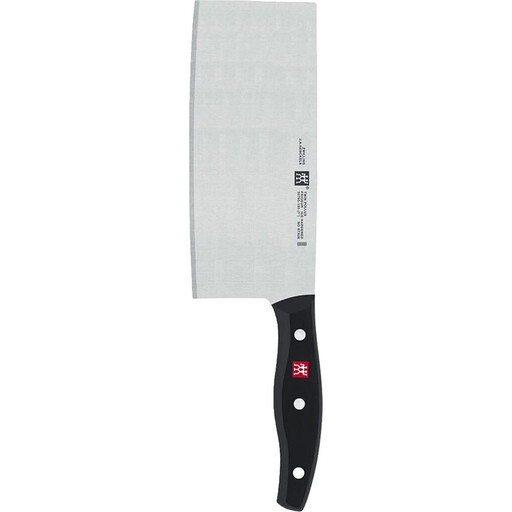
Why it's a good fit: For users who want to combine the versatility of a Chinese chef's knife with the proven quality and durability of a German brand. Ideal for daily, demanding kitchen work.
According to the manufacturer, the ice-hardened FRIODUR blade made of special formula steel ensures high edge retention and corrosion resistance. This addresses the problem of blades that dull quickly.
The combination of a special hardening process and stainless steel offers long-lasting sharpness with low maintenance. The ergonomic handle ensures safe handling.

Why it's a good fit: This knife is designed for intensive use. It is more robust and heavier than a pure slicer, making it suitable for users who regularly prepare large quantities and need a tool with high durability.
The full-tang construction and robust blade steel provide excellent balance and durability. This prevents fatigue during prolonged use and avoids the typical weak points of poorly constructed handles.
The sturdy construction allows for high power transfer and is also suitable for more demanding tasks like breaking down a chicken. The wooden handle provides a secure grip even when wet.
The models presented here are just a snapshot. If you want to compare more knives that meet our criteria for material, craftsmanship, and balance, you can find a broader selection here.
Yes, absolutely. Its versatility makes it an excellent all-purpose tool that can replace many other knives in the kitchen. However, beginners should briefly familiarize themselves with the proper handling: the grip is usually achieved by pinching the blade with the thumb and index finger to ensure maximum control.
Due to the wide blade surface, a whetstone (sharpening stone) is the recommended method. Conventional pull-through sharpeners can damage the fine cutting angle. Guide the blade over the moistened stone at a shallow angle (approx. 15–20 degrees) to restore its original sharpness.
This is strongly discouraged. The harsh chemicals in dishwasher tablets, high temperatures, and contact with other dishes can damage the fine cutting edge and cause the handle, especially if made of wood, to swell or become brittle. Hand washing with warm water and mild soap is the safest method to maximize your knife's lifespan.