What to look for when buying
First, measure your tin or baking tray, then check which type of appliance and location will work for it. The heating function, controls, energy consumption and cleaning requirements will help you narrow down your options.
| Priority |
What to check when buying |
Who it matters most to |
| Tin size and baking capacity |
Check your tin and baking tray against the usable internal dimensions of the specific model. |
If I’m planning a large cake or a traybake for our get-together, I want to be sure everything will fit. Around 36% of consumers put tin size and baking capacity first. |
| Space for the appliance |
Check the dimensions of the housing space or available worktop area, as well as the appliance’s positioning instructions. |
If space is limited in the kitchen, the appliance needs to fit the existing housing or a suitable clear area. Around 29% of consumers prioritise having the right space for their appliance. |
| Heating function and controls |
Check that the recipe’s requirements for conventional top and bottom heat or fan-assisted cooking match the model’s specifications. |
If the recipe calls for a particular heating function or I’m planning several baking projects, I’ll look for the right setting. Around 21% of consumers prioritise heating functions and ease of use. |
| Energy use and cleaning |
Check comparable kWh figures per standard baking cycle and the specific cleaning method. |
If you use your oven often, you’ll want to consider both its running costs and how much effort it takes to clean. Around 14% of consumers put these points first. |
The Verbraucherzentrale gives electricity consumption figures for domestic ovens per standard baking cycle, for conventional top and bottom heat and fan-assisted cooking. For a meaningful comparison, appliances and figures need to be assessed on the same basis. Check the relevant labelling separately for mini ovens.
Ovens at Joybuy
The ovens below include built-in models for baking larger batches, as well as freestanding mini ovens for suitably sized tins. Before buying, check that the dimensions, heating functions and positioning requirements will work in your kitchen.
 No image available
Bosch HBA571BB4 Series 2 built-in oven, 71 l
For larger baking get-togethers, provided the housing space and cake tin are the right size.
The product specifications list a 71 l capacity, conventional top and bottom heat, and 3D hot air.
View at Joybuy
 No image available
Comfee built-in oven, 60 cm, 70 l, 3 kW
A built-in option for a baking get-together, provided the housing space is the right size for the appliance.
The product specifications list a 70 l capacity, fan-assisted cooking and a timer.
View at Joybuy
 No image available
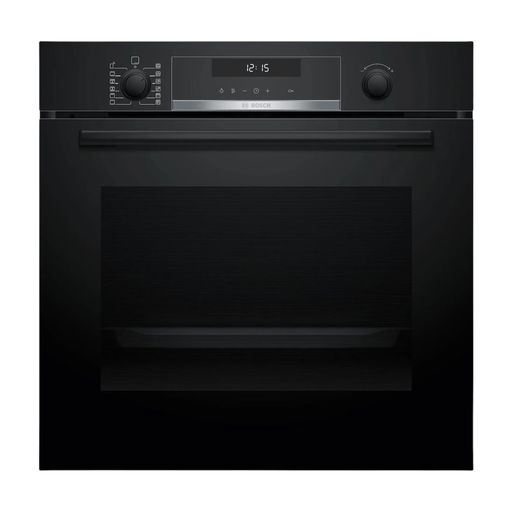
Bosch HBG578EB7 Series 6 built-in oven, 60 cm
For larger baking projects, provided the built-in space and tin are right for your kitchen.
Bosch lists a 71 l usable capacity, conventional top and bottom heat, 4D hot air and pyrolytic cleaning for this model.
View at Joybuy
 No image available
Woltu BF12sz mini oven, 32 l, white
A freestanding baking option, provided your tin fits inside and you have a suitable place to put the oven.
The product specifications list a 32 l capacity, 1,600 W, a 60-minute timer, a crumb tray and a temperature range of 100 to 250 °C.
View at Joybuy
 No image available
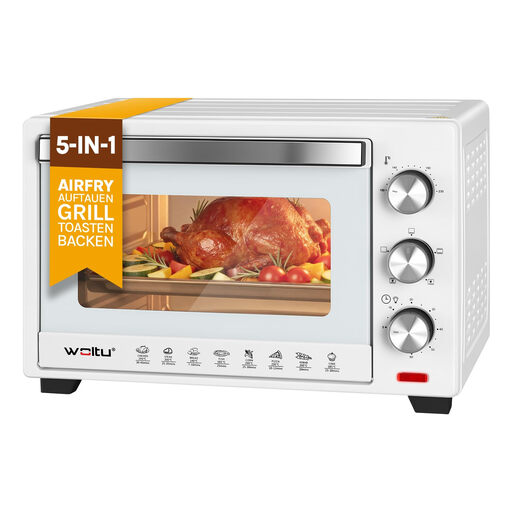
Woltu mini convection oven, 28 l, white
A freestanding option, provided the oven suits your chosen tin and you have a safe place to put it.
The product specifications list a 28 l capacity, top heat, bottom heat and combined heat, as well as a mechanical timer.
View at Joybuy
Frequently asked questions
Will a mini oven be big enough for your cake to enjoy with coffee?
A mini oven may be big enough if your tin fits and the model has the heating function you need. The manufacturer specifies tins up to 31.5 cm in diameter for the Rommelsbacher BG 1805/E and up to 30 cm for the Severin TO 2067. You should also check the baking tray dimensions and usable height.
What should you bear in mind when positioning and cleaning a mini oven?
Follow the instructions for the specific appliance. The Severin TO 2067 instructions require sufficient air circulation and warn that surfaces can get hot. Before cleaning, unplug the appliance and let it cool down.
How can you compare energy use and running costs?
For domestic ovens with the relevant labelling, kWh per standard cycle for conventional top and bottom heat and fan-assisted cooking, together with oven capacity, can help you compare models. The Verbraucherzentrale explains these energy consumption figures. Check the relevant labelling separately for mini ovens. Your actual costs will also depend on how you use the oven and your electricity tariff.
Who should you contact if something is wrong with the appliance?
The seller is generally responsible for your statutory consumer rights. A guarantee is separate and voluntary. The Verbraucherzentrale lists repair or replacement as possible remedies.
Can you connect an oven to the electricity supply yourself?
Plugging in an appliance with a suitable mains plug is different from working on the fixed electrical installation. Under § 13 NAV, this type of work may generally only be carried out by the network operator or an installation company listed in its installer register. The connection work required will depend on the appliance and the connection already in place.


