
Lieferung heute & morgen

Qualitätsgarantie

Willkommens-Angebote freischalten: KOSTENLOSE Lieferung | Bis zu 80 % RABATT | Kostenlose 30-Tage-JoyPlus-Testphase
App herunterladen
The right cake decorations can turn a simple cake into a centrepiece for a special occasion. Sprinkles, icings, sugar decorations and decorating sets all differ in how they’re used, what they contain and how they should be stored. If you choose based only on colour or packaging, you could miss important details.
Three common problems to watch out for:
If you’re buying edible cake decorations, read the ingredients before buying and again before serving. Look out for statements such as ‘contains milk’ or ‘may contain traces of nuts’. This applies even to seemingly simple products such as chocolate sprinkles, sugar eyes and marzipan flowers.
For products containing colourings, check the labelling. The range may include natural colouring foods, such as beetroot or spirulina concentrates, as well as approved colourings. A bright colour alone doesn’t tell you whether a product is suitable or high quality.
Small decorations are often enough for cupcakes and muffins. A large cake, on the other hand, usually needs more sprinkles, several sugar decorations or icing to cover the whole surface. So check the pack size:
The type of decoration also affects how you prepare the cake. Sugar sprinkles can go straight onto icing that’s still soft. Marzipan flowers and chocolate curls, by contrast, are usually added after the icing or cream has been applied.
A cake glaze needs to suit your recipe and the finish you want. Ruf Cocoa Cake Glaze 100g is heated in a bain-marie or at a low microwave setting. The product instructions specify a maximum microwave setting of 240 watts; using too high a setting or heating it for too long may affect the product quality. The glaze is then spread over cooled baked goods.
Powder-based cake glaze for fruit cakes works differently. The powder is mixed with water or fruit juice and sugar, brought to the boil, then poured over the topped cake. Ruf Red Cake Glaze Powder 3x12g uses carrageenan as a gelling agent. The product information does not list milk, egg, nuts or gluten as ingredients. Always check the current packaging for the definitive information.
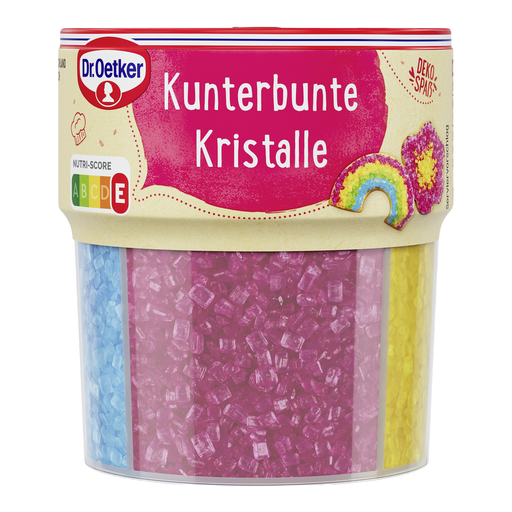
Why it’s a good fit: The 100 g pack makes it easy to decorate cakes, muffins or cupcakes with colourful sprinkles.
The pack size is clearly stated and gives you enough for several small decorating projects, rather than just one finishing touch.
100 g; store at room temperature in a dry place, away from light and heat.
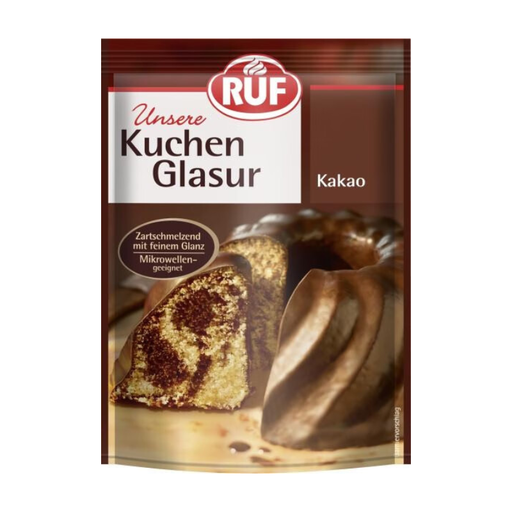
Why it’s a good fit: Use this chocolate glaze to coat the whole cake or create fine lines and patterns.
The instructions explain how to heat it in a bain-marie or microwave, helping you warm it up in a controlled way.
100 g; labelled gluten-free; suitable for biscuits, cakes, eclairs and doughnuts.
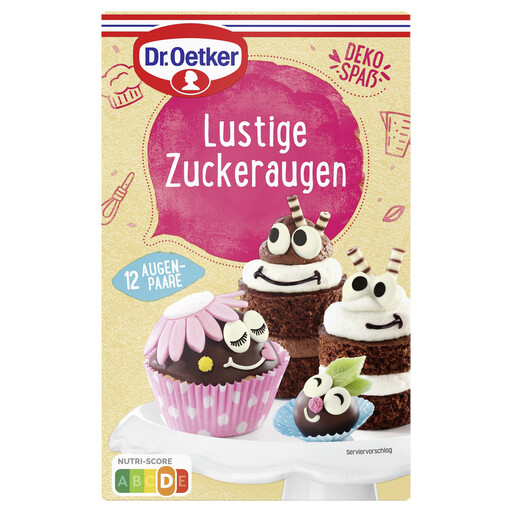
Why it’s a good fit: With 24 sugar eyes in six different directions, this pack is ideal for muffins, cake pops and imaginative cakes for children.
The number of pieces and the different eye directions are listed, making it easier to plan your design.
24 individual eyes; sugar-based; check the warning about possible egg ingredients.
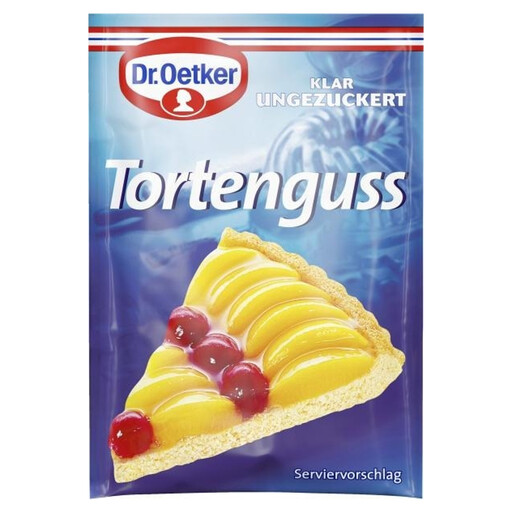
Why it’s a good fit: The three 12 g portions are designed for making fruit cakes again and again, and can be prepared with different liquids.
The instructions specify 250 ml of liquid per portion, making it easier to get the consistency right.
36 g total; colourless recipe; according to the product information, vegan and with no declared allergens.
We’ve put together a complete, regularly updated list of products that meet these strict selection criteria and fully comply with the safety regulations in force in the EU.
Sprinkles, sugar eyes and small sugar decorations can be placed on soft icing or cream. For heavier decorations, use a firm layer of cream or a small dab of icing. The surface shouldn’t still be hot, so the decorations keep their shape and colour.
Shelf life varies by product. Always follow the best-before date and storage instructions on the packaging. Keep dry sprinkles and sugar decorations away from moisture. Marzipan and chocolate decorations may soften or change shape in warm conditions.
Cake glaze is usually made by boiling powder with liquid and sugar, then spreading it over a fruit cake. It forms a setting layer that’s often transparent. Cake icing, such as chocolate icing, is heated and applied as a coating or decoration. Choose the right one for your recipe, surface and desired finish.