Occasional cake freezers
You’d like to save a few slices for a get-together another day and want to check whether your existing compartment will do the job. The Federal Centre for Nutrition lists cake among the foods that can be frozen.


If you only freeze a few cake slices now and again, an existing fridge compartment is often enough, provided it has a four-star rating for freezing fresh food. A separate appliance is more worthwhile if you regularly run short of freezer space, but it needs room and adds to your electricity use. What matters is whether your containers and the appliance will fit, as well as its annual energy consumption – not just its capacity in litres.
You’d like to save a few slices for a get-together another day and want to check whether your existing compartment will do the job. The Federal Centre for Nutrition lists cake among the foods that can be frozen.
Your current freezer space often isn’t enough, but any additional appliance needs to fit in a small kitchen. The consumer advice centre recommends considering your needs and the appliance’s energy consumption when choosing a freezer.
You freeze other foods as well as cake and want to be able to reach individual portions easily. The consumer advice centre highlights suitable capacity and layout as important factors when choosing an appliance.
Best if: you only freeze a few slices now and again, and suitable containers fit without being crammed in.
Things to consider: you won’t need another appliance, but you’ll be limited by the compartment’s dimensions and available space.
Best if: your existing compartment is regularly too small and there’s only limited room for another appliance.
Things to consider: drawers can keep portions separate, but the external dimensions, door clearance and energy consumption all need to suit the space.
Best if: you regularly want to store other food alongside cake and easy access to the contents is important.
Things to consider: an appliance that’s larger than you need may use electricity unnecessarily, as the consumer advice centre explains.
Best if: you can freeze larger quantities overall and have enough room for the appliance and to open its lid.
Things to consider: individual cake slices may be less easy to reach in a deep chest freezer. Compare the annual energy consumption of the specific model.
According to the Federal Centre for Nutrition, a four-star rating is essential if you plan to freeze fresh cake slices in a fridge compartment. The consumer advice centre also recommends checking that the appliance suits your needs, energy budget and available space.
| What you need | What to check before buying | Who this matters to |
|---|---|---|
| Use an existing compartment or buy an appliance? | Check the four-star rating, available space and internal dimensions for wrapped slices. | If I only freeze a few slices occasionally, I want to avoid buying an unnecessary appliance and taking up extra space. Around 36% of consumers prioritise using their existing compartment and keeping additional needs to a minimum. |
| Will an additional appliance fit at home? | Measure the width, depth and height, as well as the space needed with the door or lid open. | When space is tight, the appliance needs to fit in the kitchen with room to open it. Around 29% of consumers prioritise the available space. |
| Store portions separately and within easy reach | Check drawer and container dimensions, and whether components can be removed; defrosting systems vary by model. | If I regularly take out individual slices, I need an organised layout and space for my containers. Around 21% of consumers prioritise easy, organised access. |
| Store additional supplies | Compare usable capacity, baskets or compartments, clearance for the lid and annual energy consumption in kWh. | If you store larger quantities of food as well as cake, you’ll need more capacity than you would for just a few slices. Around 14% of consumers prioritise the need for extra storage. |
Freezers run all the time. An appliance that’s too large for your needs may use electricity unnecessarily, which is why the consumer advice centre recommends checking what you need first.
Check the star rating and measure up to see whether your wrapped slices fit in the existing compartment without being crammed in.
Usable capacity alone doesn’t tell you whether tall slices or rigid containers will fit in a particular compartment or drawer.
Measure your containers and the interior, and remember to allow for the door hinge and opening clearance.
For the HS210530N model, Beko describes MinFrost as a feature that reduces ice build-up. Bosch lists NoFrost for the GSN29VWEP; this doesn’t mean the two features are the same.
Check the defrosting feature on the exact model before choosing an appliance.
Depending on the model, manual defrosting may mean extra maintenance.
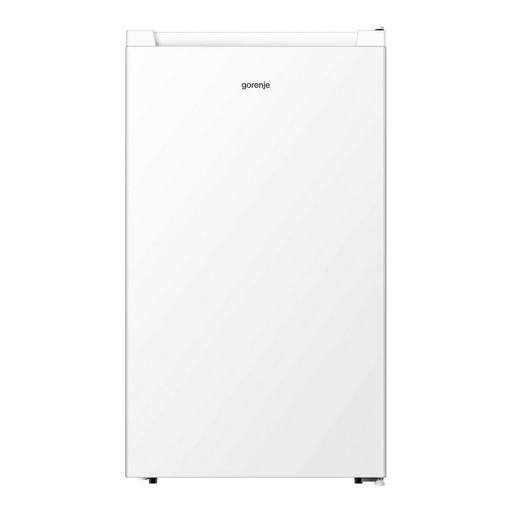
The GS80-HE-040D white is a compact drawer freezer.
The FNdi 1624 Plus is a table-top freezer with NoFrost and removable drawers.
The GSN29VWEP is an example of a larger upright freezer with drawers and NoFrost.
The HS210530N is a compact chest freezer, while the FSE1175N is a separate table-top appliance.
The GS33NVWEP is a larger upright freezer with NoFrost and adjustable shelves.
The appliances below include compact freezers, a fridge with a freezer compartment and chest freezers to suit different space and storage needs.
 No image available
A compact extra option for the occasional slice, if you’d like a separate appliance.
35 L; four-star rating; reversible door; 41 dB according to the product name.
 No image available
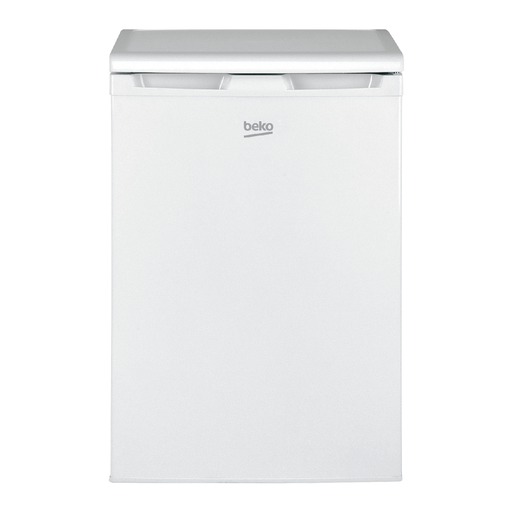
A standalone table-top freezer to consider if you’re looking for a compact separate appliance.
Energy class E according to the product name. The product description says manual defrosting is required.
 No image available
A fridge-freezer for storing a few portions if you don’t want a separate freezer.
13 l freezer compartment; 101 l fridge section; reversible door and MinFrost according to the product name. The freezer compartment is only part of the appliance.
 No image available
A chest freezer for households looking to store other supplies as well as cake slices.
95 L; switches between fridge and freezer modes; removable basket and defrost drain according to the product name.
 No image available
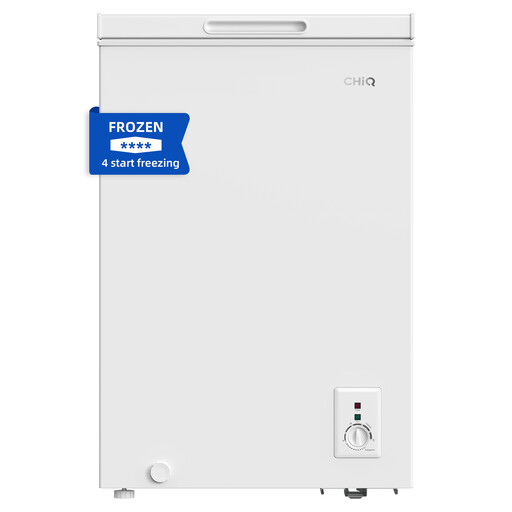
A standalone chest freezer for extra freezer space, if you have enough room to open the lid.
99 L; wire basket and floating lid according to the product name.
No. According to the Federal Centre for Nutrition, the four-star compartment in a fridge-freezer is the one designed to freeze food. A three-star compartment is intended for storing food that’s already frozen and doesn’t offer the same freezing function.
Use suitable freezer containers or bags and allow plenty of time for defrosting. The Federal Institute for Risk Assessment recommends defrosting frozen food in the fridge wherever possible. Careful chilling is especially important for delicate cream fillings; freezing won’t make food that has already spoiled safe to eat again.
Compare the annual energy consumption in kWh on the EU energy label for appliances with a suitable capacity. For a rough estimate, multiply kWh/year by your electricity price per kWh; actual consumption also depends on how and where you use the appliance.
Yes. The European Commission explains that household fridges and freezers have used a scale from A to G since 2021. The label includes details such as annual energy consumption, freezer capacity and noise emissions. You’ll also need to check the available space and your actual freezer needs.
The German Environment Agency recommends disposing of it properly at a local collection point or through the retailer when buying a new appliance. If it’s still working, don’t replace it too hastily just because a newer model has a better energy efficiency rating.