
Lieferung heute & morgen

Qualitätsgarantie

Willkommens-Angebote freischalten: KOSTENLOSE Lieferung | Bis zu 80 % RABATT | Kostenlose 30-Tage-JoyPlus-Testphase
App herunterladen
A homemade cake or an elaborately decorated torte deserves a presentation that does it justice. A cake stand literally elevates your baked creation to the next level, making it the centrepiece of any dessert table. However, the selection is vast, and not every model delivers on its promise. As your Joybuy Product Recommendation Officer, I'll help you navigate common purchasing pitfalls and make an informed decision.
Many buyers focus solely on aesthetics, overlooking crucial functional flaws. This often leads to disappointment and unnecessary expense. Pay special attention to these three points:
To avoid these mistakes, you should check three essential features before buying. These define the quality and practicality of any cake stand, whether it's a simple cake plate or a multi-level tiered stand.
The material determines not only the aesthetics but also the durability and maintenance requirements.
Stability is paramount. Examine the construction of the base. A pedestal cake plate should have a wide and sufficiently heavy base to prevent tipping. For multi-tiered stands, the central rod is the critical point; it must be securely screwed in and must not give way under load. Flat serving plates for cakes without a pedestal naturally offer the highest stability, but not the desired presentation effect.
Measure the diameter of your most commonly used baking pan. For a cake from a 26 cm (10.2") pan, the serving plate for cake should have a diameter of at least 28 cm (11") to provide a safe margin for lifting and serving. For a 28 cm (11") cake, a diameter of 30 cm (12") or more is recommended. When checking product specifications, pay attention to whether the stated diameter refers to the entire plate or only the usable, flat surface.
Here are some models that represent a considered choice based on objective features for specific needs and user profiles.
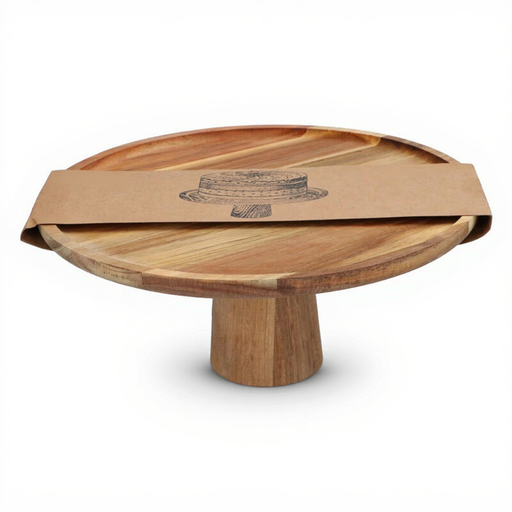
Why it's a great fit: Ideal for anyone who appreciates a natural and warm aesthetic. The solid acacia wood with its unique grain makes each stand one-of-a-kind and complements a cosy interior style perfectly.
The solid wood construction provides good stability (avoids pitfall 1). According to the manufacturer, the lacquered surface is food-safe and easy to clean, which prevents staining (avoids pitfall 2).
The generous diameter of 30 cm (11.8") provides ample space even for larger cakes. The weight of 780g ensures a secure footing without being unwieldy.
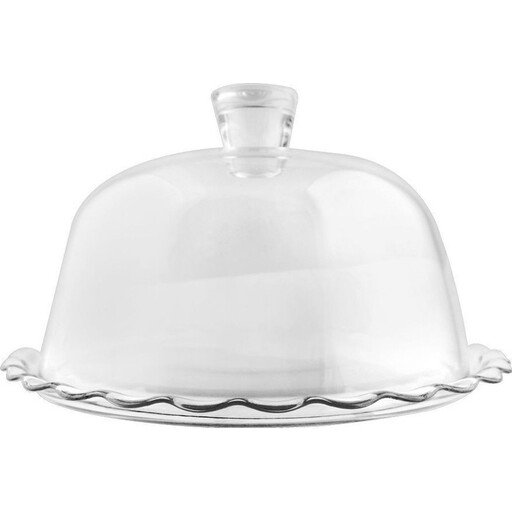
Why it's a great fit: For hosts who prefer a timeless look and want to keep their baked goods fresh. The classic glass design is versatile, and the dome protects against drying out.
The wide glass foot ensures high stability (avoids pitfall 1). The specified diameter of 26 cm (10.2") is clearly defined and fits common cake sizes (avoids pitfall 3).
The glass material is hygienic and, according to the manufacturer, dishwasher-safe, which significantly simplifies cleaning. The included dome offers clear functional added value.

Why it's a great fit: Perfect for parties, buffets, or celebrations where various foods like cupcakes, desserts, or appetisers need to be presented attractively on different levels.
As a set of three separate risers, the problem of an unstable central rod is eliminated (avoids pitfall 1). The sturdy metal is durable, and the matte finish is less prone to smudges than glossy versions (avoids pitfall 2).
The set features a nesting design, allowing for extremely space-saving storage. The three different heights (5.1 cm/2", 10.2 cm/4", 15.2 cm/6") enable a dynamic presentation.
We have compiled a complete, up-to-date list of products that fully meet these strict selection criteria and UK/EU safety regulations.
1. What is the easiest material for a cake stand to clean? Models made of glass, porcelain, or coated metal are generally the easiest to clean. Many of them are dishwasher-safe, which minimises effort. A wooden cake stand requires more care; it should only be cleaned by hand with a damp cloth and occasionally treated with a food-safe oil to protect the material.
2. How tall should a cake stand be? A standard height of 10 to 15 cm (4" to 6") is ideal for most tables, as it makes the cake clearly visible without being too dominant. For a buffet, taller stands or multi-tiered stands can be useful to save space and create a dynamic arrangement. Flat serving plates are practical when height is not a factor.
3. Will a standard-sized cake fit on any cake stand? No, caution is advised here. Many recipes are based on 26 cm (10.2") or 28 cm (11") springform pans. The plate of the stand should always be slightly larger than the cake itself. A good rule of thumb is to choose a stand whose usable surface is at least 2-4 cm (1"-1.5") larger in diameter than your cake. A diameter of 30 cm (12") is a safe and versatile choice for most home bakers.