
Lieferung heute & morgen

Qualitätsgarantie

Willkommens-Angebote freischalten: KOSTENLOSE Lieferung | Bis zu 80 % RABATT | Kostenlose 30-Tage-JoyPlus-Testphase
App herunterladen
A cake stand presents cakes, gateaux and desserts at eye level while creating more space and order on a laid table. However, not every model is suitable for every occasion. A small cake stand may reach its limits when used for a tiered cake, while a large buffet stand can take up unnecessarily much space on a private dining table.
It is therefore worth checking the actual dimensions, material and intended use before buying. This helps you avoid common purchasing mistakes.
The stated size usually refers to the diameter or width of the top plate. The base, support or multiple tiers also require space. For a cake measuring 26 cm in diameter, the cake plate should not be smaller than the cake base. If you are using decorations such as piped cream borders or fruit extending beyond the edge, an additional margin is advisable.
With tiered models, you also need to consider the gap between the tiers. Low-tier stands are generally more suitable for cupcakes, chocolates and small desserts than for tall cakes.
A delicate metal stand or glass cake stand may look decorative, but it must stand securely on a level surface. Key factors include a sufficiently large base, even weight distribution and a strong connection between the plate and the base.
Product descriptions do not always state a maximum load. In such cases, heavy cakes should not automatically be placed on a lightweight model. For professional or frequent use, clear information about the material, weight and construction is particularly important.
Wood, glass and metal require different care. A wooden cake stand should not be soaked and, as a rule, should not be used in the dishwasher or microwave. Glass can usually be cleaned with a damp cloth, but may be damaged by impacts. Coated metal should not be treated with harsh or abrasive cleaning products.
If you regularly use the stand for buffets or in a café, you should therefore check not only the design but also the cleaning instructions.
For a single round cake, diameters of around 28 to 32 cm are often practical. One example is the Acacia Cake Stand with a 28 cm diameter and 9 cm height. This size may be sufficient for smaller cakes, pastries or fruit. For larger cakes or elaborate decorations, choose a cake plate that is suitably wider.
A low cake stand is ideal for cutting and serving. Taller models create a more striking presentation, but require a stable base and sufficient space. Rectangular or square buffet stands are particularly suitable for serving several smaller dishes.
A single cake plate is straightforward, easy to set up and generally simple to store. A multi-tier cake stand or a set of several buffet stands, on the other hand, provides more display space when table space is limited. This solution is suitable for cupcakes, snacks, canapés and small desserts.
With multi-tier models, check whether the tiers can be removed, how much space there is between them and whether the stand can be dismantled for transport.

Why this product suits this profile: With its 28 cm diameter, this round acacia wood cake stand is designed for cakes, pastries and desserts for everyday use or smaller celebrations.
The clearly stated dimensions make it easier to compare the space required with the size of the cake before buying. The care instructions clearly explain the limitations regarding water, heat and dishwasher use.
Acacia wood, 28 cm diameter and 9 cm height; stated weight 0,673 kg.
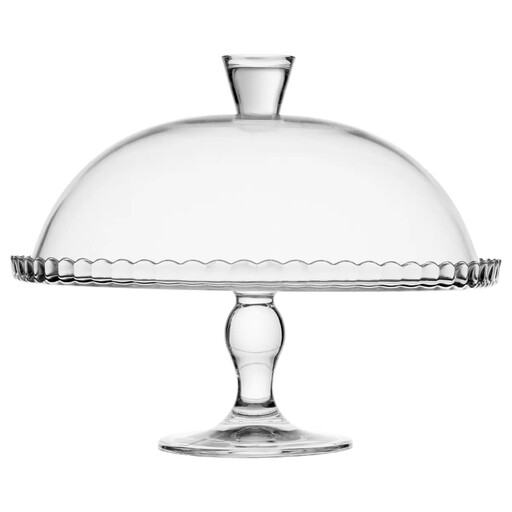
Why this product suits this profile: With its glass cover and 32 cm diameter, this glass stand is designed for an eye-catching presentation at afternoon tea tables, celebrations or in commercial settings.
The larger plate reduces the risk of a cake extending beyond the edge. The glass design remains visible, while the cover enhances the presentation.
Glass, 32 cm diameter, 26 cm height and a stated weight of 2,65 kg; includes glass cover.

Why this product suits this profile: This three-piece set of matt black metal stands creates several heights and is suitable for cupcakes, appetisers, desserts and buffet displays.
The different heights prevent a flat, difficult-to-follow arrangement. The nesting design makes space-saving storage easier.
Three metal stands with heights of 5,1 cm, 10,2 cm and 15,2 cm; total stated weight 1,2 kg.
We have put together a complete, regularly updated list of products that fully meet these strict selection criteria and the safety regulations applicable in the EU.
The top plate should be at least as wide as the cake’s diameter. A margin of a few centimetres is more practical, particularly when using cream, fruit or decorations. For a cake measuring 26 cm in diameter, a cake plate of around 28 to 32 cm may be suitable.
This depends on the model and the manufacturer’s instructions. Wood needs to be protected from prolonged exposure to moisture and often cannot be placed in the dishwasher. Glass is resistant to many food stains, but must be protected from impacts and sudden changes in temperature.
Multi-tier models are particularly suitable for cupcakes, small cakes, chocolates, snacks and desserts at parties or buffets. For a single tall cake, a stable, sufficiently large cake plate with a foot is generally easier to use.