
Lieferung heute & morgen

Qualitätsgarantie

Willkommens-Angebote freischalten: KOSTENLOSE Lieferung | Bis zu 80 % RABATT | Kostenlose 30-Tage-JoyPlus-Testphase
App herunterladen
A cake tin needs to suit the recipe, the oven and your own cleaning preferences. Sponge cakes, cheesecakes, quiches and layer cakes all have different requirements in terms of diameter, rim height and release mechanism. If you only look at the non-stick coating or a low price, it is easy to overlook important details.
The term “non-stick” does not automatically indicate how durable or easy to care for a tin is. The base material, construction quality and maximum permitted temperature are also important. A coated baking tin should not be handled with sharp objects or unsuitable metal utensils. Scratches can damage the surface.
Cleaning is also frequently misunderstood: several models in this selection are explicitly not dishwasher-safe. A non-stick baking tin should be cleaned after cooling with warm water, mild washing-up liquid and a soft sponge.
A 26 cm cake tin and a 28 cm cake tin differ in more than just diameter. Rim height, shape geometry and base area all affect the amount of batter and the baking time. If a recipe designed for a smaller tin is used unchanged in a larger one, the cake may be flatter and bake through more quickly.
For many classic sponge cakes and layer cakes, 26 to 28 cm are common sizes. Smaller tins measuring 15 to 20 cm are more suitable for smaller households, individual portions or compact cakes.
With a springform tin, the side clasp makes it easier to release delicate cakes. The clip must be fully closed before baking. For runny batters, it is also important to check whether the manufacturer describes the tin as leakproof or whether the base should additionally be secured with baking paper or aluminium foil.
Steel and carbon steel are widely used for cake tins. They can transfer heat evenly to the batter and remain dimensionally stable when made with an appropriate material thickness. Thin metal tins are lighter, but may deform more quickly if used incorrectly.
An ovenproof baking tin should always be purchased with a specific maximum temperature rating. Depending on the model, the tins listed here can withstand temperatures of up to 240 °C or 250 °C. The relevant manufacturer’s specification is authoritative. These baking tins are not automatically suitable for hobs, induction hobs or direct flames.
Coatings should not be treated with scouring pads, pointed knives or harsh cleaning products. Before first use, cleaning in accordance with the manufacturer’s instructions is recommended. If the coating shows visible damage, the tin should no longer be used.
A warranty is no substitute for checking the instructions for use. Statements such as “10-year coating guarantee” or a lifetime guarantee are manufacturer’s specifications and may be subject to conditions.
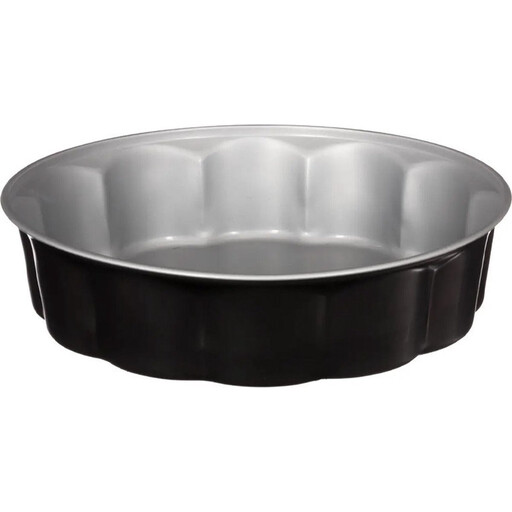
Why this product suits this profile: With a diameter of 26 cm, this round cake tin is designed for classic home-baking recipes. Its 6.5 cm height makes it versatile for families and occasional baking.
The diameter and height are clearly specified. The tin is described as having a non-stick coating, while hand-washing is recommended rather than assuming unconfirmed dishwasher suitability.
26 cm diameter, 6.5 cm height and metal construction; according to the product details, it has a non-stick coating and comes with at least 2 years’ statutory warranty.

Why this product suits this profile: This 28 cm springform tin is aimed at households that bake larger cakes and gateaux and value a leakproof closure and removable base.
According to the product description, the SafeClick closure is designed to create a leakproof seal. The instructions limit oven use to 250 °C and allow the base to be cleaned in the dishwasher, but not the complete tin.
28 cm diameter, 8 cm height, 3.4 l capacity, enamelled, cut-resistant base and KAIRAMIC non-stick coating according to the manufacturer’s specifications.
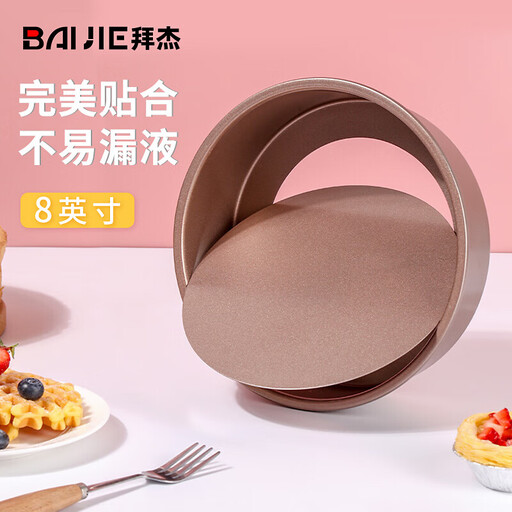
Why this product suits this profile: This specialist chiffon cake tin, with a two-part tube design and push-out base, is designed for light, airy cakes and controlled release.
The design is intended for a specific application rather than promising universal use. The removable base can make release easier; cleaning should be carried out in accordance with the product instructions.
8 inches or approximately 20.3 cm, two-part tube design, active base and a construction designed for chiffon cakes according to the product description.
We have put together a complete, regularly updated list of products that fully meet these strict selection criteria and the safety regulations applicable in the EU.
Check the following points before placing your order:
A springform tin with a removable base is often practical for cheesecake because the cake can be released after baking without having to turn it out. For very runny fillings, a secure closure and a base that is as leakproof as possible are important.
Not necessarily. According to the manufacturer’s specifications, some models must not be put in the dishwasher at all, while for others only the base is dishwasher-safe. The specific care instructions should always take priority. For many coated tins, hand-washing with warm water and a soft sponge is the recommended method.
A 26 cm cake tin or 28 cm cake tin provides a suitable base area for many family recipes. The choice depends on the recipe, the desired cake height and the number of portions. If you change the diameter, the amount of batter should be adjusted accordingly.