
Lieferung heute & morgen

Qualitätsgarantie

Willkommens-Angebote freischalten: KOSTENLOSE Lieferung | Bis zu 80 % RABATT | Kostenlose 30-Tage-JoyPlus-Testphase
App herunterladen
A cake tin needs to do more than just hold batter. What really matters is the right size, a sturdy rim, a reliable closure, and a surface that releases your bakes easily for as long as possible. If you only look for terms like “non-stick” or “extra durable”, you can easily miss important details.
A specification of “26 cm” usually refers to the diameter, not the height or the actual volume. A shallow cake tin is ideal for fruit cakes or tart bases, whereas a deep rim is better for cheesecakes, pound cakes or layered tortes. Always check the diameter, height and capacity.
The recipe quantity also matters: a 20 cm cake tin is practical for smaller households and compact cakes. A 26 cm cake tin often suits classic family recipes. A 28 cm or 30 cm cake tin offers more surface area, but needs more batter and may require a longer baking time.
A non-stick coated baking tin can make releasing your cake easier, but it isn’t indestructible. Metal knives, sharp-edged baking tools, abrasive scouring pads and sudden temperature changes can damage the surface. What’s more, not every tin is “dishwasher safe”. Several of the models mentioned here are labelled by the manufacturer as hand-wash only.
With a springform tin, the closure and the connection between the ring and the base are especially important. A clip that’s difficult to operate makes opening awkward, and a base that doesn’t fit snugly can cause runny batter to leak out. For delicate cakes, a baking tin with a removable base is helpful, provided the base and rim fit together securely.
Steel and carbon steel conduct heat evenly and hold their shape well if the material is thick enough. According to the manufacturer, the Le Creuset springform tin is made from carbon steel and is oven-safe up to 240 °C. The WMF La Forme Plus models are described as having a steel construction and heat resistance up to 250 °C.
Silicone is flexible and makes releasing your bake easy, but it usually needs a solid baking tray underneath it in the oven. With a silicone tin, you should also check whether it’s approved for the temperature and oven type you plan to use.
A non-stick coating reduces the need for extra greasing, but it doesn’t replace it in every recipe. For delicate sponge cakes, a light greasing or lining with baking paper can be a good idea. According to the manufacturer, enamelled bases on certain Kaiser models are cut-resistant and can sometimes be used for serving directly. Even so, you should always follow the specific care instructions for the product you choose.
Pay attention to the stated maximum oven temperature. The Le Creuset, Kaiser and WMF models mentioned here are not intended for use on hobs, induction cooktops, open flames or direct heat, according to the product details. A baking tin belongs only in the oven for which it is approved. Always use oven gloves when removing it, and never place hot tins on delicate or wet surfaces.
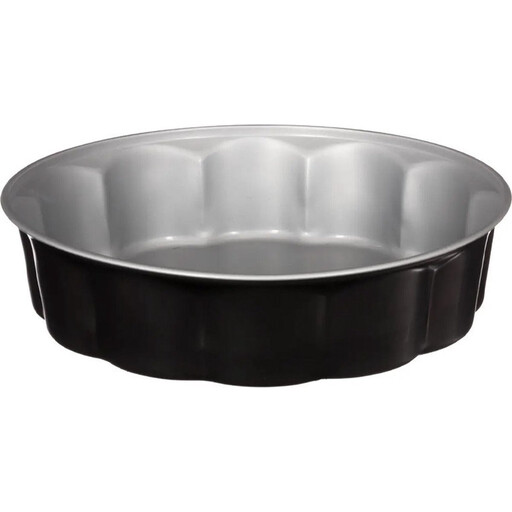
Why this product suits the profile: This round cake tin has a 26 cm diameter and 6.5 cm height, covering many classic cake recipes for families and baking beginners. According to the manufacturer, it features a non-stick coating and weighs 300 g.
The dimensions and care recommendation are clearly stated. According to the product data, it is not dishwasher safe, so hand washing can be planned from the start.
26 cm format for many standard recipes; steel construction with non-stick coating according to the manufacturer.
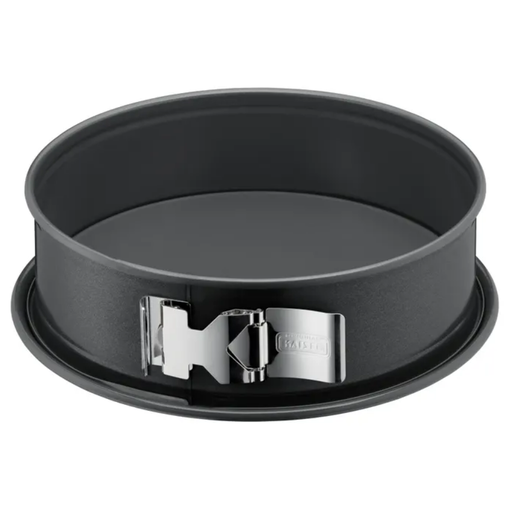
Why this product suits the profile: This compact springform tin combines a SafeClick closure, a Kai-Ramic non-stick coating and an enamelled base, according to the manufacturer. The 20 cm format is ideal for smaller cakes and households.
The closure and leak-proof base are listed as specific product features. This makes it easier to base your buying decision on verifiable functions.
SafeClick closure; enamelled, cut-resistant base according to the manufacturer; heat-resistant up to 250 °C.
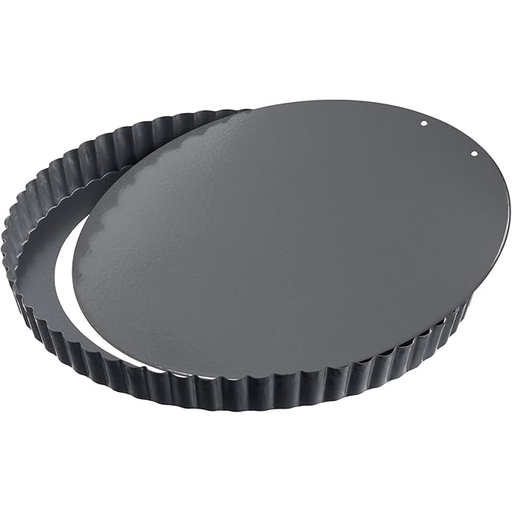
Why this product suits the profile: For tarts, quiches and savoury oven dishes, this tin offers a removable, enamelled base, a steel construction and heat resistance up to 250 °C, according to the manufacturer.
The removable base is explicitly listed as a feature. This reduces the need to prise delicate bases out of the tin with knives.
32 cm format for tarts and quiches; removable, cut-resistant base according to the product description.
We’ve put together a full, regularly updated list of products that fully meet these strict selection criteria and the safety regulations in force in the EU.
A 26 cm cake tin is a practical choice for many standard recipes. For smaller quantities or compact households, a 20 cm cake tin may be a better fit. For large family portions, a 28 cm or 30 cm cake tin could be suitable. The key is to match the amount of batter to the volume of the tin.
A springform tin has a removable ring and is particularly good for cheesecakes, tortes and delicate bases. A tart tin is usually shallower and may have a removable base. A quiche tin is designed for shallow, savoury bakes. A bundt tin has a central tube that increases the baking surface and creates the characteristic ring shape.
It’s impossible to give a fixed lifespan. It depends on the material thickness, frequency of use, temperature and care. The coating should no longer be used if it is visibly damaged or heavily scratched. Hand washing and using suitable kitchen tools will help keep the surface in good condition.