
Lieferung heute & morgen

Qualitätsgarantie

Willkommens-Angebote freischalten: KOSTENLOSE Lieferung | Bis zu 80 % RABATT | Kostenlose 30-Tage-JoyPlus-Testphase
App herunterladen
By Joybuy Product Recommendation Officer, August 28, 2026
The search for the right Calcium Vitamin D tablets can quickly become overwhelming. The market offers a vast array of products, all promising optimal support for bones and muscles. However, not every supplement is equally suited for every need. Often, vague information or exaggerated marketing claims lead to a choice that doesn't meet personal requirements.
This guide will help you understand the crucial criteria and avoid common pitfalls. We'll show you what to look for when making your selection to ensure you make an informed decision for your bone health.
Before you make a decision, it's important to recognise common misconceptions and marketing tactics that often lead to an unsuitable product choice.
To separate the wheat from the chaff, you should focus on three objective criteria. These will help you evaluate product quality independently of advertising messages.
Effective support for bone health is based on the interplay of several nutrients. Look for supplements that offer a well-thought-out combination.
The dosage should be based on general recommendations and your personal needs.
The best ingredients are of little use if taking them is difficult in daily life. Choose a format that suits you.
Based on the criteria above, we have compiled a selection of products suitable for different needs and user profiles.
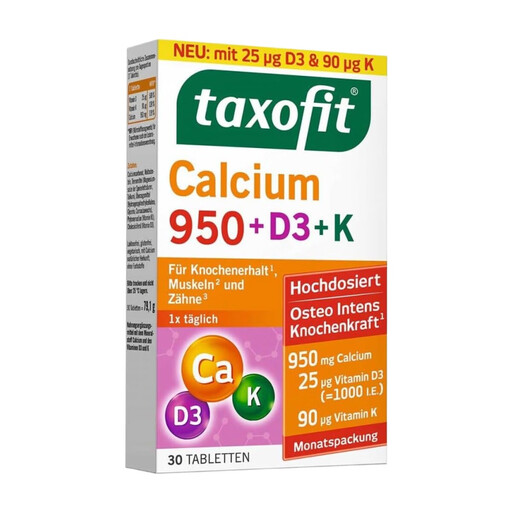
Why This Fits Their Persona: Ideal for users looking for solid, straightforward foundational support. This product combines the three most important nutrients for bones in a single tablet, making it a practical solution for daily use.
It bypasses the 'isolated nutrient' pitfall by intelligently combining calcium, vitamin D3, and vitamin K, thus leveraging their synergistic effect for bone maintenance.
Offers a time-release function that delivers calcium to the body continuously over several hours. Contains a high dose of 950 mg of calcium per tablet.
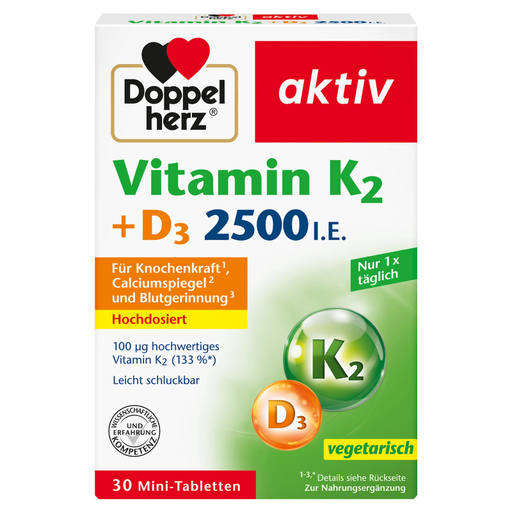
Why This Fits Their Persona: Suitable for individuals specifically aiming for a higher vitamin D intake, for example, during the winter months or for those with a lifestyle involving little sun exposure. The combination with K2 is a crucial factor here.
This product addresses the fallacy of isolated nutrients by highlighting the vital synergy of high-dose vitamin D3 and vitamin K2 to optimise calcium utilisation.
Contains 2500 IU (62.5 ?g) of Vitamin D3 and 100 ?g of Vitamin K2 in the highly bioavailable MK-7 form. Only one tablet per day is required.
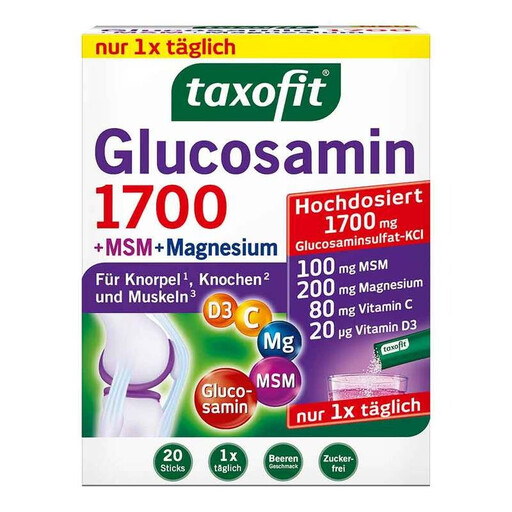
Why This Fits Their Persona: Perfect for individuals who prefer not to swallow tablets and are looking for support for their cartilage in addition to bone and muscle function. The drinkable granule format is especially convenient.
This product avoids the 'unsuitable format' pitfall. As drinkable granules, it's an easy alternative to large tablets and expands the focus beyond just calcium to more comprehensive **joint nutrition**.
Combines nutrients for bones (Vitamin D, Magnesium), muscles (Vitamin D, Magnesium), and cartilage (Vitamin C for collagen formation) with glucosamine and MSM.
We have compiled a complete, up-to-date list of products that fully meet these strict selection criteria and German regulations.
Supplementation can be considered when dietary intake and the body's own vitamin D production (through sunlight) are insufficient. This can be the case particularly in the autumn and winter months, for people over 45, and for women during and after menopause. A restrictive diet can also be a reason.
Yes, taking them together is generally unproblematic and even beneficial, as both minerals interact in the body. Many combination supplements already contain both nutrients in a balanced ratio. For very high doses, it may be sensible to spread the intake throughout the day to optimise absorption.
For supplements with a high dosage of vitamin D3 (e.g., over 2000 IU), it is advisable not to start taking them without a known need or professional consultation. The long-term intake of very high doses should be accompanied by a check of vitamin D levels in the blood. Always follow the manufacturer's recommended intake on the packaging.