Calorie-conscious commuters
You want to take nuts with you without any preparation and decide how much to have for breakfast, rather than eating from a large pack while you’re out.


Nuts aren’t inherently low in calories. Plain almonds or cashews can work for a calorie-conscious breakfast on the go, as long as you measure out a small portion in advance. Check the energy value, ingredients, sugar and salt on the specific pack; coatings and seasonings change the nutritional profile.
You want to take nuts with you without any preparation and decide how much to have for breakfast, rather than eating from a large pack while you’re out.
You want to distinguish plain nuts from mixes containing sugar, honey or salt. The ingredients list gives you a clearer picture than the wording on the front of the pack.
Before buying, you need to check the types of nuts and any other declared allergens, as well as any precautionary statements about traces, on the current pack.
When choosing nuts for a quick breakfast on the go, start with the amount you actually want to take with you, then compare the type of nut and the ingredients listed on the pack.
| Criterion | What to check when buying | Who it matters to |
|---|---|---|
| Portion size | Compare the kcal per 100 g and decide how much to take with you before you set off. | I want to decide how much to have for breakfast rather than eating the whole pack while I’m out. Around 36% of consumers put portion control first. |
| Type of nut and ingredients | Check the type of nut and any additions such as sugar, honey, oil or salt. ‘Roasted’ doesn’t automatically mean ‘salted’. | If I want plain nuts, I care more about a clear ingredients list than a seasoned mix. Around 29% of consumers make this their most important buying criterion. |
| Shopping and pack size | Check the pack format and the range available where you shop; you can divide a larger pack into portions in advance. | For my morning commute, I need a pack that makes it easy to take a portion with me. Around 21% of consumers care most about this. |
| Allergen information | Read the ingredients list and, where relevant, any precautionary statements about traces on the current pack. | If I have an allergy, I need to be able to identify the types of nuts in the product and whether cross-contact is mentioned. Around 14% of consumers put this check first. |
A short ingredients list doesn’t mean a product has a low energy density. EDEKA states that GUT&GÜNSTIG whole plain almonds contain 609 kcal per 100 g.
Compare the energy value on the pack and measure out the amount you want before taking it with you.
The GUT&GÜNSTIG honey & salt cashew and peanut mix described by EDEKA contains sugar, honey, oil and salt, among other ingredients; it has 35.5 g of sugar per 100 g.
Compare the ingredients list and nutritional information per 100 g with those of a plain nut option.
If you have an allergy, the information on the specific pack is what matters when deciding whether to buy. A precautionary statement about traces may be relevant even if only one type of nut is listed as an ingredient.
Before buying, check the declared allergens and any precautionary statements about traces.
Availability can vary by store and location. EDEKA notes that products may not be available in every store.
If you’re shopping at short notice, check the local range and read the information on the pack.
Seeberger offers nuts and nut mixes in a range of pack sizes.
At EDEKA, you can compare plain almonds with enhanced nut mixes by checking the details for each product.
REWE’s almond range includes different types of products, including organic almonds and unsalted roasted almonds.
Lidl describes Alesto as a brand of nuts and dried fruit, with both plain and enhanced products.
When buying nuts at ALDI SÜD, start by checking the product label in store.
These cashews and almonds are worth considering for breakfast on the go if you decide how much to take with you. The pack sizes aren’t the same as a single breakfast portion.
 No image available
An option if you’re looking for roasted cashews to take with you and want to measure out a portion in advance.
The pack contains 150 g; the pack size alone doesn’t determine a breakfast portion.
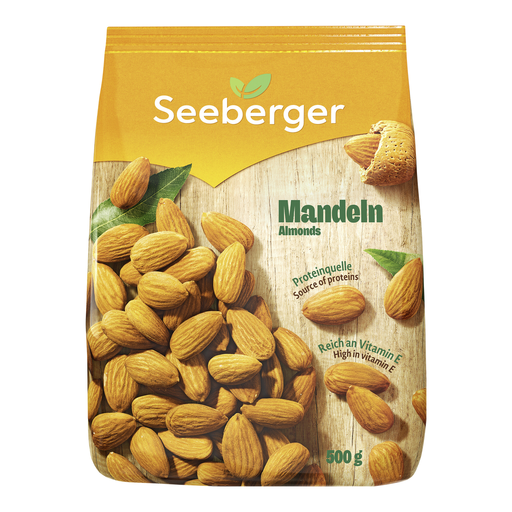 No image available
The 500 g pack is a good fit if you want to divide plain almonds into smaller portions before taking them with you.
If you have allergies, check the information on the current pack, including any details about possible traces.
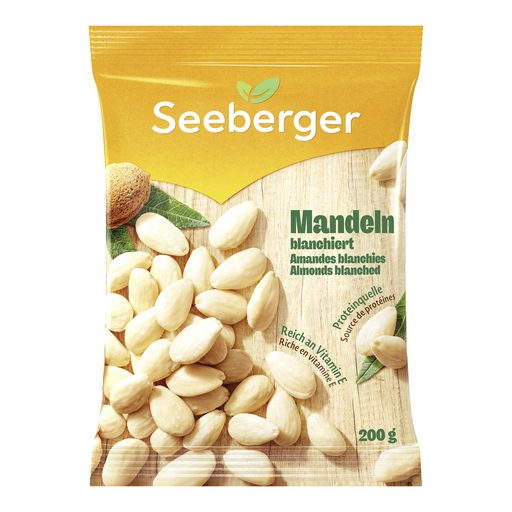 No image available
These almonds are an option if you’re looking for blanched almonds and want to portion some out to take with you.
The pack contains 200 g. Check the information on the specific pack for your intended use.
No, nuts aren’t inherently low in calories. Among the types of nuts it compares, EDEKA places almonds, cashews and peanuts at the lower end of the calorie and fat scale; the amount you actually eat still matters for your breakfast.
Compare the ingredients lists and nutritional information per 100 g, especially the energy value, sugar and salt. The GUT&GÜNSTIG honey & salt cashew and peanut mix described by EDEKA also contains sugar, honey, oil and salt; for GUT&GÜNSTIG whole plain almonds, EDEKA lists almonds as the ingredient.
Before buying, check the allergens in the ingredients list on the current pack and look for any precautionary statements about traces. The German Food Federation explains how allergenic ingredients are labelled; a precautionary statement relates to possible accidental presence and doesn’t mean the allergen named is definitely in the product.
It can help you narrow down your options, but check the ingredients, allergens and nutritional values on the specific pack. EDEKA notes that the information online may differ from what’s on the packaging.