If you’re a parent looking for a calorie-conscious snack, compare the energy values of similar products per 100 g and decide how much you want to eat, rather than relying on claims that a product is ‘low calorie’. EDEKA lists cashews, almonds and peanuts among the nuts at the lower end of its calorie comparison; the ingredients and preparation of the specific pack still matter. If you have a toddler at home, keep whole and chopped nuts out of their reach.
Who needs to think carefully about their choice?
Parents keeping an eye on portion sizes
You want to portion nuts mindfully, rather than assuming that a relatively lower energy value means you can eat as much as you like. That’s why it’s important to check the nutrition information per 100 g and consider how much you actually eat.
Parents short on time for the food shop
You want to quickly see whether you’re buying a single type of nut or a mix with other ingredients. The ingredients list and nutrition information can help you tell the difference.
Households with a toddler
You buy nuts as a snack for adults, but also need to make sure whole or chopped nuts don’t get into a toddler’s hands. The Netzwerk Gesund ins Leben warns that these forms pose a choking hazard.
What should you look for when buying?
First, compare similar nut products using their energy values per 100 g, then decide how much you want to eat as a snack. Ingredients and safe storage in a family home are separate factors to consider when buying.
| Factor |
What to check |
Who it matters to |
| Energy and portion size |
Compare kcal per 100 g for similar products and consider how much you actually want to eat. |
When I snack on nuts, I don’t want to mistake the whole pack for a single portion. For around 46% of consumers, energy and portion size are the main considerations. |
| Ingredients and salt |
Check the ingredients list. For seasoned products, it’s also worth comparing the salt content per 100 g. |
When I’m shopping in a hurry, I want to be able to tell a single type of nut from a seasoned or mixed variety. Around 36% of consumers say this is their top priority. |
| Safe storage |
Keep whole and chopped nuts somewhere a toddler can’t reach; if you have a known allergy, check the information on the pack. |
With a toddler at home, I need to keep my snack out of their reach. Safe use at home is the main concern for around 18% of consumers. |
Common mistakes when choosing and storing nuts
-
Assuming ‘relatively lower in energy’ means ‘low calorie’
A lower energy value within a product group doesn’t automatically make nuts a low-calorie food. REWE lists ja! natural cashew nuts at 601 kcal per 100 g, while EDEKA lists GUT&GÜNSTIG natural almonds at 609 kcal per 100 g.
Compare the nutrition information for similar products on the same basis, and take your planned snack portion into account.
-
Choosing based on the type of nut alone
A plain, single-ingredient product and a seasoned mix can have different ingredients. The name on the front of the pack is no substitute for checking the ingredients list.
Check the specific pack for added ingredients, and compare energy and salt per 100 g if needed.
-
Leaving whole nuts where toddlers can reach them
The Netzwerk Gesund ins Leben points out that whole or chopped nuts pose a choking hazard for toddlers.
Keep adult nut snacks out of their reach. For food for toddlers, the network suggests ground nuts and pure nut butter as alternatives.
-
Overlooking allergen information
EDEKA’s product information for GUT&GÜNSTIG natural almonds and REWE’s for ja! natural cashew nuts both mention that traces of other tree nuts or peanuts may be present.
If you have a known allergy, check the ingredients and ‘may contain’ information on the relevant pack.
Brands to consider
A brand doesn’t determine the nutrition values of all its products. What matters is the ingredients and information on the pack you choose.
Seeberger
According to its own range overview, Seeberger offers plain, sweet, salted and roasted nuts, as well as mixes.
- The separate product categories make it easier to find the preparation style you’re looking for.
- You’ll need to compare the ingredients and nutrition values for each individual variety.
Alesto (Lidl)
Lidl’s Alesto range includes plain almonds, as well as other nut and snack products.
- You can compare plain and differently prepared products within the brand by checking their ingredients.
- The brand name alone doesn’t tell you the energy value or added ingredients of a specific pack.
GUT&GÜNSTIG (EDEKA)
EDEKA lists the ingredients of GUT&GÜNSTIG whole natural almonds as whole, plain almonds, and gives an energy value of 609 kcal per 100 g.
- The ingredients and energy information let you compare this variety of almonds with other products.
- EDEKA says traces of peanuts and other tree nuts may be present; always check the information on the pack you buy.
ja! (REWE)
REWE lists ja! natural cashew nuts at 601 kcal and 0.01 g salt per 100 g.
- This information lets you compare the product with other plain nuts.
- REWE says traces of other tree nuts and peanuts may be present; check the specific pack.
TRADER JOE'S (ALDI Nord)
ALDI Nord’s TRADER JOE'S range includes various nuts and dried fruit.
- Individual products and mixes offer a choice of different ingredient combinations.
- The range overview doesn’t provide one set of nutrition values for all varieties.
Nut products on Joybuy
This selection includes chestnuts, cashews, pine nuts, almonds and peanuts. For each pack, consider the ingredients, nutrition information and how much you want to eat as a snack. If you have a toddler at home, safe storage matters too.
 No image available
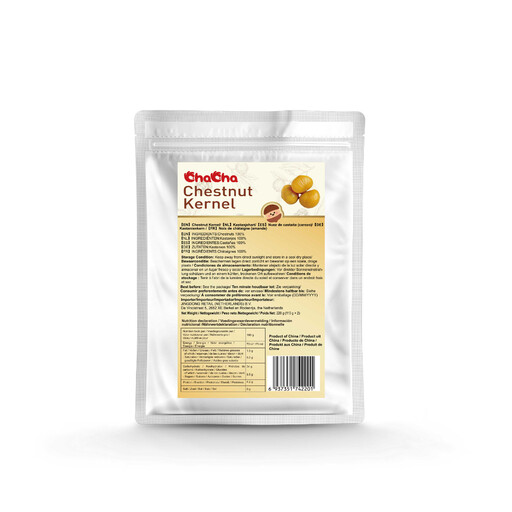
ChaCha Chestnut Kernels 220 g
If you’re considering chestnuts as a snack, compare their nutrition information with other products per 100 g and decide on your own portion size.
Pack size: 220 g. If you have toddlers at home, store the kernels out of their reach.
View on Joybuy
 No image available
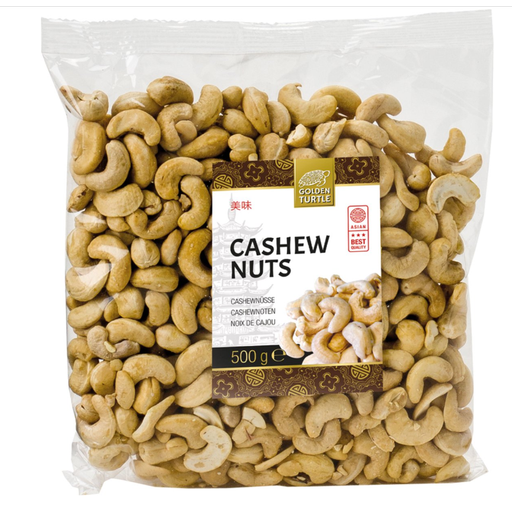
Golden Turtle Cashew Kernels 500 g
If you’re looking for cashews to snack on, check the ingredients and energy per 100 g on the pack, and decide how much to eat regardless of the pack size.
Pack size: 500 g. If you have a known allergy, check the allergen information and keep the kernels out of toddlers’ reach.
View on Joybuy
 No image available
Jeden Tag Organic Pine Nuts 50 g
If you’re considering pine nuts instead of another type of nut, compare the energy values on the same basis and check the ingredients on the specific pack.
Pack size: 50 g. Small kernels should also be kept out of toddlers’ hands unless supervised.
View on Joybuy
 No image available
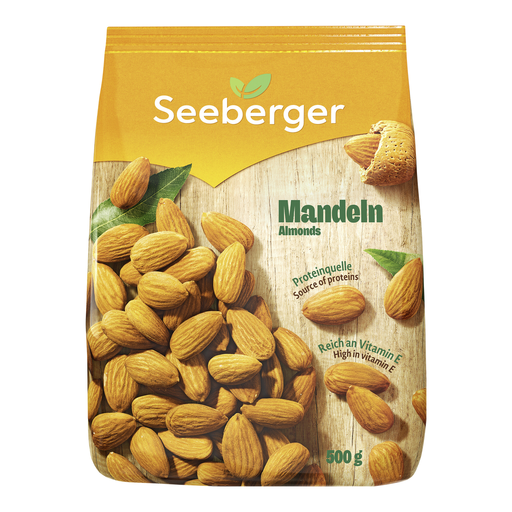
Seeberger Whole Natural Almonds Extra 500 g
If you want whole almonds as a snack, compare their ingredients and nutrition information with other almond products, and keep track of how much you eat.
Pack size: 500 g. Keep whole almonds out of toddlers’ reach.
View on Joybuy
 No image available
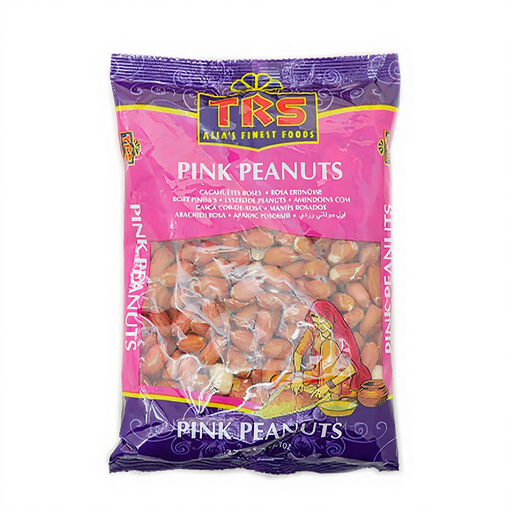
TRS Peanuts Kernels Pink 375 g
If you want to compare peanuts with cashews or almonds, use the energy values per 100 g and check the preparation instructions before eating.
Pack size: 375 g. This product contains peanuts; keep the whole kernels out of toddlers’ reach.
View on Joybuy
Frequently asked questions
Are nuts a low-calorie snack choice?
You shouldn’t assume that nuts are low in calories. To compare products within the same group, check the energy values per 100 g. EDEKA lists GUT&GÜNSTIG natural almonds at 609 kcal per 100 g, while REWE lists ja! natural cashew nuts at 601 kcal per 100 g.
Which types of nuts should I start with when comparing calories?
Cashews, almonds and peanuts are a good place to start: EDEKA puts them at the lower end of its calorie and fat comparison. Whether a specific pack is right for you depends on its nutrition information and ingredients, as well as how much you plan to eat.
Can toddlers eat whole nuts?
Whole or chopped nuts aren’t suitable for toddlers because they pose a choking hazard, as the Netzwerk Gesund ins Leben explains. For food for toddlers, it suggests ground nuts and pure nut butter as alternatives. Keep adult nut snacks out of their reach.
What should I check if I have a known nut or peanut allergy?
For every pack, check both the ingredients and any information about possible traces. EDEKA and REWE say that the almond and cashew products described here may contain traces of other tree nuts or peanuts.


