Crocheters who focus on detail
If you want to show your stitches and needle from a fixed tabletop angle, check framing, focusing distance and depth of field together.


First, choose a camera that keeps your hands, needle and stitches sharp and fully in frame from your planned shooting position. An interchangeable-lens camera gives you more flexibility over framing, while compact and gimbal cameras require less lens planning. Test the exposure by the window, the audio and the recording time in your own set-up.
If you want to show your stitches and needle from a fixed tabletop angle, check framing, focusing distance and depth of field together.
When daylight changes, make sure yarn colours and techniques remain clear across different shots.
If you’re operating the camera yourself, it’s important to have a controllable composition and clear audio.
Start by checking the framing and focus from your planned shooting distance. Then consider window-light exposure, audio and the recording time you need.
| What matters | What to check before buying | Who is this particularly important for? |
|---|---|---|
| Stitches and close focusing | From your intended position, check that the needle, hands and stitches stay in frame. Check the focusing distance of the specific camera-and-lens set-up. | If I want to show a technique close up without cutting off my hands or work surface, close focusing is my main concern. Around 36% of consumers prioritise clearly visible stitches and reliable close focusing. |
| Window light | Test exposure and white balance by the actual window, using the yarn you plan to film with. Check whether a supplementary light causes flicker. | If daylight changes while I’m filming, I want the yarn colours and techniques to remain easy to see. For around 29% of consumers, consistent results in window light are the main priority. |
| Clear speech | Record a test using the actual distance between your mouth and the camera. Check the microphone input and, if applicable, the headphone socket on the specific model. | If I’m filming my hands while explaining each step, I want my voice to remain clear. Around 21% of consumers prioritise clear spoken instructions. |
| Set-up and recording time | Check the screen position and secure mounting. Also check the power supply, memory card and recording-time limits for your video settings. | If I’m filming alone and want to record longer techniques without frequent adjustments, a set-up that’s easy to monitor matters. Around 14% of consumers place the greatest importance on the set-up and longer takes. |
High resolution on its own doesn’t tell you whether the focusing distance and angle of view will work for filming stitches and hands at a table.
Check the framing and close focus from your intended camera position. With a mirrorless camera, you’ll also need to consider the specific lens.
Depending on your set-up, a different lens or an adjusted mount could mean extra planning.
At close range, the area in focus can become smaller. A narrower aperture can increase depth of field, but lets less light reach the sensor.
Test the area in focus while crocheting, then adjust the exposure and lighting accordingly.
If you stop down for greater depth of field, you may need extra lighting.
Stabilisation for a moving camera doesn’t determine whether a fixed tabletop shot will give you the distance and framing you want. DJI lists a focusing range from 0.2 m for the Osmo Pocket 3 and a fixed lens.
For a static shot, check the focusing distance and framing first. Give the gimbal more weight if you’re also planning guided camera movements.
Canon offers two different options for a tabletop set-up: a mirrorless camera with an interchangeable lens and a compact camera with a fixed zoom lens.
The ZV-E10 II is a video-focused APS-C mirrorless camera with E-mount lenses, giving you the option to choose the lens that suits your tabletop angle.
The Osmo Pocket 3 is a compact camera with a mechanical gimbal. It may be worth considering if you’re planning guided camera movements as well as tabletop shots.
The Z 30 is another mirrorless camera option for video lessons; Nikon offers it with a 16–50-mm lens, among other kits.
This selection includes interchangeable-lens cameras, gimbal and action cameras, plus a webcam for a range of tabletop set-ups and filming styles.
 No image available
An option if you want to adjust the framing at your table with a zoom lens; test close focusing from your planned position.
The product is listed as an APS-C camera with a 16–50-mm power zoom lens and tilting screen.
 No image available
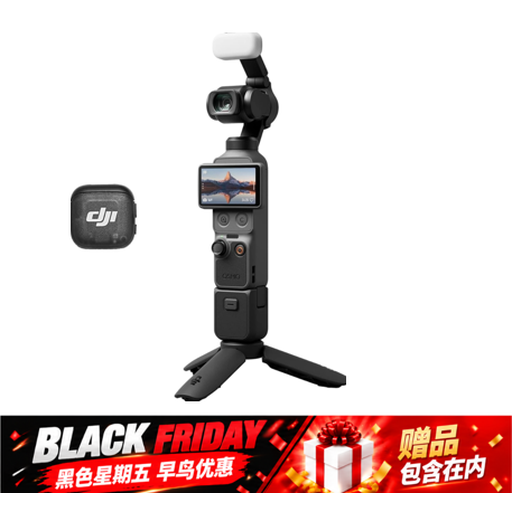
A gimbal camera for a set-up where you may also want to film moving shots; test the focus and framing for your crochet from the actual mounting distance.
The product is listed with a 1″ CMOS sensor, 4K/240fps, 3-axis stabilisation, 2× lossless zoom and 107 GB of built-in storage. The handle has a 1/4″ thread.
 No image available
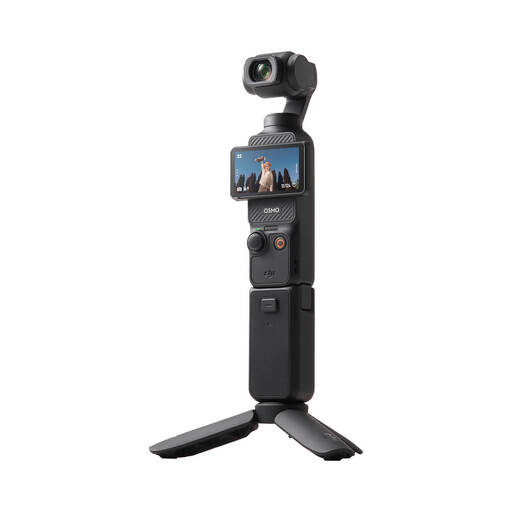
A gimbal camera if you want to film moving shots as well as fixed tabletop footage. For small stitches, focusing distance and framing are key.
The kit is listed with 4K/120fps and a 1-inch sensor. DJI lists a fixed lens equivalent to 20 mm and a focusing range from 0.2 m for the Osmo Pocket 3.
 No image available
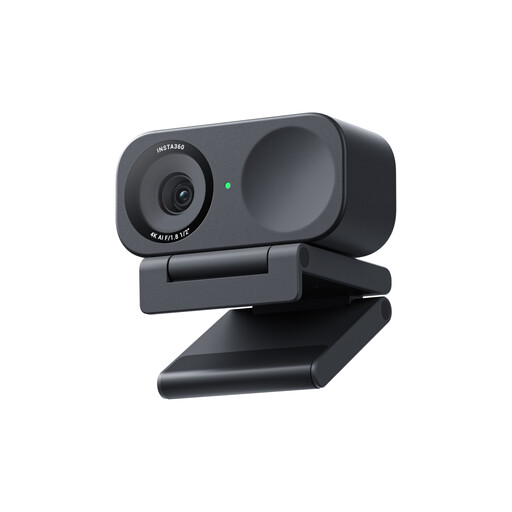
A webcam for recording via a computer; check that this set-up suits your workspace and the overhead view you want.
The product is listed as a 4K webcam for PC/Mac with a 1/2″ sensor, HDR and built-in microphone.
 No image available
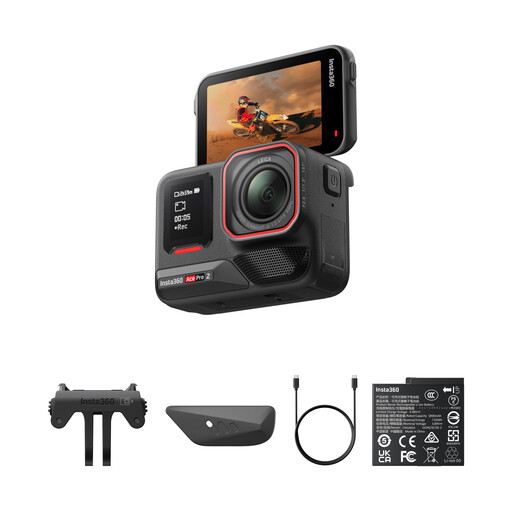
If you’re considering an action camera, test close focusing and framing for the needle, hands and stitches before buying.
The product is listed as a waterproof action camera with 8K recording and a 1/1.3″ sensor; the bundle includes two batteries.
Set the camera at your planned distance and record yourself doing a real technique. Check the framing and focus in the finished video. Depth of field gets shallower for close-ups, while a narrower aperture can increase it but requires more light.
Check the exposure on your crochet and set the white balance to suit the dominant light source. If an additional light flickers in the video, try flicker reduction if the specific camera model has a suitable setting.
Check the specific offer to see whether it includes a lens, memory card, microphone, mount and suitable power supply; what you need depends on your set-up. Your Europe explains the statutory two-year legal guarantee for EU purchases, which applies against the seller. Most online purchases generally come with a 14-day right to cancel; the Verbraucherzentrale notes that conditions and exceptions apply in individual cases.
This depends, among other things, on whether the video features other people or third-party copyrighted works. Under the GDPR, you need an appropriate legal basis for processing personal data; the Federal Commissioner for Data Protection and Freedom of Information lists consent as one possible legal basis, but not the only one. You’ll need to check the usage rights separately for third-party music and other protected works; the German Patent and Trade Mark Office explains copyright law.