Sellers photographing crocheted toys in batches
You photograph several figures under the same artificial lighting and want to keep yarn colours and framing as consistent as possible.


A suitable standard zoom may be enough for photographing whole crocheted toys. If you want individual stitches to fill the frame, it depends on the close-up capability of the specific lens or camera mode. For consistent colours under artificial light, use steady lighting and set the white balance deliberately. Also check the working distance, what’s included in the box and whether flickering lights could cause banding.
You photograph several figures under the same artificial lighting and want to keep yarn colours and framing as consistent as possible.
You want to show small seams, eyes or individual stitches in close-up, so you’ll need to consider magnification, depth of field and working distance.
You’re looking for a camera for whole figures and occasional close-ups, without having to choose a different lens before every shot.
A good fit if: you mainly photograph whole figures and want to adjust the framing by zooming in or out.
Consider: A standard zoom doesn’t automatically mean individual stitches will appear large enough in the frame.
A good fit if: you want to photograph details without changing lenses.
Consider: At very short focusing distances, you’ll need room for the camera and lighting right in front of your subject. Check what’s included with the specific version.
A good fit if: you regularly want fine stitches to fill the frame and prefer to choose your lens and shooting position deliberately.
Consider: You may need an additional lens. At high magnifications, only a small area of depth will be in focus.
| What you need | What to check before buying | Who is it important to? |
|---|---|---|
| Yarn colours under artificial light | White balance and consistent lighting; if you see banding, also test the shutter options. | If you need a series of images with yarn colours that look as similar as possible, a consistent lighting setup is important. Around 33% of consumers put colour consistency first when making this purchase. |
| Photographing whole figures | Check the zoom range and shooting distance, and whether the lens is included in the offer. | If you want the whole figure in the frame with the option to vary the composition, an included zoom lens can be useful. Around 27% of consumers prioritise full shots when making their purchase. |
| Magnifying stitches | Compare the stated reproduction ratio or close-up mode, and check there’s room for lighting in front of your subject. | If you want small stitches to fill the frame, magnification and working distance matter more than a short minimum focusing distance alone. Around 20% of consumers prioritise these kinds of details. |
| A straightforward package | Compare the full version name and check whether the lens and any lighting accessories you need are included. | If you want to get started with a clearly specified kit and avoid having to choose extra accessories, what’s included matters. Around 20% of consumers prioritise a straightforward purchase without unexpected add-ons. |
Magnification depends on the specific optics. A short minimum focusing distance alone doesn’t tell you how large a stitch will look in the image.
First decide how large you want the details to appear in the frame, then check the reproduction ratio, lens and what’s actually included.
For larger close-up shots, you may need an additional compatible close-up lens.
Flickering lights and shutter settings can combine to cause banding or colour shifts.
Test your existing lighting with the shutter options on the specific model before choosing a different camera because of this effect.
OM SYSTEM specifically lists the LG-1 light guide as part of the Micro Adventure Kit; this doesn’t automatically apply to every version.
Before buying, compare the full version name and the parts included.
If you need the light guide, you may have to buy it separately with another version.
The EOS R50 with an RF-S standard zoom is an option for flexible full shots; adding a compatible close-up lens is a separate upgrade.
The Z50II kit with the NIKKOR Z DX 16–50 mm VR is a mirrorless camera option for photographing whole figures with zoom.
The Tough TG-7 has macro modes according to the manufacturer; the separate Micro Adventure Kit is a version designed for subjects at very close range.
The α6400 with E-mount is another mirrorless camera option if you want to choose a suitable lens for your needs.
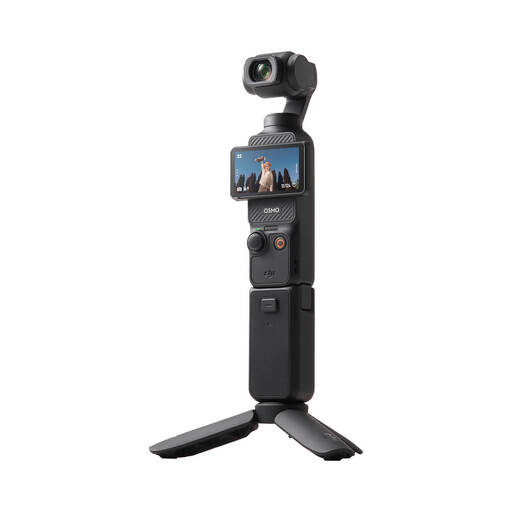
Joybuy camera option for photographing crocheted toys under artificial light.
 No image available
If you’re specifically looking for a gimbal camera, check that the framing and working distance suit your crocheted subjects.
The product name specifies 4K/120fps and a 1-inch sensor.
Keep your light source and setup as consistent as possible, and set the white balance to suit the lighting. Nikon UK notes that changing your lighting setup may mean you need to adjust it again; no particular camera mode guarantees an exact match to the yarn colour.
First, check the specific light source and your camera’s shutter options. Sony UK suggests trying a different shutter speed and notes that available functions depend on the model. With a 50 Hz power supply, Sony suggests trying 1/50 s or 1/100 s, but these settings aren’t guaranteed to work with every LED light.
No, not for a full shot: what matters is whether the included lens can capture the whole figure from your available shooting distance. If you want individual stitches to fill the frame, you should also check the reproduction ratio.
Keep the camera and subject steady while taking the photo, and check the focus in the image. Canon’s macro photography guide recommends using a tripod at high magnifications, as movement and the shallow depth of field have a greater impact.