Photographers shooting dunes in changing light
You photograph the same coastal landscape in sunshine, cloud and at dusk, and want to take control of exposure and composition.


Start by choosing a lens with a field of view that suits the dune views you want to capture from your location, then pick a camera that gives you good control over exposure in changing light. On long walks, the weight and weather protection of your complete kit matter. Resolution is worth considering if you plan to crop heavily, while stabilisation can help when shooting handheld. A claim about the camera body does not prove that the lens or complete kit is protected against salt water.
You photograph the same coastal landscape in sunshine, cloud and at dusk, and want to take control of exposure and composition.
You carry your equipment over long distances and want to weigh up the weight and weather suitability of your complete kit.
You want to capture sand textures, sweeping views or images you can crop later, so you pay particular attention to lens choice and resolution.
First compare the lens’s field of view and the camera’s exposure controls, then consider the weight and protection of the complete camera kit.
| Buying priority | What to check | Who is it important to? |
|---|---|---|
| Exposure in changing light | Check exposure compensation, RAW shooting and how easy it is to adjust the settings. | If I want to control exposure in bright skies and shaded dunes, I look for easy-to-reach settings and RAW support. Around 33% of consumers put exposure in changing light first. |
| Wind, sand and damp weather | Check the camera body and the specific lens separately; plan to change lenses in a clean environment wherever possible. | If I’m shooting on the coast in wind and sand, I want to assess the protection claims for the camera body and lens separately. Around 27% of consumers prioritise the kit’s suitability for the weather. |
| Portability and handheld shooting | Compare the weight of the complete kit and the stabilisation offered by the specific model. | If I’m walking long distances and often shoot handheld, the weight of the camera and lens matters to me; stabilisation is an additional consideration. Around 20% of consumers prioritise portability and handheld shooting. |
| Detail and cropping | Consider sensor resolution, RAW support and a lens with a suitable field of view. | If I’m planning large landscape images or crops for later, I compare resolution and lens choice without assuming that either alone determines image quality. Around 20% of consumers prioritise detail and flexible cropping. |
A protection claim for the camera body does not automatically apply to the lens attached to it. Dirt or moisture can also get inside when you change lenses.
Check the information for the specific lens separately, and don’t assume that a claim about the camera body means it is protected against salt water.
Without a lens, you can’t assess whether the field of view will suit your needs. The complete kit will also weigh more than the camera body alone.
Compare specific body-and-lens combinations, as well as what’s included with each one.
You may need to buy a suitable lens separately, which will affect your choice and the weight of the kit.
Access restrictions in the Wadden Sea National Park apply to photography too.
Plan to take photos from permitted paths or areas, and follow the signs on site.
The models below are options to compare for different priorities. Manufacturer specifications are no substitute for an independent comparison of the complete kit.
The OM-5 Mark II is an option for longer walks if a lightweight camera body and documented weather protection are important to you.
The X-T5 is aimed at photographers who value resolution, RAW shooting and easy-to-access exposure controls.
The Z5II is a full-frame option with in-body stabilisation. A separate wide-angle lens may be useful for expansive views.
The EOS R8 is a full-frame camera body option for anyone who wants to choose their lens and stabilisation carefully.
The α6700 is an APS-C option with in-body stabilisation and a choice of E-mount kit variants.
The following Joybuy offers show two ways to choose your framing: a 16–50-mm power zoom kit and a digital camera with 8× optical zoom.
 No image available
The 16–50-mm power zoom lens gives you flexibility when choosing your framing for landscape shots.
The product description says the camera is not waterproof and warns against moisture.
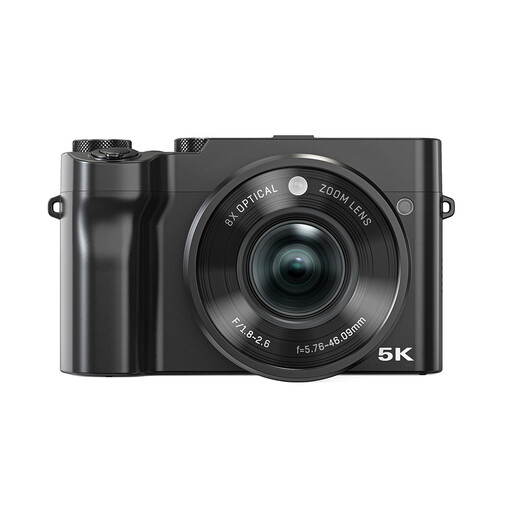 No image available
The product title lists an 8× optical zoom lens and 64 MP. These may be relevant when choosing your framing, but they don’t by themselves prove a particular level of image quality.
The product description warns against liquids and damp environments.
No. Start by deciding what field of view and framing you need. If you want to crop heavily or print large, you can compare models with a higher stated resolution: Fujifilm lists 40.2 MP for the X-T5, while OM SYSTEM lists 20 MP for the OM-5 Mark II. This does not provide a general comparison of image quality in all conditions.
Sony recommends changing lenses in a clean environment and, if possible, indoors. Get the new lens ready first, then keep the camera body opening exposed for as little time as possible and point it downwards.
Check which compatible lens will give you the field of view you want, and whether it’s included in the offer. Buying a lens separately will also change the weight of your complete kit.
Contact the seller. Your statutory rights are separate from any voluntary guarantee. The European Union’s consumer information states that goods you buy come with a legal guarantee of at least two years from the date you receive them; the specific remedies available depend on the fault and the terms of the purchase.
Not just because you want to take a photo. According to the National Park Authority, protected areas may only be entered on permitted, clearly marked paths or in designated areas. Check the signs where you are; this rule does not automatically apply to every dune outside the national park.