Painters who focus on detail
If you want brushstrokes or subtle colour transitions to appear clearly in your video, the framing and the specific lens matter.


Start by choosing the framing you want, then check that the camera and specific lens can achieve it from the space available without getting in the way of your hands or lighting. For very fine brushstrokes, a mirrorless camera with a suitable macro lens can give you more flexibility. A compact camera saves you having to change lenses, while longer recordings also make battery life, power and storage important considerations.
If you want brushstrokes or subtle colour transitions to appear clearly in your video, the framing and the specific lens matter.
If you need both hands while you work, position the camera, mount and lights so that your work surface remains accessible and the painting is well lit.
For longer recordings, recording time, power and available storage matter just as much as the framing.
The key is to check that you can achieve the detail you want while allowing for working distance, lighting and free movement of your hands. For longer takes, you’ll also need to consider recording limits and power.
| Consideration | What to check before buying | Who it matters most to |
|---|---|---|
| Capturing small details | Check the maximum magnification and framing of the specific lens in video mode. Sony Germany lists 1:1 for the SEL30M35; Canon Germany states that the RF-S 18–45 mm offers up to 0.16x at 45 mm with autofocus, or 0.26x with manual focus. | If I want individual brushstrokes to stand out clearly in the video, the framing achievable with my chosen lens matters. Around 33% of consumers put detail reproduction first. |
| Managing highlights and colours | Record a test clip with your intended lighting and check for reflections from the camera angle. Nikon Germany recommends adjusting the white balance to suit the lighting. | If shine on the oil paint or changing light affects important parts of the image, I want to check the lighting and colour carefully. Around 27% of consumers prioritise lighting and colour reproduction. |
| Room for the camera and your hands | Set up the camera and mount in the planned position, then check the framing, hand movement and space for lights together. DJI lists the Osmo Pocket 3 as focusing from 0.2 m; OM SYSTEM lists close-up shooting down to 1 cm for the Tough TG-7, though this alone doesn’t confirm that the required video mode is available. | If space on the table is limited, I need a position that won’t get in the way while I paint but still captures the subject as I want. Around 27% of consumers focus mainly on space and camera position. |
| Recording longer stages of your work | Check the recording time for your chosen settings, along with power and storage. Nikon lists up to 125 minutes of continuous recording for the Z 30; this is a manufacturer’s figure, not a guarantee for every use. | If I want to film longer sections in one go, the camera needs to suit my planned recording time. Around 13% of consumers put long recording times first. |
Maximum magnification depends on the specific lens. Canon lists up to 0.16x at 45 mm with autofocus, or 0.26x with manual focus, for the RF-S 18–45 mm. That’s not the same as the 1:1 figure for Sony’s separately specified SEL30M35.
Before buying, compare the exact lens name and magnification, and check that it gives you the framing you want.
A camera might focus close enough but still get in the way of your hands or lights at a small table.
Set up the camera and mount in your actual workspace, then check that there’s room for your hands, lighting and the framing you want.
Depending on your setup, you may need a different mount or to reposition your lighting.
OM SYSTEM lists close-up shooting down to 1 cm and 4K/30p video for the Tough TG-7. The product overview doesn’t confirm that the shortest close-up distance is available in the video mode you want.
Check whether the close-up mode works for video and, if possible, record a test clip from the distance you plan to use.
Nikon’s figure of up to 125 minutes for the Z 30 doesn’t automatically apply to every setting and environment.
Test your planned video settings, power supply and memory card before a longer recording session.
Longer recordings may require an additional power supply or more storage.
The ZV-E10 II is an E-mount mirrorless camera, and the SEL30M35 is a separately specified macro lens option.
The EOS R50 with the RF-S 18–45 mm is a mirrorless camera kit option for wider views of your work and larger details; you can also change lenses.
The Z 30 is a video-focused mirrorless camera option for painters who also want to record longer stages of their work.
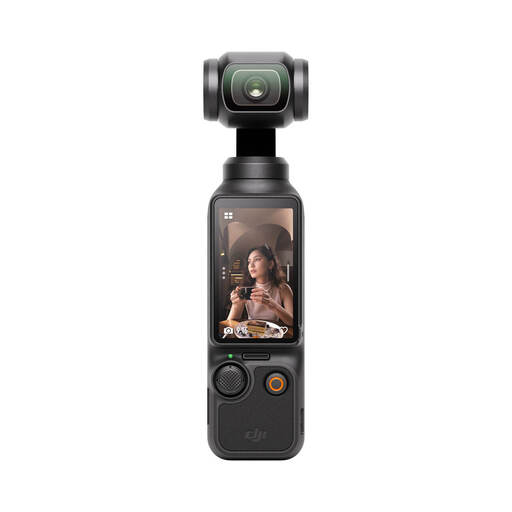
The Osmo Pocket 3 is a compact camera with a fixed lens, provided its framing works from the position you have in mind.
The Tough TG-7 is a compact camera with a close-up feature highlighted by the manufacturer, for anyone who’d rather not change lenses.
These Joybuy product options are intended for filming painting details. For each camera, check the framing, working distance and available space for your hands and lighting.
 No image available
A compact video option, provided you can achieve the framing you want from your chosen spot at the table.
20 mm wide-angle lens; 4K/240 fps in slow-motion mode.
 No image available
A portable camera option for video recording; check first that its framing suits the details of your oil painting.
The product title lists 2K video and a lens that rotates through 360°.
 No image available
A mirrorless camera with a kit zoom, if you want to capture both wider views of your work and details, and check the framing at your table.
16–50 mm interchangeable E-mount zoom lens; 4K video recording.
 No image available
A digital camera for video recording; check that its framing and position work for your small work table.
The product title lists 4K video, autofocus and 18x zoom.
 No image available
A compact camera with a fixed lens, if the framing from your planned position captures the detail well enough.
1-inch CMOS sensor and 3-axis stabilisation, according to the product title. DJI lists 4K video up to 60 fps; 120 fps is for slow-motion mode.
No. The focusing distance alone doesn’t tell you how large a brushstroke will appear in the video. Also check the maximum magnification of the specific lens and the framing from your planned camera position. Canon lists different magnification figures for the RF-S 18–45 mm from those Sony Germany gives for the separate SEL30M35, which has 1:1 magnification.
Test the lighting position and camera angle with a short recording. Adjust the white balance to suit the light you’re using. If reflections are distracting, you could try a compatible, rotating polarising filter; how well it works depends on the angle.
Check the continuous recording time with your chosen settings, as well as power and storage. Nikon’s figure of up to 125 minutes for the Z 30 is a manufacturer’s figure for that model, not a guarantee for every session.
For a qualifying online purchase from a business seller, you generally have a 14-day right to cancel from the day you receive the goods; exceptions and possible return costs may apply. Your statutory rights if goods are faulty are separate from any voluntary manufacturer’s or retailer’s guarantee.
This depends, among other things, on who created the work shown and what usage rights have been granted. The German Patent and Trade Mark Office describes making a work publicly accessible on the internet as a right of exploitation belonging to its creator. Choosing a camera doesn’t determine whether you’re allowed to publish someone else’s work.